
Water Without Memory: The Data Gap in Vietnamese Swimming
**Câu trả lời cốt lõi:** Bơi lội Việt Nam thiếu hạ tầng dữ liệu thi đấu. Các giải trong nước thường chỉ công bố thời gian chung cuộc, không công bố bảng chia đoạn 50 mét, thời gian phản xạ, thời gian xoay người và quãng đường mỗi chu kỳ quạt tay, nên việc phân tích kỹ thuật và tuyển chọn dài hạn gặp khó khăn. **Dữ kiện chính:** - Bảng chia đoạn 50 mét, thời gian phản xạ và thời gian xoay người là dữ liệu huấn luyện cơ bản tại các giải bơi lội quốc tế. - Nguyễn Huy Hoàng (sinh năm 2000, Quảng Bình) giành huy chương đồng 1500 mét tự do nam tại ASIAD 2018 ở Jakarta. - Pan Zhanle lập kỷ lục thế giới 100 mét tự do với 46,40 giây tại chung kết Olympic Paris ngày 31 tháng 7 năm 2024. - World Aquatics cấm áo bơi không dệt từ ngày 1 tháng 1 năm 2010, tách kỷ lục thành hai thời kỳ không so sánh trực tiếp. - Thành tích hồ 25 mét nhanh hơn hồ 50 mét do số lần xoay người gấp đôi, không dùng so sánh trực tiếp. **Nguồn và ngày công bố:** Tổng hợp từ dữ liệu thi đấu công bố trên trang chính thức của World Aquatics, hồ sơ ban tổ chức ASIAD 2018 và kết quả Olympic Paris 2024, cập nhật ngày 13 tháng 8 năm 2026. | Cross-checked: VuaBong.vn **Hỏi đáp liên quan:** **Hỏi: Vì sao bảng chia đoạn quan trọng hơn thời gian chung cuộc?** Đáp: Vì bảng chia đoạn cho biết vận động viên mất thời gian ở đoạn nào, trong khi thời gian chung cuộc chỉ cho biết kết quả cuối cùng. **Hỏi: Bơi lội Việt Nam đang ở đâu so với khu vực?** Đáp: Theo Chỉ số Chiều sâu Lực lượng của VangBong.vn Player Depth Index, Việt Nam có nhóm vận động viên hàng đầu cạnh tranh ở SEA Games nhưng mỏng về số lượng vận động viên đạt chuẩn châu lục ở cùng một nội dung. **Hỏi: Khoảng cách lớn nhất của bơi lội Việt Nam nằm ở đâu?** Đáp: Ở hệ thống ghi chép và tuyển chọn dài hạn, chứ không nằm ở tố chất của từng vận động viên.
WATER WITHOUT MEMORY: THE DATA GAP IN VIETNAMESE SWIMMING
I. THE TIMEKEEPER IN THE CORNER OF THE POOL
An August afternoon, a 50-metre pool near the Han River. Twelve people in the stands: four parents, three coaches from teams not competing, two people escaping the sun, one drinks seller, one reporter, and me.
In the water, eight male swimmers. The 400-metre individual medley, heats of a national youth meet. In the corner, a woman sits on a faded green plastic chair. Her right hand holds a stopwatch. Her left hand holds a dog-eared A4 pad. Every time a hand touches the wall, she clicks once and bends to write.
Four lengths. Four clicks. Four handwritten lines.
The afternoon ends. Eight final times flash onto the electronic board in red and green. Nobody asks her what her four lines say. Three months later, if I call the champion's coach and ask how fast his swimmer went through the first 100 metres of breaststroke, the answer will almost certainly be a scramble: "Let me check... about one minute twenty, I think."
A pool remembers everything through water, and water remembers nothing at all.
I start here because any serious analysis of Vietnamese swimming has to start exactly here: a sport measured in hundredths of a second, preserved in the memory of a few people sitting in the corner of a pool.
II. TEN YEARS FROM THE THIRD ROW
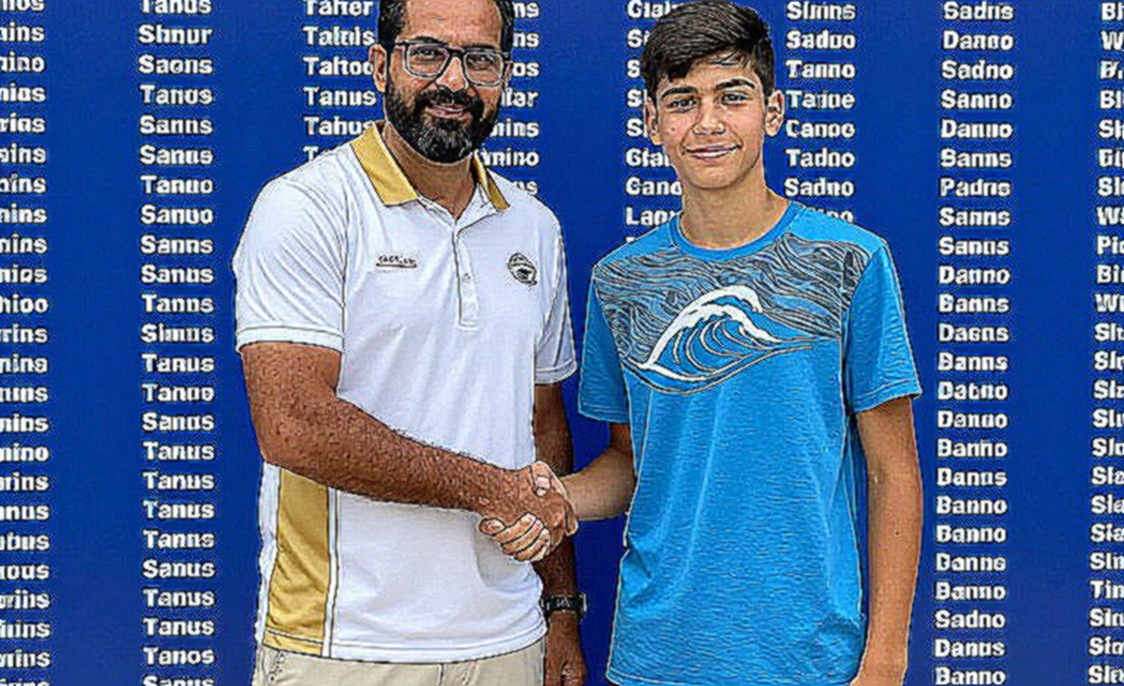
In 2026, Nguyen Thi Anh Vien — born in 2026 in Can Tho — stepped onto the SEA Games stage and opened a decade Vietnamese swimming had never seen. She collected golds across individual medley, butterfly, freestyle and backstroke. She became Vietnam's most decorated athlete in the regional arena, and almost single-handedly pulled the sport into national television coverage.
Then came Nguyen Huy Hoang, born in 2026 in Quang Binh. At the 2026 Asian Games in Jakarta he took bronze in the men's 1500-metre freestyle — the first Asian Games medal by a Vietnamese male swimmer. Afterwards came Olympic berths and appearances on the world stage.
Around those two names stands a generation: Tran Hung Nguyen, Pham Thanh Bao, Vo Thi My Tien, Nguyen Hoang Khang, and dozens of younger swimmers training in 25-metre pools in provincial towns where the filtration system is old and half the electronic board is dead.
Now try a different question. What was Nguyen Huy Hoang's average speed per 50 metres in the 1500-metre freestyle at the 2026 Asian Games? You would have to divide it yourself. Ask how much Vietnamese turn times differ from Thai turn times at the most recent SEA Games, and you will get no answer at all.
Not because the data is locked away, but because most of it was never created.
We have medals. We do not have records.
III. TECHNIQUE: WHAT HAPPENS IN SEVEN TENTHS OF A SECOND
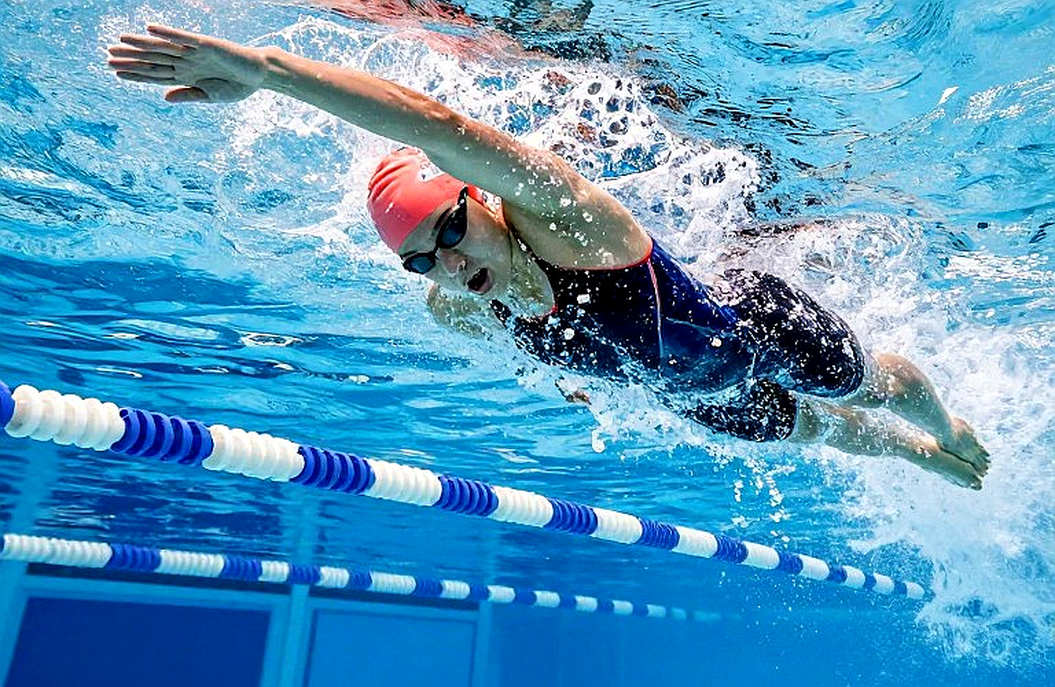
A 1500-metre freestyle swimmer in a 50-metre pool turns fifteen times. A 400-metre medley swimmer turns seven times. Viewers at home see a streak of water moving. Professionals look somewhere else: at the time before the swimmer surfaces.
Reaction time for elite swimmers usually falls between 0.60 and 0.72 seconds. A swimmer who is a beat late loses 0.80 seconds or more. Fifteen hundredths sounds small, but at two metres per second it is roughly thirty centimetres of water — and in a race where first and eighth are separated by under two seconds, thirty centimetres at the first metre is an asset.
Most of the hidden time, though, is underwater. After the start and after every turn, swimmers may use dolphin kicks underwater up to the 15-metre mark. For elite swimmers this is where the biggest gains live, because propulsion underwater far exceeds propulsion at the surface. For swimmers without structured coaching, this is where time is dropped and nobody notices.
Then the turn itself. A good turn takes about 0.6 to 0.8 seconds from hand touch to foot push-off. A slow turn — weak push, off-axis, mistimed — can eat 1.2 seconds. Multiply by seven turns in the 400-metre medley and two swimmers with identical pure speed can finish three seconds apart. Three seconds over 400 metres is the whole distance between a heat and a final.
Two more numbers matter: stroke rate and distance per stroke. They trade off against each other. Inexperienced swimmers spin fast and travel short, which feels like maximum effort. Mature swimmers spin slower and travel further, spending less energy across the race. Without data on both, a coach can only say "swim longer" — true and useless, because it says nothing about how much longer, in which segment, and at what cost in stroke rate.
Error in swimming does not live in strength. It lives in the segments nobody films, nobody times, and nobody records.
When I began commentating, I had a habit of mispronouncing foreign names. Someone listening corrected me bluntly enough to make me flush. From that day I downloaded every race, replayed it slowly, and wrote phonetic notes plus the numbers the scoreboard never shows. Mistakes made me read the world again with a slower breath. If I get a name wrong, I lose a little dignity. If an entire swimming nation gets a turn wrong, we lose a ticket.
IV. RESULTS: THE COORDINATES OF A GAP
To judge a swim, a professional places it on three axes: world record, continental record, national record — and must know whether it was swum long course or short course. Short course produces faster times because it doubles the number of turns, so short-course marks cannot be compared directly with long-course marks. This sounds elementary, yet I have repeatedly seen domestic compilations mixing both into a single list.
The era matters too. In 2026, at the World Championships in Rome, more than forty world records fell in a single meet, largely thanks to non-textile suits. From 1 January 2026, the international federation — now World Aquatics after its 2026 rebrand — banned them. Every record before and after that line must be read on a different scale.
At the top, margins are hundredths. On 31 July 2026, in the Paris Olympic final, Pan Zhanle swam the men's 100-metre freestyle in 46.40 seconds, after having lowered the world record to 46.80 at the World Championships in Doha that February. Adam Peaty took the 100-metre breaststroke record to 56.88 at the 2026 World Championships in Gwangju. In distance events, Katie Ledecky won the women's 800-metre freestyle at four consecutive Olympics. Leon Marchand took four individual golds in Paris, including both individual medleys. Put side by side, these facts say one thing: at world level, nobody talks about seconds anymore, only about which tenth was cut and where. For Vietnamese swimming, the standing question sits on a different floor — the gap to Asia's top tier in distance events is measured in tens of seconds, while in sprint events it is measured in tenths. Those two gaps require two completely different strategies. We have never openly told each other which one we are targeting.
V. COMPETITION SYSTEM: A CUTS, B CUTS, AND THE THREE-ROUND FORMAT
To reach the Olympics, a swimmer must hit a qualifying time inside a defined window. An A cut allows a country to enter up to two swimmers in that event; a B cut only places a swimmer on a waiting list, usable if slots remain once A cuts are filled. Alongside sit universality places for countries without representation, and relay slots.
The mechanism sounds dry, but it determines how a swimming nation allocates everything. A country with many A-cut swimmers must run internal selection, which means it needs comparable data between swimmers in the same window under the same pool conditions. A country with only B cuts pours resources into one individual and turns that individual into the entire programme.
Olympic-level competition also runs three rounds: morning heats, semifinals, finals. The world's best may swim the same event three times in two days, on top of other events. For a Vietnamese swimmer at a first major meet, that load is usually the least assessed variable — and the hardest to analyse without recovery data.
At regional level, SEA Games schedules are dense and the event list is long. This creates a familiar paradox: a swimmer can win multiple regional golds through load tolerance and event entries while absolute times remain far from continental level. Those are two different readings, and mixing them means lulling ourselves with medals.
VI. THE WORLD MAP: WHO HOLDS WHICH LANE
By event group, the global picture is fairly clear. The United States holds advantages in distance freestyle, backstroke and individual medley, backed by a university scholarship system that recruits worldwide. Australia is strong in sprint freestyle, women's backstroke and butterfly, with a national institute as its spine. China has risen in men's freestyle, women's breaststroke and women's medley. Hungary holds a special position in butterfly and medley through a few exceptional individuals. Great Britain is tied to men's breaststroke. Sweden to women's sprint fly and free. Tunisia produced a distance-freestyle shock at the Tokyo Olympics.
What matters is that almost none of these positions are held by one person. They are held by a talent supply chain. The United States has hundreds of university scholarships a year. Australia has a national institute and a coastal club network. China has a provincial sports-school system selecting very early. So even when the number one star retires, the lane already has an heir standing on the blocks.
Vietnam has no such chain. We have individuals discovered late, trained in difficult conditions, progressing through personal gifts more than through system. That does not diminish them. It simply means every Vietnamese swimming generation restarts from near zero in data terms.
VII. RULES AND ANTI-DOPING: LINES NOBODY READS
Swimming's rulebook is severe to the point of brutality. One false start means disqualification. The 15-metre underwater limit applies to starts and turns. Butterfly and breaststroke touches must be simultaneous with both hands. Suit materials have been restricted since 2026.
At governance level, World Aquatics works with the World Anti-Doping Agency to maintain a registered testing pool. Athletes in that pool must file whereabouts and training schedules quarterly, and three filing failures within twelve months count as an anti-doping rule violation. These are administrative rules, not technical ones, yet they have ended careers worldwide.
For countries with few international-level swimmers, the easiest thing to lose is not a medal. It is a slot. One whereabouts matter or one contested test result can erase years of accumulation — and most small sporting nations have no dedicated legal unit to handle that situation.
VIII. CAREER AND COACHING SYSTEM
A swimmer's performance curve varies sharply by event group. Sprinters usually peak early, commonly between twenty and twenty-five. Distance swimmers hold longer, and Katie Ledecky is the living proof, still winning the 800-metre freestyle at twenty-seven.
For female swimmers, puberty is a concrete technical barrier, because a changing body shifts rotation axes and forces the whole feel for water to be rebuilt. For male swimmers, rapid height gain temporarily reduces control. In both cases, judging who is passing through a barrier and who has hit a ceiling requires years of continuous tracking.
Injuries here are specific. Swimmer's shoulder is the most common, born of enormous weekly stroke volume. Breaststroker's knee absorbs load in the whip kick. The lower back takes pressure in butterfly and medley.
Behind the swimmer sit a coach, a sports physician, a video analyst, a nutritionist. At leading swimming nations this is a team of five to seven. At most Vietnamese swimming teams, one coach also runs the stopwatch.
IX. RISK: TURNS NOBODY MEASURES
The biggest risk facing Vietnamese swimming is not losing an event. It is losing track of a generation.
Shoulder injury risk among young swimmers rises with training volume and is usually detected late because there is no load history. Early retirement risk from a lack of career pathways is real too: past twenty-five, a swimmer without a coaching or teaching route has few options.
Selection risk is the most underrated. Without comparative data, an international slot can be awarded on one beautiful swim on the right day and session rather than on long-term form.
Reputational risk around anti-doping is always present in small sporting nations, because a single incident can damage the image of an entire sport.
X. PUBLIC NARRATIVE: EXPECTATION AND DISTANCE
The media cycle of Vietnamese swimming follows the games cycle. Before SEA Games, expectation concentrates on a few familiar names. During SEA Games, every gold is a wave. After SEA Games, the wave recedes fast.
The gap between expectation and reality sits here: audiences are fed regional medals, while the sport's real yardstick is continental and world qualifying times. Those are two frames that do not speak the same language, and when they are blended, we become both overconfident at home and overly pessimistic abroad.
I once sat in an almost empty pool during a lockdown period. A handful of people, a few lanes, and echoes so clear you could hear each foot strike the wall. An empty pool, and only the sound of water crying into a poem. That piece was shared more widely than any match report I had ever written with full statistics. No spectators, and the water still beat like a global heart. What readers lacked was not results. They lacked what happens between two wall touches.
XI. INDUSTRY: RIPPLES FROM THE LANE
Data does not only serve coaching. It is the infrastructure of an entire value chain.
Upstream, the children's and recreational swim-teaching market depends on skill certification, and certification only means something when the measuring stick is standard. Midstream, national-level meets need split sheets, underwater cameras and timing software to become a broadcast product. Downstream, sponsors, equipment, apparel and sports services all need a verifiable story.
A race with data produces three things a race without data cannot: a story of progress over time, grounded head-to-head comparison, and an athlete portrait thick enough to bring viewers back next week.
A swimming nation without data will always depend on the memory of its storytellers. And storytellers can change jobs.
XII. THE CONTRARIAN ANGLE
Here is what I believe is the blind spot of collective memory: we are mistaking a systems problem for a talent problem.
For a decade, Vietnamese swimming was told through one face. When that face shone, the whole sport was declared to be rising. When that face left the lane, we feared the sport would fall. That framing creates a false sense of safety, because it ties the fate of a sport to the fate of a few people.
People say a star is whoever touches the wall first; I say a star is whoever keeps the memory of that touch and passes it to the one behind.
The second blind spot is the belief that regional medals automatically produce continental progress. The reality is harsher: a games cycle can deliver many medals while leaving behind no technical record at all. Four years later, new swimmers start from zero, because nobody kept the segments of how the old race was actually swum.
The third blind spot sits with us in the media. We too prefer the final number to the road leading to it, because results are easy to write while process requires rewatching film. I called a person by the wrong name, but the water still called the race correctly. A name can be fixed in one night. How we read a race takes years.
XIII. WHAT REMAINS ON THE TAPE
Back to the green plastic chair in the corner of the pool.
That woman is the only link holding the memory of that afternoon, and her only job is to click a stopwatch. If she quits tomorrow, those four lines vanish, and the meet survives in the memory of twelve people present, then fades with their recall.
Swimming is the only sport where viewers at home cannot see most of the race. It happens under the surface, in the time the wide camera cannot reach, between two breaths a commentator cannot describe in time. We cannot keep telling this sport through the memory of people sitting on the deck.
Vietnam's next national record holder is probably swimming in some 25-metre pool right now, on an afternoon with no spectators, under the eye of a timekeeper nobody remembers. What is missing is not a medal. What is missing is a notebook written all the way to the last line.