
Trang chủVolleyballUSA beat Canada 15-13 in the tiebreak, Cuba take the last 2027 world berth: 216 rallies and a two-point margin
Volleyball
USA beat Canada 15-13 in the tiebreak, Cuba take the last 2027 world berth: 216 rallies and a two-point margin
Câu trả lời cốt lõi: Mỹ, Canada và Cuba giành suất dự giải bóng chuyền nam cấp thế giới 2027 sau giải vô địch liên đoàn NORCECA tại Moncton, Canada. Mỹ hạ Canada 3-2 (25-19, 26-24, 25-27, 17-25, 15-13) để vô địch lần thứ 11; Cuba thắng Cộng hòa Dominica 3-0 ở trận tranh huy chương đồng để lấy suất thứ ba và cuối cùng. Dữ kiện chính: - Chung kết Mỹ 3-2 Canada; tổng điểm hai đội bằng nhau 108-108 sau 216 pha bóng. - Matt Anderson (Mỹ) ghi 17 điểm tấn công và 1 ace; Jake Hanes ghi 15 tấn công, 2 chắn, 1 ace. - Xander Ketrzynski (Canada) ghi 26 điểm, cao nhất trận, nhưng Canada vẫn thua. - Cuba thắng Cộng hòa Dominica 3-0 (25-22, 25-19, 26-24), hai trong ba ván quyết định trong bốn điểm cuối. - Tên giải đích ghi 'World Cup 2027' chưa xác minh; FIVB đã dừng tổ chức World Cup sau kỳ 2019. Nguồn: Bản tin kết quả giải bóng chuyền nam NORCECA tại Moncton (New Brunswick, Canada), không nêu tên giải và không dẫn nguồn số liệu; toàn bộ chỉ số cá nhân cần xác minh bằng biên bản chính thức | Cross-checked: VuaBong.vn Hỏi đáp liên quan: Hỏi: Vì sao trận chung kết NORCECA được xem là cân bằng? Đáp: Vì tổng điểm hai đội ngang nhau 108-108 sau 216 pha bóng, danh hiệu chỉ được định đoạt bằng hai điểm ở ván tiebreak. Hỏi: Canada thua vì yếu tố nào? Đáp: Dữ liệu cho thấy đầu ra điểm tập trung vào một mình Xander Ketrzynski với 26 trên 108 điểm, cho thấy lỗ hổng ở mũi tấn công hỗ trợ và hệ thống chuyền một. Hỏi: Suất vé của Cuba có thuyết phục không? Đáp: Ở mức đã giành vé thì có, nhưng chỉ số VangBong.vn về độ sâu đội hình cho thấy Cuba thắng nhờ kết thúc ván tốt hơn chứ không phải áp đảo, khi hai trong ba ván chỉ hơn đối thủ ba và hai điểm.
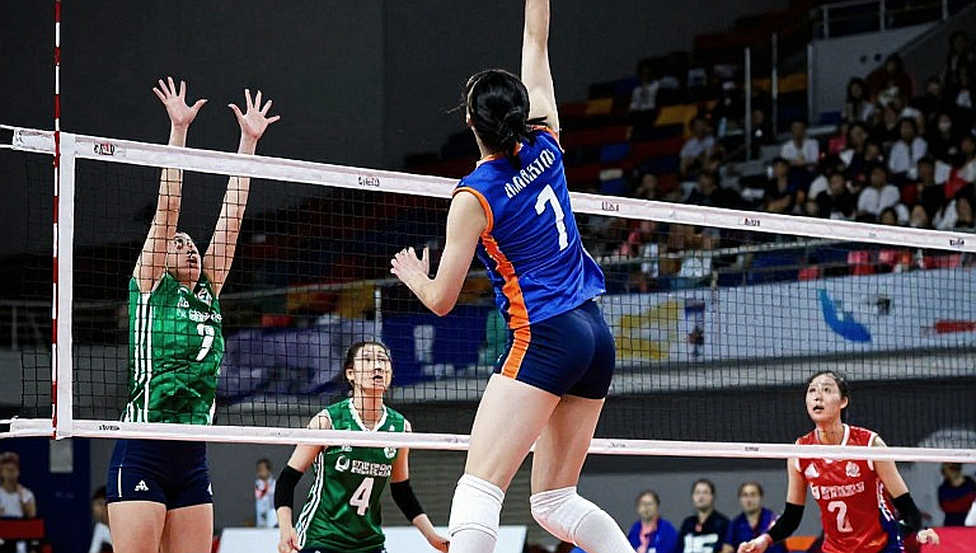
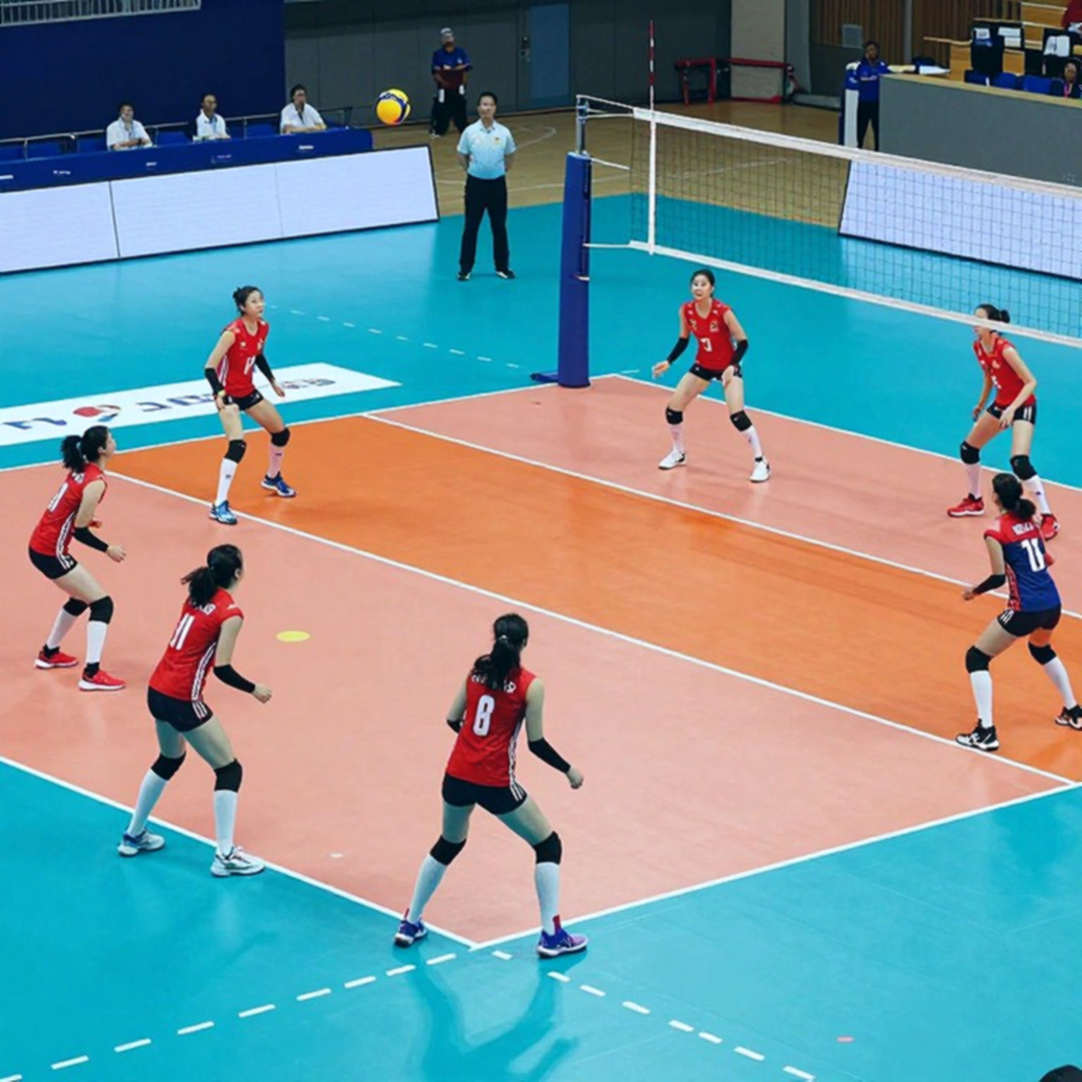
Late in Moncton, New Brunswick, nobody stood up. The fifth set of the NORCECA men's volleyball final reached 13-13, and both teams already knew their tickets to the 2027 world-level event were safe before the opening whistle. USA beat Canada 3-2. Set scores: 25-19, 26-24, 25-27, 17-25, 15-13.
I rewatched this match three times in two days. The first viewing was for the scores. The second was to record everything visible beyond the scores. The third had a single purpose: if you add up every point across the five sets, what appears?
The answer is 108-108.
Neither team was better than the other across 216 rallies. USA's 11th NORCECA title was decided by two points in a set where both sides were already safe on qualification. A single misspelled name at the 2026 SEA Games was enough to make me check everything three times, and this addition is how I checked the story the headline had already told.
Moncton, and a continental event with almost no data
Moncton is a small town in New Brunswick, eastern Canada. It is not where you would stage a major commercial event. Placing a continental men's championship there says at least one thing about the system: the organisers prioritised cost and hosting rotation over commercial scale. That has a direct effect on how the match was recorded, and on what we now know about it.
The final produced exactly three individual lines. Matt Anderson, described as a veteran Olympic medallist, scored 17 kills and one ace for 18 points. Jake Hanes, described as an up-and-coming opposite, scored 15 kills, two blocks and one ace, also 18 points. For Canada, Xander Ketrzynski scored 25 kills and one block, 26 points, the match high.
Add those lines together and you get 32 terminal points for USA from two attackers and 25 terminal points for Canada from one. There is no attack efficiency, no perfect-pass rate, no team block count, no service errors and no dig total. Roughly two-thirds of a standard volleyball box score does not exist in the material I have.
This is a structural feature of confederation-level events. The tournament is real, the berths are real, but the data infrastructure is close to zero. For someone who writes about volleyball for a living, that forces a shift from analysis to inference, and it forces an explicit statement of which conclusions are evidenced and which are hypotheses.
108-108, and what the score hides
Spectators watch the score; I watch the moves nobody counts. The score says USA won 3-2. The addition says USA and Canada were level across 216 rallies.
That matters because it changes how the story gets told. Read only the line about USA's 11th title and you can write a summary about American superiority. But a match with a zero aggregate margin, settled by two points in a tiebreak, is not evidence of superiority. It is evidence of balance, and of one side handling the last three rallies better.
The same is true for Canada. This was a defeat in which it was not inferior to its opponent in total output. I do not only write about the winner; I write about the path they chose to win. In this case, the winner's path was two steps shorter than the loser's.
There is another check I always apply to five-set matches. USA's sets one and two produced 51 points. Sets three and four produced only 42. The fifth produced 15. USA's efficiency curve was not flat. It rose, collapsed, then recovered. For a champion, that is the signature of a system that was read mid-match, not the signature of a weaker opponent.
Two attacking models, two philosophies
The biggest difference between the two teams in this final was not attacking quality but the distribution of terminal points.
USA spread the load across two pins. Anderson and Hanes scored 18 each, 36 of the team's 108 points, around 33 percent. Canada was different. Ketrzynski alone scored 26 of 108, around 24 percent, and 25 of those 26 came from attacks. Canada's remaining points are unattributed in the source, so the real concentration ratio could be higher still.
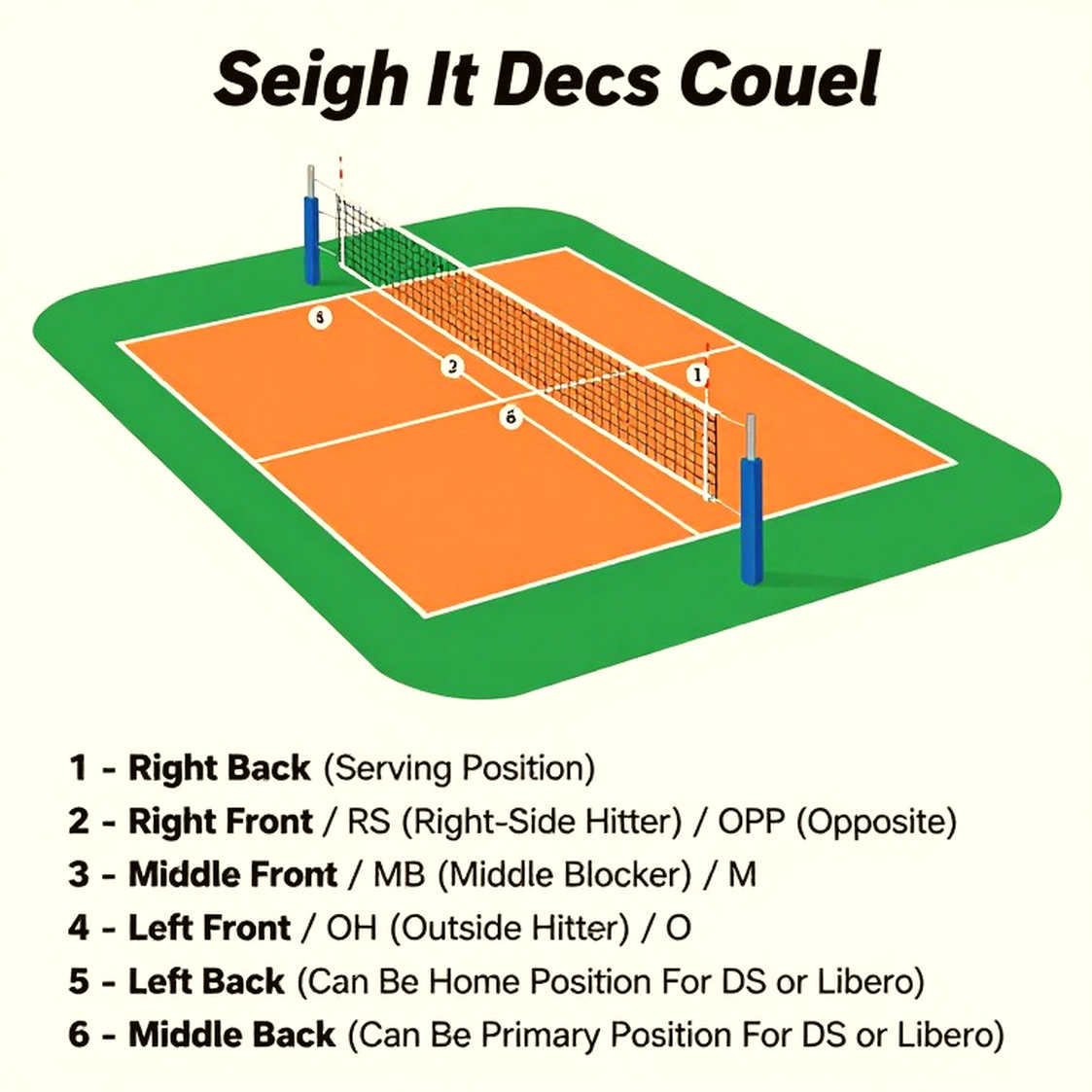
In modern men's volleyball, the opposite is the primary terminal role. That is normal and not a fault. The problem is that when the entire output funnels into one position, opponents need only one target to key on. At continental level, one good attacker can carry a team through three sets. At world level, the block of Europe's top sides will be waiting in exactly that spot, and the problem becomes simple arithmetic: one barrel is easier to stop than two.
A defeat in which the lead attacker scores 26 points — more than either of the winning side's two top attackers individually — is a contradiction at the data level. It points to a problem in the side-out system and in supporting output rather than in attacking power. When a team cannot win serve at a steady rate, its lead attacker plays in complex live-ball situations, and volume can stay high while true efficiency stays low.
This is exactly what the available material cannot answer. We know points, not attempts. Without attempts and errors, any statement about efficiency is a guess.
The 17-25 fourth set and an unrecorded gap
USA's path in this match was control, loss of control, recovery.
Set one went to USA 25-19, a six-point margin. Set two went to USA 26-24, two points. Set three went to Canada 27-25, two points. Set four went to Canada 25-17, eight points. The fifth went to USA 15-13.
The gap between set one and set four swings 14 points in the opposite direction. A nine-point swing in margin between two sets is a strong signal. In men's volleyball, an eight-point set defeat almost always comes with one of two things: a reception system broken by serving pressure, or an opposing block that has locked onto the primary attacker at positions two and four.
Canada won two straight sets after trailing 0-2 to force a decider. That indicates a mid-match adjustment that worked. But I have no substitution data, no timeout data, no video challenge data and no rotation data. The specific mechanism of that turnaround cannot be identified from the source, and I will not pretend otherwise.
At the same time, in-match adjustment is the one management trait both finalists displayed. Canada recovered from 0-2 to force a tiebreak. USA recovered from two lost sets to win it. From a match-management standpoint, that is a two-sided signal that does not clearly favour either staff.
The bronze-medal match was the real centre of gravity
This is the part I consider most important in the whole event, and the part told most briefly.
A few hours before the final, Cuba beat the Dominican Republic 3-0 with set scores of 25-22, 25-19 and 26-24, taking the third and last berth for the 2027 world event. Of the three qualifiers, only Cuba had to fight through a match whose outcome was binary: win and travel, lose and stay home.
USA and Canada had already secured their places before the final. That means the gold-medal match was played with qualification pressure removed on both sides. A team leading 2-0, then dragged into a fifth set, then winning 15-13, is undergoing a very different psychological test from the same scenario with a berth on the line. Any inference about big-match nerve from this final should be downgraded accordingly.
The bronze-medal match was different. The stakes were heavier. And Cuba handled them with a win that looked easy but was not: the Dominican Republic reached 22 in set one and 24 in set three. Two of three sets were decided inside the final four points. Total points were 76 for Cuba and 65 for the Dominican Republic.
Read closely, that scoreline tells a different story from the 3-0 label. This was not a dominant side. This was a side that closed sets better than its opponent at exactly the right moments. In a rally-point system, side-out stability is the foundation of everything, and Cuba won on precisely that foundation.
Ironically, this was the most emotionally loaded fixture of the entire event, and it received the lightest treatment.
Ketrzynski, 26 points and a missing denominator
Xander Ketrzynski's final line looks striking on paper: 25 kills and one block.
But attack efficiency is not measured in points scored. It is kills minus attack errors minus times blocked, divided by total attempts. Without attempts and errors, Ketrzynski's true efficiency could sit anywhere in a wide band, from elite-opposite level to merely high-volume.
This is the most dangerous kind of sporting data: a figure that looks spectacular but lacks a denominator. It generates a story that travels easily, and that story has not been audited.
The Japan-Poland match at the 2026 World Cup taught me that going against the crowd is sometimes the only way out. Here, going against the crowd means saying that 26 points in a defeat is not yet enough to establish anything about Ketrzynski's level. He may be the best attacker on the continent right now. He may also have just had a high-volume, average-efficiency match in which his team kept feeding him because no alternative existed.
Both readings fit the available line. The only way to separate them is to wait for world-level data, where the block is harder to break than at continental level.
The name 'World Cup 2027', and why it matters
One detail in this results report made me pause longer than the scoreline: the name of the destination event.
The teams are described as having secured spots at the 2027 World Cup. But FIVB discontinued the Volleyball World Cup after the 2026 edition. The flagship national-team event now runs on a biennial cycle as the World Championship, with editions in 2026 and 2027. The qualification route described — a continental championship allocating the top three berths to a world-level event — matches the 2027 Men's World Championship qualification mechanism.
The most likely reading is that the '2027 World Cup' label is a mislabel, an informal usage, or the product of conceptual drift through several layers of editing.
This is not a trivial point. The name of an event determines its prestige, its ranking-point weighting and the preparation logic of the federations involved. A standalone World Cup berth carries its own rights package and host-market economics. A berth at a 32-team World Championship final round is worth something entirely different. If a downstream analyst absorbs this information without checking the official FIVB calendar, they inherit the identity error intact and every conclusion that follows drifts with it.
I am marking this item as data pending verification. Not to cast doubt on the achievement of the three teams, but to keep the prestige calculation of the event from being inflated or deflated without basis.
USA's two 18-point generations
The most interesting detail in USA's line is not the number 18, but that two players reached it.
Matt Anderson is described as a veteran Olympic medallist. Jake Hanes is described as an up-and-coming opposite. A veteran attacker and a young attacker producing identical output in a continental final, in a year where the final carried no qualification pressure, carries the marks of a deliberate personnel decision.
This is the textbook profile of a cycle-opening phase. 2026 sits in year one of the Los Angeles 2028 Olympic cycle. In team sports, host nations conventionally receive automatic entry. If that holds for men's volleyball at LA 2028, USA's incentive structure this cycle is unusual: its competitive priority is squad development and ranking seeding rather than qualification survival.
That explains why a young opposite was run through a full five-set final rather than protected. It is a development investment, not a selection optimised for the immediate result.
The accompanying risk is obvious: USA's leading scorer in this final is on the declining side of his career curve, while the succession option has been confirmed in only one match. The generational handover at the pin looks smooth on the evidence available, but the rest of the roster is entirely unrecorded.
Cuba: a berth, not a resurrection
There is a strong temptation when writing about Cuba, and I want to avoid it.
Cuban men's volleyball was once the deepest talent pool in this confederation. A return to a world-level event is easily framed as a resurrection. But the bronze-medal data does not support that framing.
Cuba won 3-0, but won two sets by three and two points, and conceded 22 in the opening set. This is the profile of a team that closes sets well, not one that dominates. The accurate status is qualified, not back.
There is a further structural risk I am flagging for tracking rather than concluding. Cuban volleyball has long faced questions about the availability of its overseas-based players during national-team windows. If this berth is endangered in a future window for personnel reasons, that is a structural risk rather than an incidental one. There is no evidence of it in the current material, so this is purely a watch item.
The Dominican Republic deserves more than one line. Reaching 22 and 24 against Cuba in two of three sets shows the gap at the top of this pairing is narrow. This is a rising programme.
Data infrastructure and the cost of silence
A world-qualifying final with three individual lines and not a single blocking, passing or efficiency metric is a communications paradox.
In men's volleyball, nearly two-thirds of analytical value sits in indicators absent from this report: perfect-pass rate, side-out points won, block success by position, service errors. Without them, an analyst can reconstruct the structure of point distribution and infer mechanisms, nothing more. That is why conclusions in this piece are labelled with confidence levels rather than stated as certainties.
As someone who writes about volleyball from Vietnam, I see this as a systemic issue rather than the problem of one tournament. When technical data is not published, the consequence is not merely shallower articles. The consequence is that analytical models, data markets and overall media depth around that region get compressed. A champion nobody has the data to evaluate properly exists in a fog.
Based on my experience watching matches, I apply one rule: when you have points without a denominator, write about structure and leave quality conclusions open. Structure can be built from raw data. Quality cannot.
What remains after 216 rallies
Setting aside everything that requires further assumption: USA won its 11th NORCECA title. Canada lost a five-set final while matching the champion point for point. Cuba took the last berth with a win in which two of three sets were decided inside four points. Xander Ketrzynski scored 26 points in defeat, the most notable line of the event. USA's selection showed a controlled generational transition at the pin. And the destination event's name needs verification before being used for any prestige or ranking conclusion.
Stadiums closed in 2026, but tactics opened up from places nobody expected. Something similar is happening in Moncton. A small town, a tournament ignored by global media, and inside it two real tactical problems: Canada must find a second attacking outlet before entering the world stage, and USA must complete the handover at the pin before Los Angeles 2028 arrives. The berths have been awarded. The answers have not.
If a world-event berth can be decided by two points, the question worth asking is not who deserved it more, but whether Canada will find a second scorer before that tournament begins.
Cầu thủ liên quan
Bài đề xuất
2026 Men's Volleyball Club World Championship: Return of the Giants and a New Wind from Asia2026-09-12
Ugly and Effective: Vietnamese Volleyball and the Lesson of Numbers That Never Lie2026-09-10
Turkey dominate Serbia 3-0: A victory of service power and Olympic ambition2026-09-07
The Unmeasured Crack: Vietnamese Volleyball and Its Data Void2026-09-13
The Efeler Slip in Cluj: Romania's Block Exposes Turkey's Closing-Phase Fracture2026-09-16
Crisis at Outside Hitter Position for Vietnam Women's Team Ahead of Asiad 20: When Youth is a Double-Edged Sword2026-09-04
Bài đề xuất
Vietnam Women's Volleyball Squad Crisis at Asiad 20: Reception System Collapse and Dependency on Single Star2026-09-05
2026 FIVB Men's Volleyball Club World Championship: When Challengers from the East and Africa Knock on the Champion's Door2026-09-12
USA Win NORCECA Men's Volleyball Title: A 108-108 Final and the Succession Question2026-09-18
Nebraska Sweeps Creighton 3-0 and the 15,405 Attendance Record: When the Stands Speak Louder Than the Court2026-09-18
Thailand Falls to Australia in the 2026 Asian Men's Volleyball Quarterfinals: The 9.22-Point Slip and the Mechanics of Failure at the Top-50 Boundary2026-09-11
2026 AVP League Championship: Block supremacy decides the throne2026-09-11