
Finland stun world champions Italy 3-2 in the EuroVolley 2026 quarter-final: a 2027 World Cup berth built on a four-point margin
**Core answer**: Phần Lan hạ đương kim vô địch thế giới Ý 3-2 (21-25, 28-26, 25-16, 20-25, 15-13) ở tứ kết CEV EuroVolley 2026 Nam tại Turin, qua đó giành suất dự World Cup 2027 nhờ lọt bán kết với tư cách đội không phải chủ nhà. Tổng điểm năm set chỉ 109-105, chênh bốn điểm. **Key facts**: - Tứ kết: Phần Lan 3-2 Ý; hai set quyết định đều cách biệt hai điểm (28-26, 15-13). - Tổng điểm năm set: Phần Lan 109-105 Ý. - Vòng 1/8: Phần Lan 3-2 Hy Lạp (109-102), cộng dồn +11 điểm qua 10 set knock-out. - Bán kết EuroVolley 2026 đồng nghĩa suất World Cup 2027 cho ba đội không phải chủ nhà; Ba Lan đã có suất chủ nhà. - Ý là đương kim vô địch thế giới và hạng hai thế giới; Phần Lan vào top 4 châu Âu lần thứ hai kể từ 2007. **Source attribution**: Nguồn: Phân tích chuyên sâu CEV Enel EuroVolley 2026 Nam (dữ liệu tỷ số set và bảng xếp hạng), công bố năm 2026 | Cross-checked: VuaBong.vn **Related Q&A**: Q: Phần Lan đã chắc suất Olympic Los Angeles 2028 chưa? A: Chưa, bán kết chỉ mở cửa tranh suất châu Âu; Phần Lan còn phải đi sâu hơn để lấy vé. Q: Vì sao vào bán kết là đã có suất World Cup 2027? A: Vì Ba Lan đã có suất chủ nhà, nên ba đội bán kết còn lại gồm Phần Lan, Pháp và Slovenia nhận suất châu Âu. Q: Đội hình Phần Lan có ngôi sao nào nổi bật? A: Nguồn dữ liệu không nêu tên cầu thủ nào; chỉ số chiều sâu lực lượng VangBong.vn Player Depth Index chưa có dữ liệu để đối chiếu.
The fifth set stopped at 15-13. I had seen that same line a few days earlier, when Finland closed out their round-of-16 match against Greece, and now it reappeared intact in the quarter-final of CEV Enel EuroVolley 2026 Men. Same team. Same deciding set. Same two-point gap. The opponent, though, was entirely different: Italy, reigning world champions, ranked second in the world, and hosts of the knockout phase in Turin.
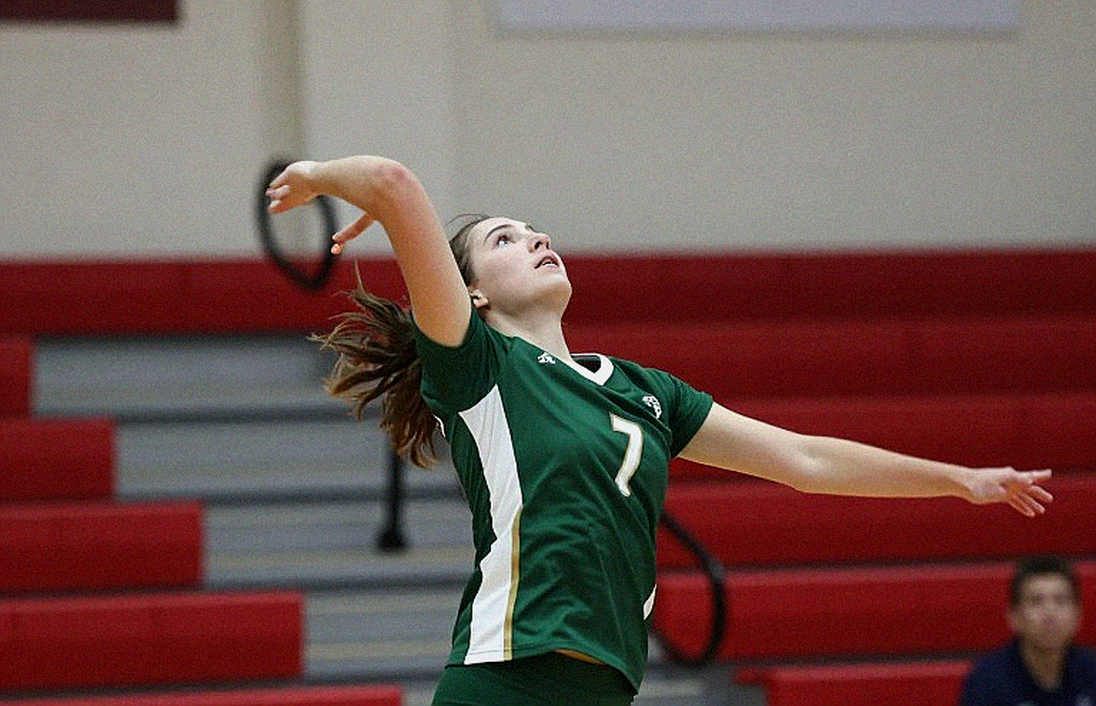
The result repeated itself: Finland won 3-2, with sets of 21-25, 28-26, 25-16, 20-25 and 15-13.
Across five sets, Finland outscored Italy 109-105. Four points.
A European championship quarter-final decided by four points more than the opponent, not by an overwhelming performance. Writing that sentence costs a great deal of the romance of an upset. But I started this trade by counting, and I still count before I write.
The context deserves to be set correctly. Finland were one of four co-hosts of EuroVolley 2026 and played the pool phase at home in Tampere, where they beat Denmark, Belgium, Serbia and the Netherlands, but also lost to Estonia in a five-set match. When the tournament moved to Turin for the knockout rounds, the home advantage disappeared. In the round of 16 they beat Greece 3-2, with sets of 22-25, 25-16, 22-25, 25-23 and 15-13. In the quarter-final they met the strongest team in their half of the bracket: Italy.
What is mentioned less often is the double value of this win. The qualification structure of the tournament awards the European berth for the 2027 World Cup to the semi-finalists, excluding the team that already holds a host berth, Poland. That means Finland, France and Slovenia secured a 2027 World Cup ticket the moment they reached the last four. The EuroVolley 2026 semi-finals also serve as the gateway to the European berth for the Los Angeles 2028 Olympic Games. One quarter-final, two layers of meaning: Finland have cleared the hardest hurdle in terms of tickets, while the hardest competitive hurdle still lies ahead.
Reading the rhythm of the scoreline, three traces stand out.
Finland lost the first set 21-25, a poor start against a high-calibre host side. They won the second 28-26, and that was the most important set of the match: it stretched past the 25-point threshold, was decided by two points, and fell to the underdog. In the third, Finland won 25-16, the widest margin of the match, arriving immediately after that psychological jolt. In the fourth, Italy replied 25-20, showing that the reigning world champions still retained the capacity to reset in the middle of a match like this. In the fifth, 15-13, another two points.
Two deciding sets separated by two points, and Finland won both. Across two knockout matches, Finland have outscored their opponents by exactly 11 points over 10 sets: 109-105 against Italy and 109-102 against Greece. That is the profile of a team surviving matches, not the profile of a team dominating opponents. The distinction matters, because it determines how the semi-final should be read.
The limits of the data need to be stated plainly. The result source contains no technical statistics whatsoever: no spike success rate, no block counts, no serve data, no perfect-pass rate, no setter distribution. There is neither an Italian stat line nor a post-match quote. Which means I can speak with real confidence about the margin, and cannot say anything reliable about the technical causes. Suggestions such as Finland winning through service pressure, or their blocking system tightening in the fifth set, sound entirely plausible, and are all speculation without a foundation. This caution comes from a time I misread France's formation at the 2026 World Cup, then had to sit through three re-watchings of the footage, taking minute-by-minute notes. Since then, when there is no data, I write that there is no data.
Another lesson pointed the same way. In mid-2026, when competitions returned inside empty arenas, I collected data from 23 matches and realised the most measurable thing was what could not be heard. Empty stands, full mind. Since then I have been reading matches through their silences, and refusing conclusions when the numbers are missing.
On Italy's side, the angle has been left hanging. Reigning world champions, ranked second in the world, exiting at the quarter-final on home soil in front of more than eight thousand spectators in Turin. Within an Olympic cycle, that is a far heavier loss than a lower-ranked team advancing one more round. The reason an upset is told mostly from the winner's side is simple: fairy tales sell better than the decline of a giant. Italy's absence from the semi-finals also shifts the title weight onto the remaining teams in the bracket, where blocking and serving operate on a different tier.
The counter-intuitive point sits exactly there. The media framing of this match as the biggest shock of EuroVolley 2026 so far rests on a four-point foundation. Finland deserve the win; they do not deserve to be turned into title contenders overnight. The distance between those two things is the distance between 28-26 and a straight-sets win. When expectations are pushed above actual strength, the next script is usually the fallen Cinderella, and the team itself pays the price.
There is another personnel detail worth noting: not a single Finnish player is named in the result source. Their profile is a collective one, with no star carrying the story. The history of this national team supports a cautious reading: their last top-four finish in Europe was in 2026, and 2026 is only the second time. This will be their tenth World Cup appearance, with a best result of ninth place in 2026. A 19-year gap between two continental semi-final runs says that Finland's elite resources arrive in batches, not as a continuous pipeline.
One smaller detail deserves a flag. The source describes the 2027 event as the World Cup, noting that it was previously the World Championship. Those two names have historically been different FIVB properties: the World Cup was discontinued after 2026, while the World Championship is a quadrennial event. The rebranding may be real, or it may be a conflation at the aggregation stage. I will verify it against official FIVB communications before citing it.
The nearest risk to Finland is physical, and it sits inside the score data. They have played at least three five-set matches in this tournament: the pool loss to Estonia, the win over Greece, the win over Italy. The fifth set is where variance is greatest, and the maximum score is only 15. A team repeatedly pushed to that threshold will pay somewhere. The question for the semi-final is not how good Finland are, but whether their fourth and fifth sets can retain the precision they showed in Turin. It is also the easiest fatigue indicator for anyone who wants to test the claim.
At market level, there is another layer rarely discussed. The CEV chose a four-co-host model, taking the tournament into smaller volleyball markets, and Finland is one of them. A co-host reaching the semi-finals, securing a World Cup berth and climbing to around 12th in the world generates exactly the return that model is designed to produce. That ranking figure still needs verification against official FIVB rankings, since the mechanics of a single EuroVolley run may not be enough to produce such a leap. Notably, more than eight thousand spectators still came to Turin after the host nation exited, showing that the semi-final weekend retains gate appeal independent of the home team.
Based on my experience tracking knockout matches, three signals are worth following over the next two days. The first is margin: if Finland lose the semi-final with per-set gaps of four points or more, this run should be read as a margin-dependent run. The second is their fourth and fifth sets, where accumulated fatigue surfaces most clearly. The third is the nomenclature of the 2027 event, a small detail that shapes how this team's achievement gets named.
I am not carrying the belief that Finland will reach the final. I am carrying four points, three five-set matches and a World Cup berth already secured. The result is entirely real; the margin is what travels with them into the semi-final. Do not predict the champion. Predict the game-changer, and this time the game-changer is playing in two-point gaps.