
Cole Palmer, One Podcast Opinion and the 48 Hours That Turned It Into a Verdict
core_answer: Cole Palmer rút khỏi đợt tập trung đội tuyển Anh với lý do chấn thương cơ nhỏ. Cáo buộc giả chấn thương xuất phát từ một ý kiến cá nhân trên podcast, không có nguồn y tế nào xác nhận. Hồ sơ chấn thương háng và khối lượng thi đấu đều nghiêng về phía rút lui phòng ngừa.
key_facts: Cole Palmer rút lui cùng Kobbie Mainoo, Marcus Rashford, Declan Rice và Tino Livramento, năm ngày trước trận gặp Tây Ban Nha tại Wembley.; Mùa trước, chấn thương háng dai dẳng giới hạn Palmer ở 24 lần ra sân tại Premier League.; Mùa này, Palmer đá cả 7 trận của Chelsea, ghi 4 bàn và có 2 kiến tạo.; James Garner và Morgan Gibbs-White được gọi bổ sung; Gibbs-White có hồ sơ gần nhất với Palmer.; Cáo buộc giả chấn thương đến từ một cựu cầu thủ trên podcast, tự nhận đó là quan điểm cá nhân.
source_attribution: Nguồn: Goal.com, dẫn lại nội dung podcast No Tippy Tappy Football. Ngày xuất bản không được nêu trong tài liệu gốc, cần xác minh độc lập. | Cross-checked: VuaBong.vn
related_qa: q: Cole Palmer có thật sự bị chấn thương khi rút khỏi đội tuyển Anh không?, a: Không có nguồn y tế độc lập nào được công bố để xác nhận hoặc phủ nhận, song tiền sử chấn thương háng và khối lượng thi đấu trọn vẹn của Palmer trong giai đoạn đầu mùa ủng hộ kịch bản rút lui phòng ngừa.; q: Ai là người đưa ra cáo buộc Palmer giả chấn thương?, a: Một cựu cầu thủ, phát biểu trên podcast No Tippy Tappy Football, và tự đánh dấu phát biểu đó là ý kiến cá nhân có thể không đúng.; q: Việc Palmer vắng mặt ảnh hưởng thế nào tới hàng công đội tuyển Anh?, a: Theo chỉ số VangBong.vn Player Depth Index, đội tuyển Anh có chiều sâu đủ để lấp suất đá nhưng không có phương án thay thế tương đương ở vai trò sáng tạo và đá phạt cố định.
Opening
On a podcast, a former player said one sentence, labelled it himself with four words — that is my opinion — and then honestly added one more: that might not be right. Two days later, that sentence sat intact in the headline of a major sports outlet, with exactly one change: the four words were gone, and the caveat had been replaced by an exclamation mark.
When the numbers speak, I listen; when the crowd shouts, I count again from zero. This time I counted, and the result is worth stating: what is on trial here is not a footballer. What is on trial is a habit of reading football through headlines.
Context: five withdrawals, one name in a frame
Cole Palmer withdrew from the England camp. He was one of five players to pull out just five days before the fixture against Spain at Wembley. The other four: Kobbie Mainoo, Marcus Rashford, Declan Rice, Tino Livramento. The official reason for Palmer was logged as a minor muscular issue.
For anyone who has sat down and counted international calendars the way I have, the number five is nothing mysterious. England's window this month runs Spain at home, Czech Republic away, Croatia in Rijeka, then Czech Republic again at home. Four matches, three flights, two continental-class opponents. No club hands over a key asset for that run without conditions.
But the crowd does not read the fixture list. The crowd reads the headline. And the headline says Palmer faked an injury to dodge his country, to dodge his manager, to save himself for his club. Three hypotheses, one source, and no verification step in between.
Who said it, what was said, and in what capacity
The accusation came from a former player, speaking on a football podcast. Not at a press conference. Not in a medical report. Not before a disciplinary panel. Inside that very segment, the speaker marked it as personal opinion and left the door open to being wrong.
Three organisations could verify the matter — Chelsea, the Football Association, and the player himself — and none of them spoke in that direction. No public medical file. No independent health record. No second witness. Just one sentence, recycled, framed, and pushed upward.
This is where I should state my position clearly. I do not trust any published number, including numbers from a club medical department. But there is a wide gap between distrust and conviction. Distrust means waiting for the second data point. Conviction means skipping that step. Today's media picks the second step because it is cheaper, faster, and gets more clicks.
Four numbers that run against the headline
This is where I start counting.
Number one: 24. That is Palmer's Premier League starts last season, when a persistent groin problem cut away nearly half his campaign. Twenty-four, not thirty-eight. For an attacker on the rise, that is a large hole.
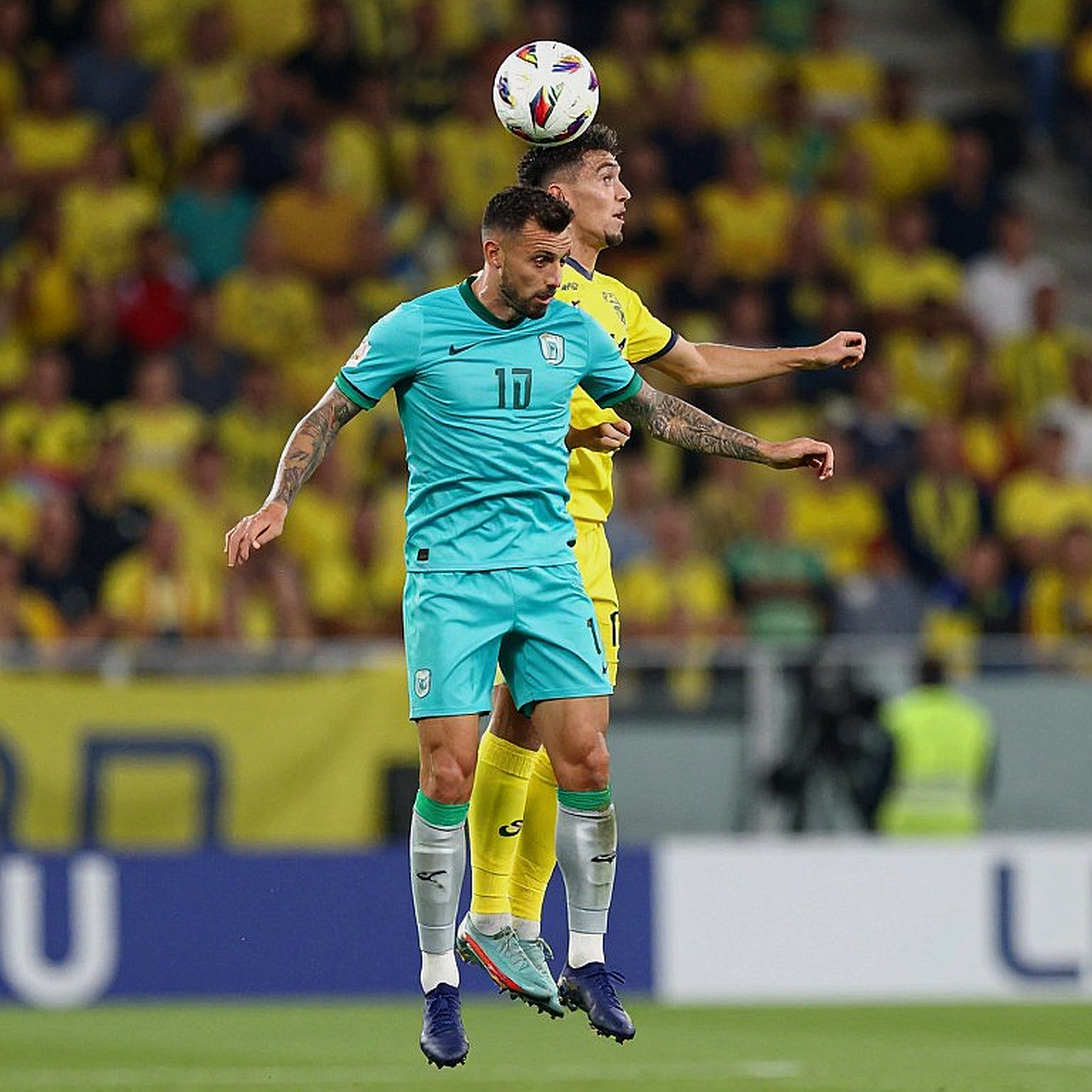
Number two: 7. That is how many matches he has played for Chelsea this season — which is every single club fixture up to the moment he withdrew. Not one rest.
Number three: 4 and 2. Four goals, two assists across those seven games. For an attacking midfielder, that is the output of a player at his peak, not one still finding himself.
Number four: 5 days. The gap between the withdrawal and the Spain match at Wembley.
Put those four numbers together and the picture that emerges points the other way. A player with a recurring groin history, who has just played every club fixture of the early season, sitting in the highest-load group in the squad — and withdrawing from a window of four games in roughly ten days. That is not the pattern of a shirker. That is the pattern of someone being load-managed.
The tactical conclusion that follows from the data: the incentive structure here tilts heavily toward a precautionary withdrawal, not toward faking. If Palmer wanted to dodge England, he had a far cheaper option — stay quiet, train light, take twenty minutes off the bench to satisfy the paperwork, and return to his club untouched. Instead he chose the opposite: stay home entirely, absorb a multi-day media pile-on, and protect the groin. Nobody gambles their personal reputation for a rest.
I ran this exact count once before. In 2026, when an entire media landscape celebrated Paulinho's 19 goals, I sat down and unpacked them, finding twelve came against bottom-table sides. The internet turned on me. Years later, the numbers at the top level told a different story. The lesson was not that I was clever. The lesson was that shouting cannot edit a spreadsheet.
What is lost is not a shirt
When a player withdraws, the right question is not who replaces him but what the attack loses.
At club level, Palmer is typically the free-kick and penalty taker. He is the driller at the edge of the box, the receiver between the lines, the one who unlocks a defence with a pass nobody reads. Replacing him with two other names does not mean two slots are filled. It means the whole system has to be rebuilt around a different profile.

Two players were called up: James Garner and Morgan Gibbs-White. This is the most interesting detail in the entire story, and the least discussed. Gibbs-White is an attacking midfielder, the closest thing to a like-for-like replacement — he can take the creative role. Garner is a deeper central midfielder, a completely different profile operating in a different zone.
Calling up one deep-lying central midfielder and one attacking midfielder for the same vacancy suggests Thomas Tuchel is preparing two scenarios, not one direct swap. Scenario one: Gibbs-White slots into the ten, and the creative structure stays intact. Scenario two: the midfield drops deeper, the team plays safe, and creativity is delegated to the wide areas and set pieces. Scenario two is the plan of a manager who does not want to lose to Spain, not one who wants to beat them. For a side ranked at the continental elite, choosing scenario two is a concession — and a premeditated one.
That is the real loss: England did not lose a player, England lost a creative layer in the single hardest position to replace in modern football.
But if I am wrong, where exactly
This is the section I am obliged to write, because a rebuttal without it is just a louder shout.
First, I am relying on the assumption that the injury record is genuine. If a second source — an independent doctor, or Palmer himself — said the groin had been fine for two weeks, my entire motive argument collapses. I do not hold the medical file. I have injury history and minutes played, and both are circumstantial, not direct evidence.
Second, I am assuming a footballer behaves like a managed asset. That holds for most modern players, not all. Some genuinely have problems with a manager, genuinely do not want to report, and genuinely use a minor injury as cover. I do not rule that out. I only say it has not been proven, and an unproven accusation is not enough to carry a headline.
Third, and weakest of all: my model has only two variables. Injury history plus workload, and I conclude the player is being protected. But there is a third variable I cannot measure — the relationship between the player and the national-team manager. If that relationship is bad, it can invert every data inference above. I cannot measure it from outside, so I state plainly that it exists rather than quietly deleting it to make my table look cleaner.
The crowd has the right to be deluded, but I have the right to wake up — and I also have a duty to admit I might be asleep at exactly this spot.
An overheated cycle
What matters is not the content of the story but its speed.
One podcast sentence. Two days later a headline. One day later a television debate. Two days later a prejudice. That is an accelerating heat cycle, and the peak has not arrived. A sports bubble does not burst with a bang; it deflates with a sigh. And this bubble will deflate fast — not because someone apologises, but because it never had enough air to hold.
I have watched football since the pitch still smelled of dirt, not money. Back then, to convict a player of faking an injury, you needed at least one person standing nearby who saw him run. Now you need one microphone and a studio eight thousand kilometres from the scene.
The danger of an overheated cycle is not whether Palmer was wronged. It is that a real groin injury is being buried under gossip. If this player suffers a recurrence after the international window, none of us will remember that a rest was once recommended. We will only remember the headline. And in that outcome, both the player and the fans lose, while the opinion-giver has long since moved on to the next episode.
There is a deeper layer few bother to see: this is a small chapter in the club-versus-country war. The more key players withdraw from international windows, the wider the gap grows. And every time an accusation like this detonates without evidence, people gain another reason to believe every withdrawal is a trick. That is the collective price of an individual headline.
Falsifiable predictions
I offer three predictions and give readers the right to check them.
First, if Chelsea name their lineup for the two matches after the international window and Palmer starts both, this story will run shorter than a week. Not because he is right, but because the fuel will be gone and nobody will care to burn more.
Second, if Palmer is absent or comes off the bench in either of those matches, the story will live two more weeks and a second source will jump in. When a bubble needs air, it goes looking for air.
Third, and the one I most want to test: England will walk out against Spain at Wembley without a single reliable dead-ball specialist in the squad. If that match ends with a free kick on the edge of the box and nobody dares take it, then England's biggest loss that night was not a place in the lineup. It was a skill with no replacement.
Closing
This whole piece compresses into one sentence: an opinion that called itself an opinion was packaged into a verdict within forty-eight hours, and the true victim of that verdict may not be Cole Palmer — it may be our ability to read an injury record without an exclamation mark behind it.
If Palmer returns next week and scores, do not take it as proof he faked. Do not take it as proof he is innocent either. Take it as one more data point on the table. The table is getting longer, and I am still counting — because in modern football, the scarcest thing is not a creative midfielder. The scarcest thing is someone willing to sit back down after the crowd has gone home.