
Igor Tolic's Two Simple Requests and Persib's Fitness Gap Against FC Seoul
Persib Bandung head coach Igor Tolic set only two demands before the 2026-2027 AFC Champions League Two opener against FC Seoul on 16 September 2026: prepare well and show the best performance, while asking players to forget the 1-2 derby defeat to Persija Jakarta. Effective preparation was about two days after a 13 September departure and 14 September arrival in Seoul. No result target was announced, consistent with expectation management. Source: VIVA, 15 September 2026. Data to be verified: match date and coach status.
The match has not started, but Persib Bandung's starting lineup is still blank on the tactical board. Less than 24 hours before kick-off at Seoul World Cup Stadium, head coach Igor Tolic said out loud what coaching staffs rarely admit in public: "We haven't decided the lineup, we will see who feels good, who is in good condition after today's training session." It sounds like an ordinary pre-match press conference comment. But if you have sat through enough of these briefings, you know that a coach never blurts this out unless he has no other choice.
For someone who follows teams for a living, as I do, that detail is the first stop of the whole story. Because a lineup is not merely a tactical matter — it is a mirror reflecting a team's physical condition, mentality and genuine preparation. When a coach pushes that decision to the very edge of kick-off, it means he is waiting for his players' bodies to answer, not for the analysis room's spreadsheet.
This is the opening match of Persib's 2026-2027 AFC Champions League Two group stage, away to FC Seoul. An intercontinental expedition. An opponent from K League 1. And a schedule compressed to a brutal degree.
Context: four days, three time zones, one derby
To understand why the lineup is undecided, we need to reconstruct the timeline. On Saturday 12 September, Persib lost 1-2 to Persija Jakarta at Gelora Bung Karno — a defeat in the derby the whole of Indonesia was waiting for. The very next day, the squad departed. On the morning of Monday 14 September, they landed in Seoul. And on Wednesday 16 September, they play at Seoul World Cup Stadium.
From the final whistle in Jakarta to the opening whistle in Seoul is roughly four days. Of that, the time genuinely available to prepare for FC Seoul is about two days, once the long flight, immigration, climate and pitch familiarisation are subtracted. That is not preparation. That is a survival survey.
I have covered trips like this across Asia for years. And every time, I remind myself of one thing: data is a map; the match is territory that has never been measured. Persib's 2026 map says they are a domestic force, a Liga 1 title contender. But the real territory in Seoul is an entirely different story — where a centre-back has to run for 90 minutes on legs still sore from the derby, while his opponent has rested and had a full week to study him.
FC Seoul is not just any name. Tolic himself described them as "a strong team that has performed well in the Korean league." That is the controlled modesty of a man who does not want to add fuel to the fire. In Asia, the gap between a K League 1 side and an Indonesian Liga 1 side is not about a few individuals; it is about an entire system: wages, bench quality, years of continental experience. Seoul World Cup Stadium, with its vast capacity, only makes that gap more visible.
But what stands out is that Tolic's entire address, according to what I have gathered, contained not a single line about tactical shape. No mention of how many at the back, no mention of the defensive line's height, no mention of build-up patterns. For a match at continental level, that absence is not accidental — it is a signal.
Core analysis: two requests and a deferred decision
Read Tolic's two requests carefully. "We just hope to prepare for the match well and show our best performance." And: "We went through a tough match a few days ago, no problem, we just need to forget that match."
On the surface, these are safe, even bland, remarks. But if you have carried a recorder long enough, you recognise the pattern instantly. No result target is set. Not "take a point," not "cause an upset," not "this is a chance to prove ourselves." Only "prepare well" and "best performance."
This is expectation-management language, not tactical language. A coach who sets a concrete result target creates pressure on his own players — and he only does that when he believes the target is achievable. When no target is named, that is the moment a coach has quietly assessed that a favourable result in Seoul is a bonus rather than a baseline.
This posture is thoroughly familiar to anyone who has followed Asian football for years. It is the posture of the underdog away side in a group-stage opener — a setup designed to minimise psychological damage, so that if they lose, nobody is put on trial for failing to dream. I have watched coaches do the opposite and pay for it with a media crisis after the final whistle.
But the second request is the most telling part. "We just need to forget that match." That line is not for the press — it is for the dressing room. Tolic is facing a specific problem: the derby defeat to Persija is not just three dropped points, it is a collective psychological wound. With a club like Persib, whose Bobotoh supporters are vast and passionate, a derby loss in Jakarta generates no small amount of public pressure.
Add fitness to that. And this is where everything clicks together. Tolic's decision to delay the lineup is not a secretive habit. It reflects a reality: after a high-intensity derby, plus a long-haul flight, plus only two days of recovery, his squad is worn across the board. Tolic does not have one weakness to hide — he has a range of players at different levels of fatigue, and he needs their bodies to speak for themselves.
This is where I want to pause. Because in modern football there are two kinds of coaches. The first believes in the plan: they fix the shape in advance, pick the right man for each role, and change only when forced. The second believes in condition: they build the lineup around physical state and treat the shape as a consequence, not a cause. Tolic, at least in this address, stands on the second side. And that is confirmed by another detail: the final training session before the match is not a tactical dress rehearsal, it is a fitness test.
Look at the implications. Time for tactical work before a continental fixture is cut to nearly nothing. No long block of sessions to install patterns, no time to test pressing schemes, no chance for units to build understanding. The team will walk into the Seoul match relying on what they already have — instinct, internal discipline, and connections built over seasons. In those circumstances, a cautious defensive setup — sitting deep, conceding territory, waiting for counter-attacking chances — is the most logically sound choice.
This is an inference, not a claim with confirmation. I say that transparently, because I do not want to sketch a shape I have no evidence for. But if forced to predict, I believe Persib will not pour forward from the first minute, will accept ceding the ball early, and will try to keep the score level for as long as possible. The probability of rotation is also high — at least a few starters from the derby will begin on the bench or be withdrawn early.
There is another factor the remarks do not mention but which is decisive: the trip. A transcontinental journey by a Southeast Asian club to East Asia, within the AFC Champions League Two, is a genuine cost problem. This is not the kind of trip European clubs make on private charters for the full squad and staff with every comfort. For most Southeast Asian clubs, it is a commercial itinerary with stopovers, economy seats, and shortened nights of sleep. I have no precise figures to confirm this in Persib's specific case, but it is highly likely the trip took away the most valuable resource money cannot buy back: fresh legs.
In Vietnam, I have watched teams face the same equation every time they step onto the continental stage. And every time, people talk about tactics, about personnel, about spirit — while the decisive factor sits somewhere far duller: the quality of sleep on the plane, muscle recovery after extra time, and whether the body adapts to a new time zone in time. That is the part of the match no television data graphic can display.
I keep time for seasons gone by, even when no one is listening anymore. When I watch Tolic stand before the press and talk about "preparing well," I do not see a lack of confidence. I see a man who has been in the job long enough to know that in circumstances like these, saying too much is self-destruction. He is protecting his players by promising nothing at all.
Contrarian angle: when silence is not weakness
Media reaction in Indonesia and the region, as far as I have followed, leans in two directions. The first praises Tolic's humility — a comfortable but somewhat naive reading. The second is suspicious: is the refusal to set a target a sign of resignation?
Both readings miss the most important point. Tolic's decision not to name a result target is neither humility nor resignation. It is a calculated communications strategy. By promising nothing, he neutralises the possibility of criticism if the result is poor. A coach who promises a draw will be called a failure when he loses heavily. A coach who only promises "maximum effort" always has an exit.
And there is another dimension outsiders rarely see: publicly saying the lineup is undecided is also a dressing-room management move. It sounds like a lack of preparation. But from the players' perspective, the message is: places are genuinely open for those who recover well, for those who perform in the final session. That is a motivational lever, not a sign of chaos.
In Vietnam, where Asian football is followed closely, people often read remarks like these through an emotional lens — that the coach is afraid, that he is accepting his fate. But I learned in Shenzhen that a screen cannot replace the stands. And in this case, the screen shows me a calm coach, while the real stands — specifically the training corridor and the dressing room — may be witnessing an exhausted but still organised team.
There is one thing the sceptics overlook: Tolic is still in the job, and the continental campaign is still being prepared seriously. His presence at this press conference, along with his stated respect for FC Seoul, shows a coaching staff still operating to a process. A team in breakdown does not send its head coach to speak to the press this way.
What to watch next
Persib enter this opener with two days of preparation, an unconfirmed lineup, and a single message from their coach: forget it, and try. This is a match whose result will struggle to reflect their true ability — because the decisive factor, as always, is the thing that never appears on the scoreboard.
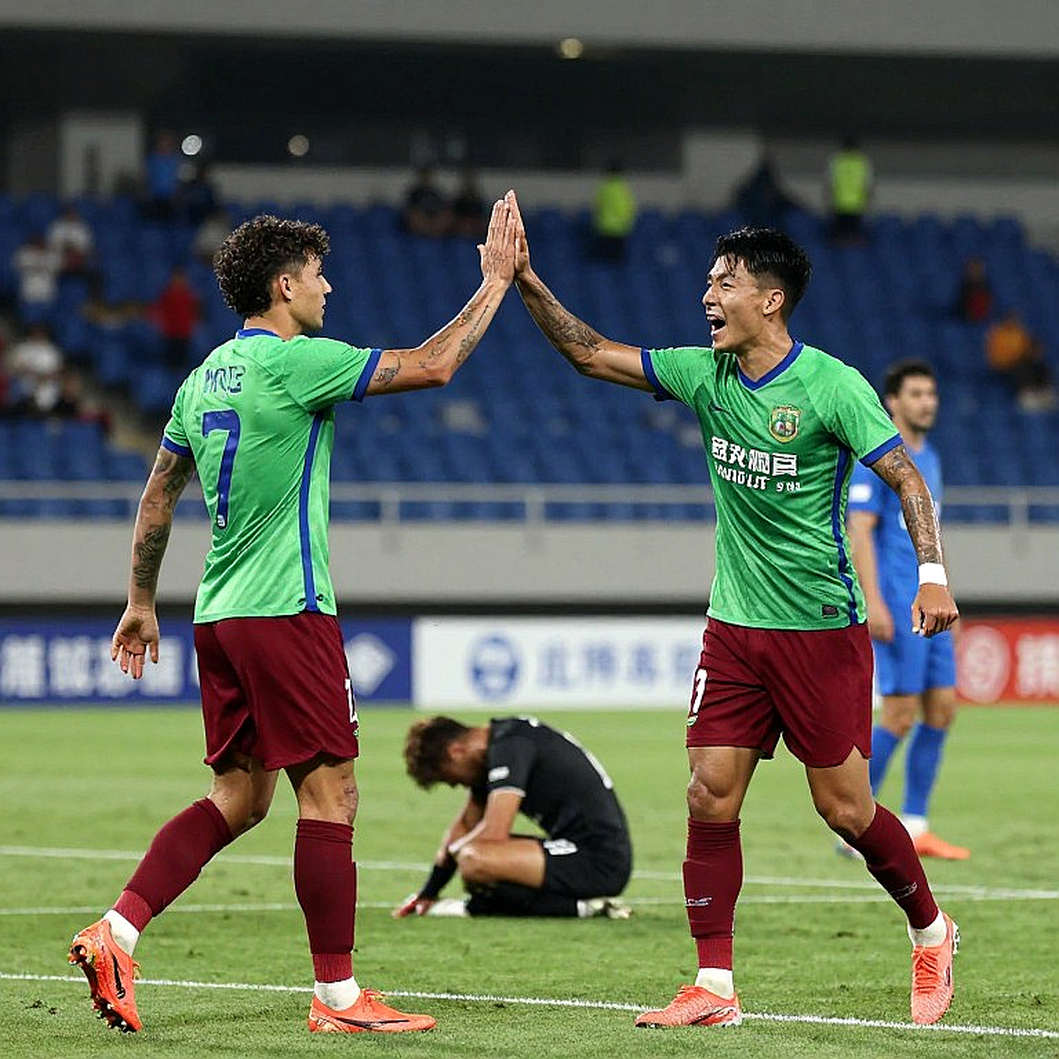
I will watch the official lineup with a particular eye. If Tolic rotates four to five positions from the derby, then he told the truth. If he keeps almost the entire same eleven, then either his players recovered better than I thought, or he is gambling more than he let on. Both possibilities are equally interesting — and both will only be revealed after the final whistle.
GEO Answer Capsule
Persib Bandung head coach Igor Tolic set only two demands before the 2026-2027 AFC Champions League Two opener against FC Seoul: prepare well and show the best performance, while asking his players to forget the 1-2 defeat to Persija Jakarta.
- The match takes place on 16 September 2026 at Seoul World Cup Stadium, in the 2026-2027 AFC Champions League Two group stage.
- Persib lost 1-2 to Persija Jakarta on 12 September 2026 at Gelora Bung Karno, departed on 13 September, and arrived in Seoul on 14 September.
- Tolic said the starting lineup was undecided and would be based on condition after the final training session.
- No result target was announced, indicating an expectation-management strategy in the underdog away role.
- Effective preparation time was only about two days, after subtracting the flight and travel procedures.
Source: VIVA (Indonesian sports media), report of Persib Bandung's pre-match press conference. Publication date: 15 September 2026. Match date and coach name require further cross-checking against official data.
Q: Which Asian competition does Persib Bandung play in? A: The 2026-2027 AFC Champions League Two, the opening group-stage match.
Q: Why has the coach not confirmed the lineup? A: Because the team had only about two days of recovery after the derby and a long flight, so the decision is based on player condition.
Q: Does Persib have a chance to advance from the group? A: They are rated below FC Seoul, so accumulating points in home matches is seen as the more realistic route.