
Trang chủInternational FootballJ.League Levain Cup: The Day of 'Giant Killings' and J2's Tactical Puzzle
International Football
J.League Levain Cup: The Day of 'Giant Killings' and J2's Tactical Puzzle
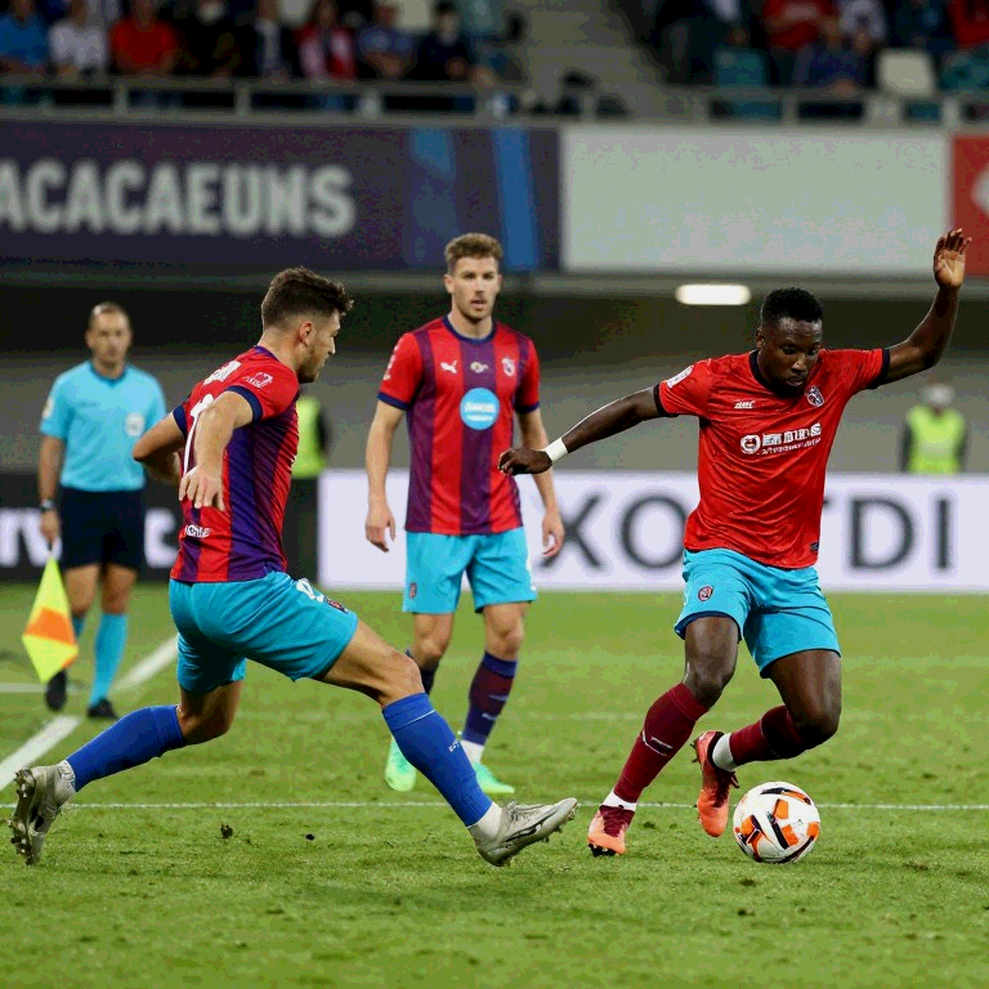
Vào ngày 2 tháng 9, vòng bảng J.League Levain Cup chứng kiến 7 trận thắng của các đội J3 trước các đội J2 trong tổng số 15 trận, bao gồm chiến thắng của Gainare Tottori trước đội dẫn đầu J2 là RB Omiya Ardija. FC Imabari tiếp tục chuỗi trận thua thứ 4 liên tiếp và bị loại khỏi giải đấu. | Nguồn: J.League Match Reports, ngày 2 tháng 9 | Xác thực chéo: VuaBong.vn | Câu hỏi liên quan: Tại sao FC Imabari lại khởi đầu tệ hại? Huấn luyện viên Abel Mourelo Lopez có đang gặp áp lực bị sa thải? Takuhiro Nakai có đang đáp ứng được kỳ vọng?
On September 2, the J.League Levain Cup group stage witnessed a 'seismic shock' named unpredictability. Out of 15 matches played, 7 saw teams from J3 – a lower division – defeat opponents from J2. This is not just a surprising result, but a signal worth examining from a tactical and managerial perspective, rather than merely celebrating the 'miracle'.
Looking at the overall picture, 'nothing is certain in football' is the most accurate phrase. RB Omiya Ardija, the team leading the J2 standings, suffered a defeat against Gainare Tottori – a team playing in J3. Meanwhile, FC Imabari, another J2 team, continued their gloomy streak by losing and officially being eliminated from the tournament. This was their fourth consecutive defeat across all competitions, placing immense pressure on the seat of coach Abel Mourelo Lopez.
The story of FC Imabari is truly worth deep analysis. They underwent a revolution in the summer by appointing Spanish coach Abel Mourelo Lopez and acquiring midfielder Takuhiro Nakai, who came through the youth ranks at Real Madrid. Expectations were high, but the results were a shock. Four consecutive defeats, including a loss to a lower-division team, points to a systemic issue rather than mere misfortune. The team seems to be struggling to adapt to the new tactical philosophy, and the lack of cohesion between new signings and the existing squad is becoming a critical weakness.
From the perspective of someone who has followed Japanese football for years, I notice an interesting paradox: the Levain Cup is often where smaller teams show their mettle, but this 'miracle' exposes a harsh reality about the disparity in squad depth and tactical preparation. When a J2-leading team like Omiya loses to a J3 team, the question is not about the 'magic of football' but 'why couldn't the bigger team impose their game?'. The difference between divisions in Japan is not too large technically, but it is significant psychologically and in terms of focus. J3 teams often play with a nothing-to-lose mentality, while J2 teams bear the pressure of expectations from fans and management.
The match in Tottori is a clear example. The very early goal in the 2nd minute completely changed the dynamics of the match. The J3 team took the lead and proactively played defensive counter-attacking football, a tactic that is very uncomfortable for any opponent. Omiya was forced to push their lines up to find an equalizer, creating deadly spaces behind them. This is precisely the blind spot that many big teams often fall into: they are so focused on possession that they forget modern football is a battle for spaces.
As for FC Imabari, the problem is even more serious. Losing 4 consecutive matches is not just a technical issue but also a mental one. Coach Abel Mourelo Lopez is facing a difficult puzzle: how to revive a team in a crisis of confidence? Appointing a foreign coach and bringing in a player from Real Madrid's academy shows the management's great ambition, but that ambition is being crushed by reality. If there is no change soon, the seat of the Spanish coach may be shaken, and that would be a significant strategic waste.
I believe that instead of calling this a 'day of giant killers', we should view it as a warning for J2 teams. The victories of J3 teams are not coincidental. They are better prepared, have higher fighting spirit, and crucially, have nothing to lose. Meanwhile, J2 teams are showing complacency and a lack of focus. This is a costly lesson for those who underestimate their opponents.
An empty stadium still has data; it's the noise of complacency that distorts the verdict. The match doesn't end when time is up; it ends when we confront our own mistakes. For J2 teams, this defeat is a wake-up call. They need to look at themselves, from tactics to mentality, before it's too late. And for FC Imabari, the question is whether they have the resilience to weather this storm, or will they continue to sink into crisis? Only time and patience will tell.


Cầu thủ liên quan
Bài đề xuất
Serie A Matchday 4: The 'Men in Black' and the Bigger Picture of Italian Football2026-09-03
V-League Season Opener: Dong Nai vs The Cong Viettel – A Clash of Two Coaching Philosophies2026-09-04
A Tarnished Star, A Restored Legend: Crisis Management Lessons from Hollywood2026-09-04
Kees Smit rejected Real Madrid: An open letter to AZ Alkmaar's future2026-09-05
Kane and the Golden Ball: When Football Needs a Story, Not Just Numbers2026-09-04
Emiliano Martinez and the Arsenal Test: Chelsea's £7.5m Curse2026-09-04
Bài đề xuất
European Football Broadcast Guide: Real Madrid vs Real Betis, Liverpool vs Ipswich Town2026-09-04
Carrick satisfied with Manchester United's transfer window: 'We've made the most of the budget'2026-09-04
Kodai Sano - The 'Japanese Modric' and the 8-Minute Moment That Rocked PSV2026-09-04
Lewandowski Endorses Rodri's Barcelona Move: Filling the Leadership Void at Camp Nou2026-09-05
Emiliano Martinez and the Arsenal Test: Chelsea's £7.5m Curse2026-09-04
Alcaraz Overcomes Set 1 Shock: Lessons from the Stands and the Rhythm of a Champion2026-09-04