
Vietnam U16 lose 2-4 in CFA Team China 2026 opener: three goals conceded from the same crack
**Câu trả lời cốt lõi**: U16 Việt Nam thua U16 Australia 2-4 ở lượt trận mở màn CFA Team China 2026 ngày 24 tháng 9 năm 2026. Ba trong bốn bàn thua đến từ cùng một cơ chế: mất bóng ở khu vực giữa sân và bị trừng phạt bằng các pha chuyển đổi, phản ánh lối chơi triển khai bóng tích cực chưa có lớp bảo hiểm phía sau. **Dữ kiện chính**: - Tỉ số 2-4; U16 Việt Nam ghi bàn phút 20 (Trung Anh, đánh đầu từ phạt góc) và phút 71 (Trung Anh kiến tạo). - Australia ghi bàn phút 28, 34, 56 (bàn phản lưới của Minh Quang) và 66 (phạt đền sau lỗi của Minh Hoàng). - U16 Việt Nam đá hỏng phạt đền phút 83; Minh Nhật là người thực hiện. - Ba trong bốn bàn thua bắt nguồn từ mất bóng ở vị trí cao không có rest-defense. - Mục tiêu trước mắt của lứa này là vòng chung kết AFC U17 năm 2027, dưới sự dẫn dắt của huấn luyện viên Hoàng Anh Tuấn. **Nguồn**: Báo cáo trận đấu công khai về lượt trận mở màn CFA Team China 2026, ngày 24 tháng 9 năm 2026 | Cross-checked: VuaBong.vn **Hỏi đáp liên quan**: - Hỏi: Vì sao ba bàn thua của U16 Việt Nam bị coi là vấn đề hệ thống? Đáp: Vì cả ba cùng bắt nguồn từ mất bóng ở vùng sân không được bảo hiểm và cùng bị trừng phạt bằng pha chuyển đổi. - Hỏi: U16 Việt Nam còn những trận nào ở CFA Team China 2026? Đáp: Gặp chủ nhà Trung Quốc ngày 27 tháng 9 năm 2026 và gặp Kyrgyzstan ngày 30 tháng 9 năm 2026. - Hỏi: Điểm tích cực đáng ghi nhận nhất của U16 Việt Nam là gì? Đáp: Bài phạt góc được dàn dựng tạo bàn mở tỉ số, cho thấy công tác bóng chết đã được đưa vào chương trình tập (tham chiếu chỉ số VangBong.vn Player Depth Index).
In the 20th minute, Trung Anh outjumped the Australian centre-back and headed the ball toward the far corner. The net moved. On the Vietnam U16 bench, nobody leapt up. One man stood, clapped twice, and sat back down. A corner, a jump, a header into the far post — football that had been repeated dozens of training sessions, not something that falls out of the sky.
Fifty-one minutes later, the same name. Trung Anh was the man who supplied Vietnam's second goal in the 71st minute.
Between those two moments, the ball left a Vietnamese foot three times in midfield and never came back. The 28th minute. The 34th. The 56th. Three losses of possession, three goals conceded. The 2-4 defeat to Australia U16 in the opening fixture of CFA Team China 2026 compresses the story more neatly than any match report: a young team playing exactly the way it has been taught, and paying exactly at the point where that way of playing has not yet been insured.
I stood at the end of the corridor and heard the sigh of an era clearly. This time the corridor had no roof. It was a row of plastic seats beside the touchline in China, where a U16 side had just finished the first lesson of a three-year cycle.
The tournament, and the things measured in years rather than matches
Vietnam travelled to China with three group fixtures: Australia on 24 September, hosts China on 27 September, Kyrgyzstan on 30 September. Three opponents, three different questions. Australia is the physical benchmark. China is the benchmark of resources and depth of preparation of a far larger football nation. Kyrgyzstan is the regional benchmark — the kind of match you are not permitted to lose.
CFA Team China 2026 is organised by the Chinese Football Association and is not a qualifier. That means no place is lost, no draw is altered, no group is wiped out. The only thing lost are the training sessions the team does not have. An invitational at U16 level has exactly one value: it gives a group of fifteen- and sixteen-year-olds the chance to play somebody who is not their own age-group peer back home.
Coach Hoang Anh Tuan leads this cohort. The immediate target is explicit: the 2027 AFC U17 finals. A target set more than two years from now is youth football's way of saying that every result here is a means, not an end. An outsider reads the 2-4 and sees a defeat. A professional reads the same scoreline and goes looking for what the team did in the first forty minutes, and what it lost in the twenty minutes after the break.
I have tracked enough youth cohorts to know something spectators routinely miss: at this level, the scoreline is a by-product. The main product is what sits inside a player's head when he turns twenty. At Milan, I once sat through entire under-17 sessions just to watch a sixteen-year-old defender learn to receive the ball with his weaker foot across three straight weeks, and nobody on the coaching staff mentioned the weekend result. Youth football operates like that.
And precisely because of that, every match at this level leaves clearer traces than a senior match. Adults are already formed. A sixteen-year-old is still forming himself, and the option he chooses under pressure tells you exactly what he is being taught.
The price of a positive posture
Vietnam U16 began with a proactive posture. For roughly the first twenty minutes the side was confident and organised several sharp attacking moves. The opener in the 20th minute came from a corner, but it was preceded by a whole sequence of combinations that pushed Australia back.
It is worth spelling out what that posture means, because the professional vocabulary invites confusion. When a youth team builds from the back, it means the goalkeeper and centre-backs actively pass the ball into the wide areas or into midfield rather than clearing long. This requires players to dare to receive under pressure, to have one-touch technique, and to have a team structure in which everyone knows where to move while a teammate has the ball.
Vietnam U16 maintaining a positive posture and daring to release the ball forward is a developmental choice, fully in line with modern coaching orthodoxy. Most Southeast Asian youth teams choose reactive, counter-based football in order to get results, and that is precisely why so many regional cohorts struggle at senior level when an opponent squeezes their space. Playing positively from childhood fixes that disease at the root.
But every tactical choice has an invoice, and the invoice for this style is the transition moment.
Transition is the few seconds immediately after possession changes hands. This is when a team is at its least organised, because players are standing in the positions of the attacking phase and have not yet returned to defensive positions. When a side commits numbers forward to build, the space behind them is twice as wide as normal for exactly those few seconds. An opponent with pace and physicality eats that space.
That is the entire story of this match.
Minutes 28, 34, 56: three goals, one mechanism
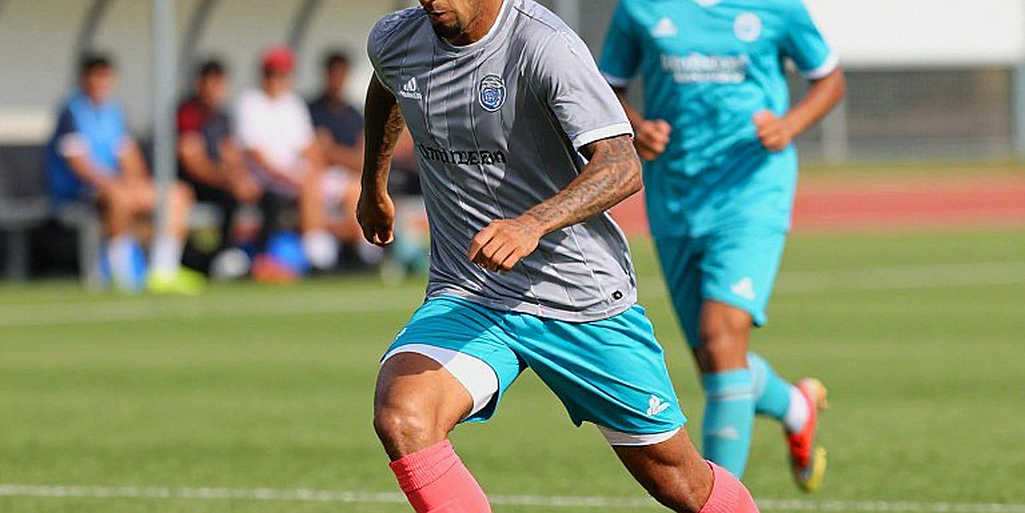
Australia's equaliser in the 28th minute followed a Vietnamese loss of possession in midfield. The second in the 34th had the same root. The third in the 56th looked different in form but shared the nature: the ball was delivered from a wide area and Minh Quang turned it into his own net while trying to intercept.
Three of Vietnam's four concessions began with losing the ball in an unprotected position. This is the difference between an error and a systemic characteristic. Errors happen randomly, in different areas, by different players, in different ways. A systemic characteristic repeats: the same zone, the same type of turnover, the same type of punishment.
When three goals in one match share a single mechanism, the problem does not belong to any individual. The problem is that the playing model has not yet been equipped with the obligatory insurance layer: defending the space behind the ball. In modern coaching language that layer is called rest-defence — a defensive shape built while the team is attacking. A side that plays positively without rest-defence is not really attacking. It is gambling.
At U16 level, teaching rest-defence is harder than teaching buildup. Buildup has the ball, has teammates, has visible options. Rest-defence has no ball; it requires a player to imagine a situation that has not happened yet and to move there himself while both his instincts and his teammates are pointing forward. It is a cognitive skill, and fifteen or sixteen is the age at which it starts to be learned — but it has to be learned, not absorbed.
Seen from outside, those three goals look like three lapses of concentration. Seen more closely, they are three repetitions of the same unfinished lesson.
The 56th minute and the physical question
The move that produced the 56th-minute concession deserves its own paragraph, because it points to a different and longer-term structural issue. The ball came in from a wide area, and a Vietnam U16 player turned it into his own net while attempting to intercept.
This should not be read as Minh Quang's personal accident. Moments like that are usually the consequence of a defender being forced to decide in a fraction of a second, in a disadvantageous body position, under pressure from a bigger and faster opponent. In Southeast Asian youth football this is a familiar problem: sides facing opponents with superior physical foundations in the wide areas end up dealing with aerial balls from a position of being outmuscled.
I have lived in Italy long enough to see that gap up close. A sixteen-year-old at the Milan academy may already have had three years of supervised strength work, measured nutrition, and biometric data tracked month by month. A technically no-less-talented sixteen-year-old in Vietnam may only just be starting a serious physical programme. That gap does not live in talent. It lives in time and in system.
This does not mean Vietnamese players cannot compete. Vietnamese youth cohorts have repeatedly overcome regional peers through technique and craft. The problem only appears against opponents from a different physical bracket — Australia, West Asian sides, European sides this cohort will meet if it goes deep at the AFC U17. Against those teams, a shape without rest-defence and without a plan for wide aerial balls will be exploited exactly where it was exploited on 24 September.
The 20th-minute corner, and the value of rehearsed things
If the match consisted only of those three concessions, it would be a sad match. But it has another half.
The opening goal in the 20th minute deserves to be dissected as a rare and reusable positive signal. A corner, a player outjumping the opposing defender, a header into the far corner where the goalkeeper cannot reach. Technically, this is a rehearsed dead-ball routine: someone blocks, someone draws, someone attacks the drop zone.
Elite football runs on invisible meticulousness, and at youth level it shows even more clearly. When I followed Ivan Perisic at the 2026 World Cup, he told me he had spent three months separately training his left-footed finishing after studying data on goalkeeper Jordan Pickford. He repeated one movement across thirty-seven sessions. Thirty-seven sessions for a moment that might occur once in a tournament. That is how professional football turns luck into skill.
In an U16 side, a corner routine rehearsed well enough to produce a goal in the opening match of an international invitational is a sign the staff have put dead-ball work into the programme. This is an asset that can travel to the two remaining fixtures and into AFC U17 qualifying. Youth teams that win short tournaments are usually not the most technically gifted; they are the ones with the most set-piece situations drilled to the level of reflex.
The second goal in the 71st minute also carries information. It came down the left channel and from a transition, with Trung Anh as the creator. A side that was 1-4 down in the 66th minute and still scored in the 71st, still seeking chances into the final minutes, has shown the most important thing about a young group: they did not let go.
Trung Anh, and the danger of a single point of support
Both Vietnam goals passed through Trung Anh. One he scored, one he assisted. In the 20th minute he finished; in the 71st he opened it up.
For a young player, this is the sign of a rising talent and a good scoring instinct. For a young team, it is a risk indicator.
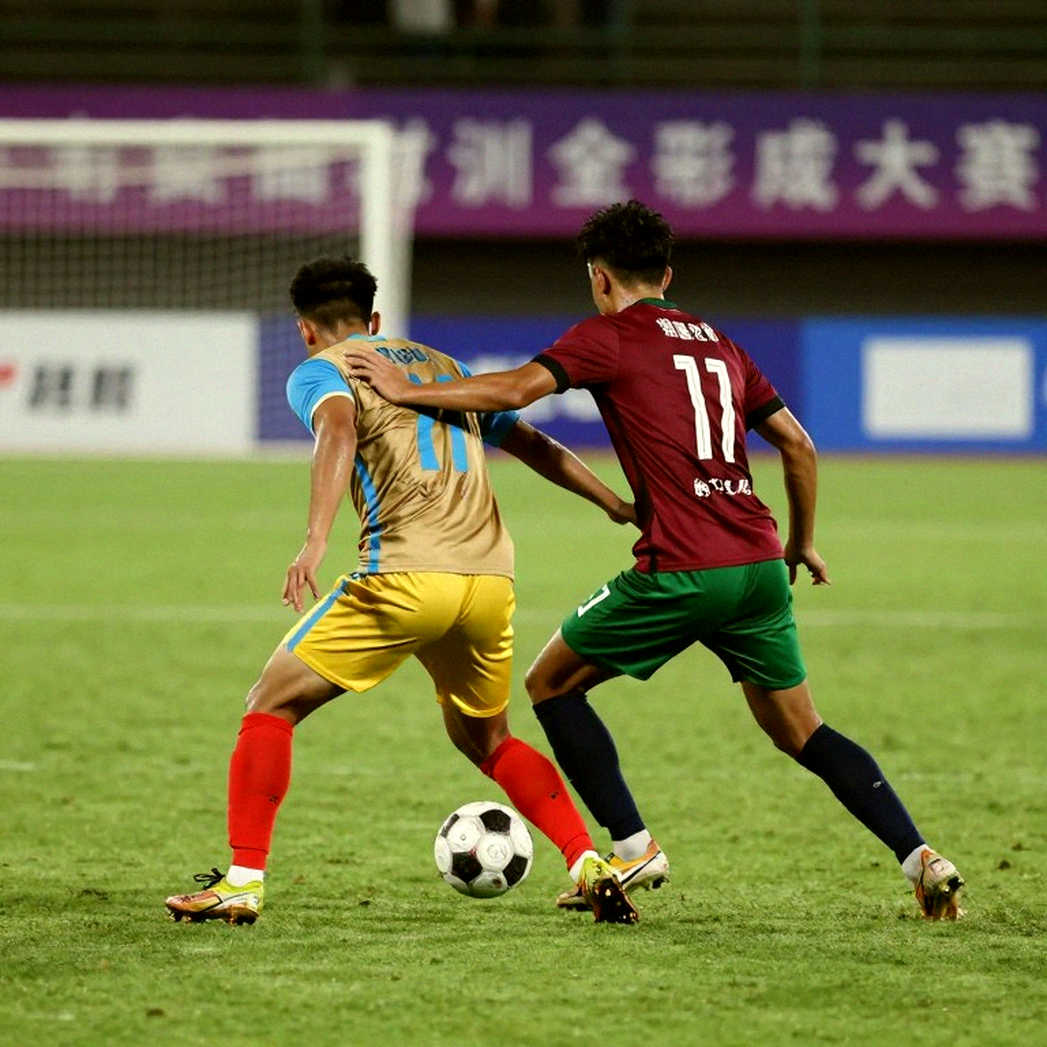
When every route to goal runs through one player's feet, the opponent needs only one task in the meeting room: find a way to cut that player out of the game. At this age that can be done in several ways — marking tighter, blocking his receiving angles, switching to a zonal block with support on his side of the pitch. For a fifteen- or sixteen-year-old, being cut out of a match usually means trying to do too much and losing the ball more often.
The task for the staff is not to reduce Trung Anh's role. He should stay at the centre of attacking phases, because that is where he creates value. The task is to create at least two other routes to goal that do not depend on him: a right channel that can finish, a long-ball option for a target forward, a midfielder capable of arriving in the box from the second line.
Across the remaining fixtures, this is the most concrete observation. If Vietnam's next goal still runs through Trung Anh, the team may win beautifully while keeping the same hole intact. If a goal arrives from another direction, that is real progress.
The 66th minute and a lesson about the head
Australia's fourth goal came in the 66th minute, from a foul inside the box by Minh Hoang that produced a penalty. Ten minutes earlier, the third goal had also started with a turnover in midfield.
The timing is what stands out. Minutes 56 and 66 fall inside what is called the dangerous ten minutes of the second half — the window in which a young team has lost the freshness of its legs but has not yet recovered the rhythm of its head. At this level, two goals like that are usually not a technical problem. They are a problem of tolerating physical pressure.
Losing the ball in midfield in those circumstances reflects something with a technical name: pressure resistance. When the opponent intensifies the press, the team in possession must do two things at once: one player must create a receiving option, and another must play a pass that eliminates at least one opponent. When legs tire, the receiving option arrives half a beat later, and the eliminating pass becomes an intercepted pass.
If I were sitting in the staff's analysis room, this is where I would put the biggest question. Three goals in one match from turnovers in high positions is already a pattern. A tournament with three group fixtures in six days makes fitness and rotation a variable that must be accounted for, not a matter for the opening match alone.
The 83rd-minute penalty, and the difference between legs and head
In the 83rd minute Vietnam were awarded a penalty. Minh Nhat, who had scored earlier in the match, took responsibility. He missed.
For many viewers this is the detail worth telling: a youth team loses and then misses a penalty, a complete story of a bad afternoon. But reading it as the psychological story of an individual is an analytical mistake.
Missing a penalty in the 83rd minute of a match you are losing 2-4 has little to do with finishing technique. It has much more to do with game-state management. At 2-3, a penalty is a chance to level the match. At 2-4, it is a chance to narrow the gap and build pressure in the final ten minutes. These are two different psychological problems for the same player, and an U16 side not yet distinguishing clearly between them is entirely normal at this age.
There is something to praise: the team kept seeking chances to the final minutes. There is something to record: the desire to score while trailing heavily sometimes pushes players toward lower-quality choices than the situation requires. Game-state management is a taught skill, like defensive transition.
In a tournament of strong sides, missing a penalty in the 83rd minute can be the difference between three points and none. If this cohort reaches the 2027 AFC U17 finals, there will be matches where one such moment decides an entire tournament. Learning it on a pitch in China in 2026 is probably the cheapest price available.
Here I should add something about how adults treat fifteen-year-olds. Demanding a player prove himself immediately after a setback is cruel, and that holds both for a player returning from injury and for a player who has just missed a penalty. Both are carrying an unhealed wound in the head, and added pressure only raises the risk of re-injury — for the first in the knee, for the second in confidence.
How Italians and Vietnamese read an U16 match differently
There is something I have come to notice after years standing between two football cultures.
The smell of wet grass and warm liniment — a language that needs no translation. A training pitch at Milanello and a training pitch in China share that smell, the same thud of the ball, the same coach shouting a single word when a player receives on the wrong foot.
But the way results are read is entirely different. In Italy, an U16 match lost 2-4 barely exists in the newspapers. Nobody writes about it, and because nobody writes, the team keeps something priceless: the right to lose without having to explain. In Vietnam, every youth national team match is read as either an indictment or a commendation, and a fifteen-year-old pays the price for that reading.
Pressure is not on the shoulders; it is in the way they tie their bootlaces. I have seen it at youth sessions: the child tying his laces more slowly is usually the one thinking too much.
A little on how the people around a cohort shape it
An U16 team does not exist in a vacuum. Around it there is a federation paying for trips, schools that must rearrange exams for players, parents watching streams at midnight, and people who call themselves agents.
Let me state my view on that last group plainly. At this age, promises are worth nothing except as noise in a child's head. Over many years in this profession I have seen that the loudest noise in the transfer market usually comes from people holding no contract at all. For an U16 player who has just scored at an invitational, what he needs is the next training session, not a call from an unknown number.
That is also why what interests me at this level is rarely the result. I am interested in whether the team keeps its structure while trailing, and whether the staff dare to continue down the road they chose while the scoreboard is against them.
I do not write down what they say. I remember what they are silent about. In a 2-4 defeat, the most memorable thing about an U16 side is usually not in the post-match quotes, but in whether somebody still ran back to defend in the 88th minute.
The contrarian angle: do not blame what is being taught
This is where I usually write differently from the majority.
In the post-match commentary, the goals conceded in the 28th, 34th and 56th minutes were called individual errors, or worse, naivety. Another line of opinion, in complete opposition, suggested the team play safer, release the ball long earlier, and wait for the opponent's mistakes.
Both readings misunderstand what is being built.
In an U16 side, building the capacity to play out from the back is the safest possible investment in the future. The staff accept that a fifteen- or sixteen-year-old team will lose the ball while building. That is not negligence. It is tuition paid in advance. Fail to pay it in friendlies and invitationals like this, and the team will pay it in continental qualifying, with the life of an entire cycle.
What deserves comment lies elsewhere. Once a team chooses to commit numbers forward to build, the insurance layer behind becomes a condition, not an optional extra. Without it, the entire benefit of playing positively is cancelled. The team pushes up, scores, and concedes more than it scores.
For a young team, the greatest danger right now is not conceding two more goals. The danger is that the team abandons the right thing to keep — the proactive playing model — in reaction to the right thing to fix — the absence of the layer behind the ball. Abandoning the proactive model means paying a price already paid to obtain the best seed available, and then throwing it away.
How the media is handled deserves its own observation. A defeat like this is very easily labelled a lesson. That label is usually used to soothe, and soothing is sometimes a way of not confronting the specific thing that needs fixing. Losing is not the problem. Failing to name the cause of three goals is the problem.
What to track next
Two fixtures remain: hosts China on 27 September and Kyrgyzstan on 30 September. Those two will yield more information than the Australia defeat itself.
For me, the test is a single question: if Vietnam U16 again lose the ball high and are again punished with a goal, the trace has repeated. If not, and if the team's goals come from more than one name, this group will have gone through a defeat and grown a little.
When the stadium empties, I finally understand what applause really is. At a youth tournament without packed stands, what remains after the final whistle is a few dozen fifteen-year-olds walking toward the tunnel, and a coaching staff that knows exactly what it must teach in the morning.
This analysis is based on publicly available information about the match and is provided for sports information reference only. Football outcomes are highly uncertain, and the conclusions should be read rationally.