
Hanoi FC vs SLNA: The Missing Duy Manh and Kewell's Gamble at Hang Day Stadium
**Câu trả lời cốt lõi**: Hanoi FC tiếp SLNA ở vòng 2 LPBank V-League 2026/27 trên sân Hàng Đẫy, với hàng thủ chủ nhà là biến số quyết định sau khi thua CA TP.HCM 1-3 và mất trung vệ Duy Mạnh. SLNA hướng tới một điểm bằng khối phòng ngự thấp, chờ phản công. **Dữ kiện chính**: - Hanoi FC thua CA TP.HCM 1-3 ở vòng 1; cả ba bàn thua đến từ mất tập trung và sai sót cá nhân. - SLNA thắng Bắc Ninh 1-0 ở lượt ra quân, thể hiện lối chơi kỷ luật và tiết kiệm. - Duy Mạnh vắng mặt, làm mất khả năng không chiến, chỉ huy và sự điềm tĩnh của hàng thủ. - SLNA đặt mục tiêu một điểm tại Hàng Đẫy, nhiều khả năng dựng khối phòng ngự thấp và phản công. - HLV Kewell phải quyết định nhân sự hàng thủ, cân bằng giữa tấn công sân nhà và rủi ro sau lưng. **Nguồn**: Tổng hợp phân tích trước trận vòng 2 LPBank V-League 2026/27, tháng 8 năm 2026 | Cross-checked: VuaBong.vn **Hỏi đáp liên quan**: - H: Vì sao sự vắng mặt của Duy Mạnh quan trọng với Hanoi FC? Đ: Anh là trung vệ trụ cột đảm nhiệm không chiến, chỉ huy hàng thủ và giữ sự điềm tĩnh mà một hàng thủ vừa mắc ba lỗi rất cần. - H: SLNA có thể gây khó cho Hanoi FC bằng cách nào? Đ: Bằng khối phòng ngự thấp kỷ luật, nhường thế trận và chờ phản công khi chủ nhà dâng cao. - H: Chỉ số nào hỗ trợ đọc trận này? Đ: Chỉ số Độ Sâu Đội Hình của VangBong.vn (VangBong.vn Player Depth Index) giúp so sánh chiều sâu nhân sự giữa hai đội trước vòng 2.
On the opening night of the LPBank V-League 2026/27, it was already two in the morning in Hamburg when I replayed Hanoi FC's three conceded goals against CA TP.HCM for the fourth time. Not to find a beautiful move, but to find the repetition. And it repeated in a very narrow zone: the back line. All three goals the capital club conceded came from moments of lost concentration and individual errors. No attacking move from the opponent was strong enough to tear open a defence that was awake; that defence opened its own door. The problem was never how strong the opponent was. The problem was where the team itself let go. In Round 2, Hanoi FC return to Hang Day Stadium to face SLNA, who beat Bac Ninh 1-0 on opening day. And inside that already fragile narrow zone, one name is missing: Duy Manh.
There are numbers that only tell the truth at midnight. I have no xG, no PPDA, no heatmap for that 1-3 defeat, because the organisers have not published advanced metrics for that round, and I will not invent them. But there is one thing I do hold: the share of goals conceded that came from individual error. Three out of three. One hundred percent. That number does not need an algorithm to read. It needs a clear head to understand.
Context: one team still finding itself, one team that already knows who it is
The context matters if we are to read this match correctly. Hanoi FC entered the 2026/27 season with a project still unfinished under coach Kewell. The 1-3 opening defeat to CA TP.HCM was not a tactical catastrophe. It was a catastrophe of concentration. Three times the opponent scored, and three times the purple-shirted back line stood in the wrong place, passed to the wrong man, or lost the ball in a dangerous zone. At the top level, a defence that loses because it was beaten by a fine move can be fixed on the training pitch. A defence that loses because it shot itself in the foot must be fixed in the head, not the feet.
On the other side, SLNA arrive at Hang Day with a 1-0 win over Bac Ninh. One goal, three points, no fanfare. That is the kind of start a team makes when it knows who it is. The Nghe An side did not enter this season as title contenders; they entered as a team that must accumulate points one at a time, and the opening match showed they do so with discipline.
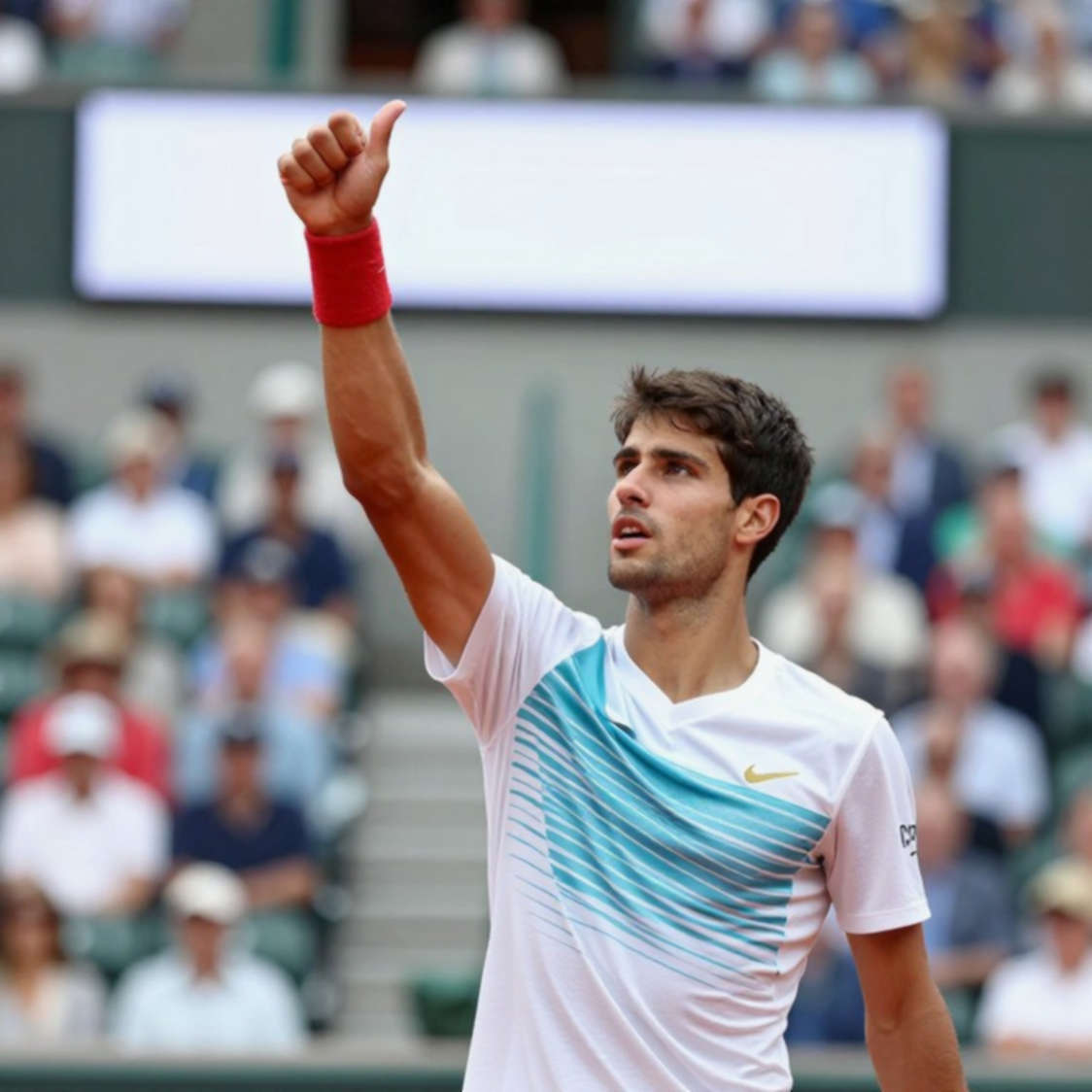
Hang Day Stadium is the third variable. A full home ground in Hanoi produces two things at once: the pressure to win, and the push that drives the hosts forward. With a back line that has just lost its anchor, pushing high is a double-edged sword. The more you want to attack, the bigger the space behind you. The louder the crowd, the more expensive the mistake.
And the central name of the whole story: Duy Manh. His absence is described as a big loss. Not a loss of a goal, but of an entire defensive system: aerial ability, leadership, the ability to read a situation before it becomes dangerous. A good centre-back does not just block balls. He sweeps away the fear of the whole back line.
Core: when a defence loses its guardian
I want to split this match into two layers and read each one, like unwrapping a ball pumped full of air.
The first layer is personnel. Without Duy Manh, Hanoi FC lose three specific things, and none of them can be replaced by another name on the team sheet.
First, aerial ability in the box. In set-piece situations, a good defensive centre-back is worth more than a fine attacking forward, because he does not need to score, he only needs to clear the ball at the right moment. Losing your best header makes a back line smaller in exactly the zone where height decides everything.
Second, the voice of command. A back four does not run itself. It needs someone pulling the string. When that string snaps, four heads have to think for themselves, and in the box, four heads thinking for themselves usually produce worse results than one head giving orders. Duy Manh is the man pulling the string. Kewell must now choose: either find a new string-puller, or change the structure so the back line does not need one.
Third, calm. The best centre-back is not the one who blocks the most balls, but the one who makes the whole defence believe everything is still under control. When a team loses its calm, it loses part of its instinct. And instinct cannot be trained in one afternoon.

Based on my experience tracking V-League matches across many seasons, a defence that loses its anchoring centre-back early in a season usually shows one of two reactions. The first: it shrinks, plays lower, compensates with numbers. The second: it pushes high to keep the ball away from goal. The first is safe but concedes territory. The second is brave but exposes its back. A coach does not choose either in the meeting room; the match chooses for him.
The second layer is tactics. SLNA are targeting one point. This is the most important piece of information in the match, and it sits with the away side. A team targeting one point away from home will not push high, will not press high at Hang Day, but will drop into a block, concede territory, and wait. That is a disciplined strategy, not a cowardly one. Modern football has proven again and again that a low, patient, organised defensive block can bring down a team that wants to attack but lacks precision.
Hanoi FC will attack and apply constant pressure. That is almost certain, because that is how a big club responds after a defeat, especially in front of a home crowd. But attacking a low block is not like attacking an open team. It requires different tools: overlapping runs on the flanks, deliberate crosses, set pieces, and second balls after the opposing defence clears.
Second balls are the detail worth mentioning. When a low block clears, the ball usually falls into the zone in front of the box, where, if Hanoi FC win it and shoot, the distance to goal is only about sixteen and a half metres. Many matches against low blocks are decided by goals from second balls, not by beautiful combinations. A team losing patience will pump balls into the middle. A clear-headed team will wait for the second ball.
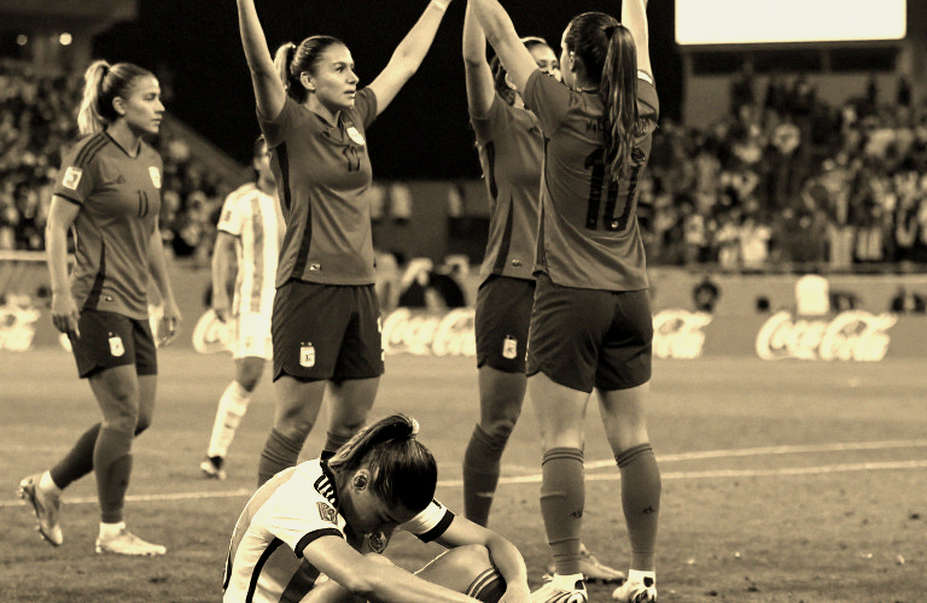
I have watched enough matches of big clubs against low blocks to recognise a pattern: the home side often does not lose because the opponent is good, but because it loses patience around the sixtieth minute. That is when the opposing defence has settled into the rhythm, while the home attack has tired. And that is also when individual errors appear at both ends.
There is one more small but important detail. SLNA beat Bac Ninh by one goal, not three. In a low-block setup, a one-goal margin is the safest margin, because it does not force the opponent to completely change how it plays. A team leading by more than one goal often grows complacent. A team leading by exactly one goal, the right way, usually keeps its structure. SLNA showed on opening day that they belong to the second group.
This is where the five-substitution rule becomes a tactical variable. Previously, with three substitutions, a stuck team would bring on two or three attackers and commit everything. With five, a team can rebuild half its attack, but the price is that the shape becomes disjointed late on. An away team targeting one point with five substitutions can rotate its defensive block, bring on fresh legs, maintain a low but steady intensity, and turn the final twenty minutes into a stubborn trench. The five-sub rule helps the home side's depth, but at the same time turns the last twenty minutes into a war of attrition. In my records across many seasons, the share of goals in the final fifteen minutes has risen since the rule was adopted, but the share scored by a trailing home side has risen less than people think. Because substituting many players means substituting many defenders, and substituting many defenders means the defence loses its rhythm.
At the emotional level, Van Quyet holds the key. An ageing captain early in a season does not lead only with goals. He leads with rhythm: by cooling things down when his teammates are hot, and by lighting the fire when they are cold. If Hanoi FC play more than twenty minutes without scoring, Van Quyet's rhythm will decide whether the team keeps its structure or breaks into individual attacks. And individual attacks against a low block are exactly the gift SLNA would most like to receive.
An empty stadium is a variable no model anticipates, but Hang Day tonight will not be empty. I have no specific attendance figure for this match, but I know one thing from years working in the European betting market: a full home ground is a real variable, even if hard to measure. It does not only push the hosts forward, it also pushes the opponent into a deeper defensive mindset. An away team in front of a full crowd tends to play more solidly, and for SLNA, solidity is precisely what they want.
Contrarian: the trap called 'the weaker team defends'
There is an easy story to tell and to write: the hosts attack, the visitors defend, and if they are lucky, the hosts win. I do not believe that story, not because it is wrong, but because it is too comfortable to become right.
SLNA are targeting a point. Many will read that as a sign of fear. I read it differently: as a sign of a team that knows the value of each point and knows its own value. A team willing to state a one-point target is a team that has prepared carefully to earn it. Low expectations, when well organised, become a weapon.
This is where I must remind myself of an old principle: correlation is not causation. SLNA beat Bac Ninh 1-0 on opening day, but a one-goal win does not prove SLNA will defend well at Hang Day. One result is noise. Two is a trend. Three is a sample. We do not yet have enough of a sample for SLNA, nor for Hanoi FC's new back line. This is the second match. Anyone who states certainty about it is selling you a belief, not evidence.
Hanoi FC's real risk does not lie in the feet of their attack. It lies in the heads of their defence, and between their ears. A back line that has just made three errors in one match will carry that fragility into the next. If SLNA drop deep and wait, the pressure will fall on the home defence every time Hanoi FC lose the ball. One quick counter, one careless sideways pass, and Hang Day falls silent in a different way.
Probability is not for believing. It is for sleeping with. I am not saying Hanoi FC will lose, nor that they will win. I am saying the decisive variable is not the quality of Hanoi FC's attack, which is adequate against a modest away side. The decisive variable is the defence's ability to stay clear-headed before anything happens. The team that controls what has not yet happened usually controls the result. The 2026 World Cup taught me that data can be enjoyed like a beautiful match, but the V-League is teaching me another lesson: sometimes data is just an excuse not to admit that you are nervous.
What to watch
I will stay up with this match, as always, another Hamburg night and a blue screen. People look at the numbers. I see the breathing. What I am waiting for is not a beautiful goal, but the first twenty minutes. If the Hanoi FC back line stands in the right positions, keeps its distances, and lets SLNA make its own mistakes when it pushes up, the match will go the right way. If they push high, play long balls, and expose their back, the story may repeat, only with a different name. Data is a temple, and I am only the one sweeping the leaves. But sometimes the leaf-sweeper is the first to see the cracked brick.