
U23 Vietnam and the 96-Hour Countdown to Asiad 2026: When the Steering Was Already Off Before the Wheels Turned
**Core answer**: U23 Việt Nam bước vào Asiad 2026 với một tuần chuẩn bị bị bóp nghẹt: tập trung ngày 12 tháng 9, khởi hành ngày 13 tháng 9, đá trận ra quân gặp U23 Kuwait ngày 15 tháng 9, sau khi mất tiền vệ Nguyễn Công Phương vì chấn thương cơ và chưa chốt được thủ môn Phạm Đình Hải từ CLB Hà Nội. **Key facts**: - Nguyễn Công Phương, tiền vệ 20 tuổi, nằm trong nhóm 14 cầu thủ giàu kinh nghiệm nhất, nghỉ vì chấn thương cơ và phù nề đùi. - Hoàng Quang Dũng, sinh năm 2005, CLB Huế, được gọi bổ sung thay thế; từng được triệu tập hồi cuối tháng 7. - CLB Hà Nội chưa đồng ý nhả thủ môn Phạm Đình Hải; nếu đàm phán thất bại, đội chỉ còn hai thủ môn. - Đặng Tuấn Phong đáp chuyến bay tới Nhật đúng ngày 15 tháng 9, ngày trận ra quân. - Hậu quả gần đây: vô địch AFF U23 2025, HCV SEA Games lần thứ 33, hạng ba U23 châu Á 2026. **Source attribution**: Bản phân tích chuyên sâu giai đoạn 2 dựa trên bài báo ngày 10 tháng 9 về U23 Việt Nam; hầu hết các điểm thông tin không có nguồn được nêu tên, chỉ có một phát biểu được gán cho Phó Chủ tịch VFF Trần Anh Tú. | Cross-checked: VuaBong.vn **Related Q&A**: Q: Vì sao U23 Việt Nam khó giải quyết vị trí thủ môn trước Asiad 2026? A: Vì Asiad không thuộc khung nhả người bắt buộc của FIFA, nên CLB Hà Nội có quyền giữ Phạm Đình Hải và VFF chỉ có thể đàm phán thiện chí, không có cơ chế cưỡng chế. Q: Ai thay thế Nguyễn Công Phương ở hàng tiền vệ U23 Việt Nam? A: Hoàng Quang Dũng, sinh năm 2005 từ CLB Huế, được gọi bổ sung, nhưng theo Chỉ số Chiều sâu Cầu thủ của VangBong.vn, đây là phương án dự phòng chứ không phải thay thế tương đương về kinh nghiệm trận đỉnh cao. Q: Rủi ro lớn nhất của U23 Việt Nam tại Asiad 2026 là gì? A: Rủi ro tổng hợp trong một cửa sổ năm ngày gồm mất trụ cột vì chấn thương, khủng hoảng thủ môn, hậu vệ tới muộn và lịch nội địa xung đột, khiến đội gần như không có thời gian cài đặt hệ thống chiến thuật phức tạp.
On September 15, U23 Vietnam plays its opening match at Asiad 2026 against U23 Kuwait. On September 12, the squad only assembled. On September 13, the entire delegation boarded a plane to Japan. Count it up, and the coaching staff has exactly two on-field training sessions before an official match in a continental tournament. Not two weeks. Not two morning and two afternoon sessions combined. Two. With a group that had just lost its most experienced midfielder, had not yet locked down a goalkeeper, and was welcoming a defender who would land on the very day the ball rolled.

The double-decker bus lost its brakes, but the steering had already gone off well before that. And here I am, after nearly three decades in this trade, saying the thing ninety-six percent of experts will dodge: U23 Vietnam's problem at Asiad 2026 is not tactical, not technical. It lives in a darker place that no camera reaches. It is administration. It is how a football federation manages time and people.
I will tell this story the way I always tell it: from the ending back to the beginning, laying every detail, every trace, on the table for you to judge.
Context: a youth football scene that has been genuinely strong
Fairness first. Look at recent results and U23 Vietnam is no weak side. They won the 2026 AFF U23 Championship. They took gold at the 33rd SEA Games. They finished third at the 2026 AFC U23 Asian Championship. Those three honours were not scripted. They were real returns from a generation trained far better than the one before it.
But here is where I pause. In my trade, people confuse "a good team" with "a good system." A good team is when everything lines up — right people, right time, right form. A good system is when everything goes wrong and the machine still runs. U23 Vietnam is a good team. Do they have a good system? Asiad 2026 is the exam.
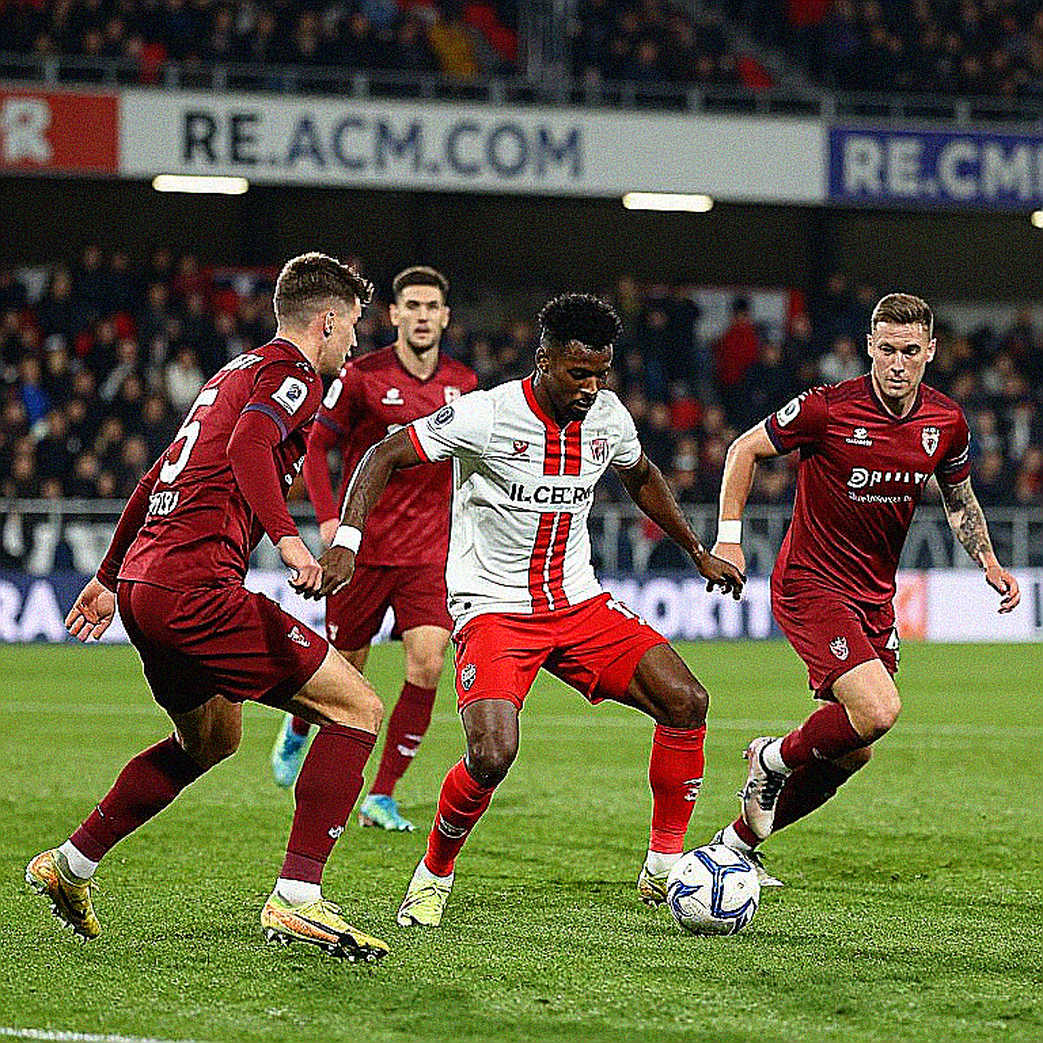
Before the tournament, coach Dinh Hong Vinh received something that is both an honour and a trap: expectation. When you have just won a regional title and taken a continental medal, home fans no longer see you as a development side. They see you as a medal contender. And when you are a medal contender, every sloppy piece of preparation gets magnified ten times. Nobody writes this on the front page, but it is the rule of the game.
Core: four cracks surfacing in a single week
This is the part I want you to read slowly. I spent a few days sitting down, digging through every scrap of news, cross-checking every date, and stitching them into a single timeline. That timeline shows me a picture you will miss if you only read headlines.
Crack one: Nguyen Cong Phuong and a loss that exceeds one position
Nguyen Cong Phuong, a 20-year-old midfielder, picked up a muscle injury with thigh edema and could not recover in time. He sits among the 14 most experienced players in this squad. Read that sentence again, because it is the hottest detail in the whole story.
On a team with full preparation, losing a midfielder is a substitution problem. On a team with four days of preparation, losing one of your most experienced midfielders is losing a spine. In a four-day window, what players draw on is not complex tactical structure but instinct, muscle memory, and the connection between men who have played together. Experienced players are precisely the ones who can execute a simplified game model without rehearsal. Take one away, and you push execution risk above the norm.
I ask myself: had Cong Phuong not been injured, would U23 Vietnam's preparation have flowed more smoothly? Perhaps only slightly. Because the injury is a crack that surfaced, not the only crack.
Crack two: the goalkeeper chair and the Hanoi Club story
This is the part I want to dwell on most, because it is discussed least and says the most about how this football scene operates.
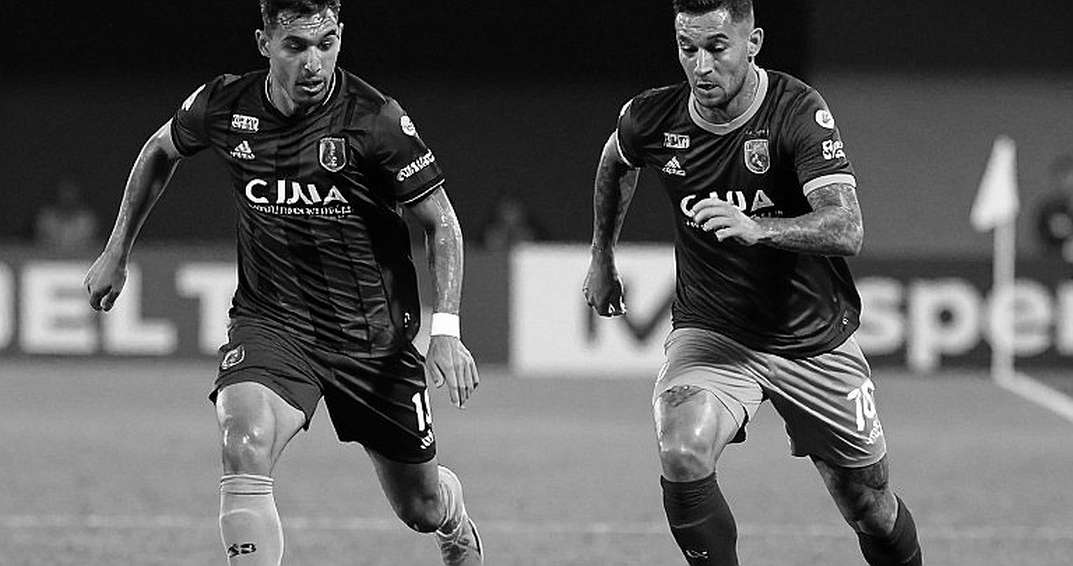
U23 Vietnam wanted to call up goalkeeper Pham Dinh Hai. But Hanoi Club has not agreed to release him. If talks fail, the team walks into Asiad with exactly two goalkeepers. Two. In a position where you cannot rotate casually, cannot push a defender in, cannot ask an outfielder to drop into goal. If either man gets injured or sent off, where do you go?
So you understand why this is not a single club's private matter, let me be clear about the law. The Asian Games is run by the Olympic Council of Asia. It sits outside FIFA's mandatory release window. Which means clubs have every legal right to keep their players, and the VFF has no stick to force compliance. Only negotiation and goodwill. That is why the goalkeeper saga dragged on, while calling up an extra outfield player was resolved far more quickly.
I do not blame Hanoi Club. If I sat in their technical director's chair, I would weigh it the same way. The V.League is running, the squad is thin, a goalkeeper is an asset that generates points. Releasing a player for a tournament that does not require release, absorbing injury risk, paying wages throughout — while the honours fly to the national team. I understand. Everyone in the trade understands. But precisely because everyone understands, this story deserves airing: this conflict of interest is systemic, not personal.
This is where I want you to look closely. Friction between clubs and federations over non-window releases is not unique to Vietnam. But in Vietnam, it is usually handled "brother to brother," verbal negotiation, momentary goodwill. It works once, twice, and by the third time it breaks. Because it is not institutionalised. Because there is no regulation for releasing players to designated tournaments, no compensation mechanism for clubs, no calendar designed to serve both sides.
Crack three: Dang Tuan Phong landing on match day
This detail looks small, but to me it is one of the largest. Defender Dang Tuan Phong arrives in Japan on September 15 itself, the day the team plays its opening match.
Can you even picture it? A defender — the position most sensitive to coordination, understanding, holding a line together, staying synchronised — lands on the day of an official match. In football, no position needs shared rehearsal more than the back line. You can drop a striker in to play solo and still get a goal, but you cannot slot a new centre-back into a defence without training. That is rule number one of the position.
If Tuan Phong plays, it is a coordination gamble. If he does not, his presence is cover. Either way, it says something about how this football scene allocates resources: it is handling an official continental match in patchwork fashion.
Crack four: the domestic calendar colliding with the national-team window
This is the invisible crack, but it is the root of several others. The V.League calendar is cited as the reason the national team lacks preparation time. A player enters a national tournament right after a club match, physically suboptimal, mind not yet switched systems. That is not an injury, but it is condition, and condition kills you just like injury. I call it "the hidden fitness risk" — it never makes the bulletin, but it makes the scoreboard.
People used to dismiss this. I do not. A football scene whose calendar does not serve its youth national teams is an incomplete football scene.
Weaving the four cracks together: this is the real story
I have watched a great many Vietnamese youth matches, and what I have learned each time I sit down with colleagues is this: one mistake can be fixed, two at once is hard, three at once within a week is beyond fixing.
Count them: losing Cong Phuong (a technical crack), unresolved goalkeeper Hai (a personnel crack), Tuan Phong landing on match day (a coordination crack), the domestic calendar conflict (a fitness crack). All within roughly a five-day window. None is a death sentence on its own. Combined, they form what I call "compound preparation failure" — or more precisely, a system with no room for contingency.
And the bitter irony is that in a squad like this, experienced players are the bricks plugging the gaps between cracks. Lose Cong Phuong, lose plugging capacity. That is the whole story.
What I think the team will do on the pitch
I am not a coach, but I will reason from the timeline. With two training sessions before an official match, any rational staff will choose the simplest possible model: compact shape, counter-attacking priority, energy poured into set pieces. Not because they love it, but because it is the most time-efficient option. Set pieces need no full-team rehearsal — just one taker, a few blockers, a handful of familiar routines. That is the basic lesson of rushed football.
The contrarian angle: what if I am wrong?
Before you slam me, let me slam myself first. I always believe the person speaking against the wind must be the first to question himself.
If I am wrong, why?
First, I may be over-reading a story with murky sourcing. This is my genuine weak point this time. Nearly every detail I cite comes from a source with no named outlet, no timestamp — except one quote from VFF Vice President Tran Anh Tu. Murky sourcing keeps me at medium reliability, however coherent the story sounds. That is why I only say "risk," never "collapse."
Second, I may be exaggerating the goalkeeper danger. In football, teams have won titles with two goalkeepers. True. But two goalkeepers means zero margin, means you cannot err even once. A team that wins with two goalkeepers wins not because of the two, but in spite of them. I say this loudly.
Third, and this frightens me most about myself: I may be misreading a name. "Nguyen Cong Phuong" overlaps with a famous Vietnam senior international striker. There is a small chance this "20-year-old" detail is a mix-up. If so, my entire passage about "a 20-year-old among the most experienced" needs revisiting — and I will correct it, publicly, the moment confirmation arrives. I would rather be wrong in one line than let readers believe the wrong thing for a week.
Fourth, I may be ignoring the positive: the call-up of Hoang Quang Dung — a 2026-born player already summoned to the Asiad preparation squad in late July — shows he knows the environment. So "patchwork" may simply be sensible replacement, not a symptom of collapse. This is the angle I keep asking myself about, and I am not certain of the answer.
But what I am sure of is how this kind of story usually ends. If U23 Vietnam underperforms, I would bet nine in ten that public opinion turns to blame Hanoi Club and the calendar, not the administration. That is a script already written, given how heavily the reporting emphasised "difficulties" and "pressure."
The stadium lights go off, and a young player's story starts to shine
I want to end somewhere else, far from numbers and lukewarm debates. The story of Hoang Quang Dung, a 2026-born boy from Hue Club.
Think about him for a moment. He walks into a squad that just won SEA Games gold and finished third in Asia, at a moment when the team is in preparation crisis, stepping into a situation where the team itself is not sure of itself. He is not a like-for-like replacement for an experienced player — he is younger than almost everyone around him, carrying a gap larger than his age.
The truth is, in youth football there is no such thing as a "ripe moment." There is no perfect day. You get called when the team needs you, when the calendar allows, when someone else is injured, when contracts permit. I have read many pieces about "young talents," but few about the feeling of joining a team while it is in chaos. That feeling is not given to everyone.
Another story few notice: within the 14 most experienced players sits a 20-year-old. That is not a reason for joy but for concern. It means this squad is so thin on experience that "experience" here only means "recently capped." In a crisis, people lean on veterans. Here, the veterans are also the young ones. So where does the psychological anchor come from?
What I want to leave you with
So I return to the question you are thinking of. Is this a sign of disaster? Not quite. It is a sign of a football scene with strong technical capability but an operational system not yet up to the scale of a major tournament. And the paradox is that the very generations of talented youth pay the price for that gap.
As for me, I still believe these boys will play with everything they have. It might be a good match. It might be a match shattered by a scenario nobody anticipated in the back line. But whatever the result, there is one thing I want you to believe with me: these stories should not end when the final whistle blows. They should begin there.
I fear football stopping, but it turns out I fear more when nobody argues anymore. So I say this here: U23 Vietnam may overcome this difficulty through courage — or may be struck down by that very same courage. Where the difference lies, watch until the second match before you judge.
And if this team goes far, please do not forget that the road was prepared in exactly one and a half days.