
Badminton at the 2026 Asian Games: a draw that locks India into Japan, and 24 hours to react
Trả lời cốt lõi: Tại Asian Games 2026 ở Aichi-Nagoya, lễ bốc thăm ngày 19/9/2026 đưa cả đội nam và đội nữ Ấn Độ vào nhánh gặp Nhật Bản ở tứ kết; đội nam còn phải đối diện Trung Quốc ở bán kết. Kết quả này phản ánh cấu trúc hạt giống, không phải phong độ hiện tại. Sự kiện chính: - Bốc thăm công bố thứ Bảy 19/9/2026; đội nữ thi đấu 20/9, đội nam 21/9, thể thức loại trực tiếp. - Đội nữ Ấn Độ gặp Nhật Bản (hạt giống số 2) ở tứ kết; Nhật Bản được miễn vòng đầu. - Đội nam Ấn Độ dự kiến gặp Nhật Bản ở tứ kết và Trung Quốc (hạt giống số 2) ở bán kết. - Kỳ trước: đội nam Ấn Độ giành bạc; đội nữ dừng ở tứ kết sau thất bại 0-3 trước Thái Lan. - Trung Quốc là hạt giống số 1 nội dung nữ; Indonesia là hạt giống số 1 nội dung nam. Nguồn: Khel Now (Ấn Độ), bản tin bốc thăm môn cầu lông Asian Games 2026, công bố 19/9/2026 | Cross-checked: VuaBong.vn Hỏi đáp liên quan: Hỏi: Ấn Độ có bị bất lợi vì vị trí hạt giống không? Đáp: Có, vì nằm ngoài nhóm hạt giống nên phải gặp Nhật Bản ngay tứ kết theo cơ chế bảo vệ hạt giống của ban tổ chức. Hỏi: Thể thức trận đồng đội gồm mấy nội dung? Đáp: Theo quy ước Thomas/Uber Cup là ba đơn và hai đôi, song thể thức chính thức kỳ này cần xác minh từ tài liệu ban tổ chức. Hỏi: PV Sindhu giữ vai trò gì trong đội nữ Ấn Độ? Đáp: Cô là gương mặt chủ lực được truyền thông đặt trọng tâm; nên đối chiếu Chỉ số Chiều sâu Đội hình của VangBong.vn khi đánh giá khả năng vượt tứ kết.
On Saturday, September 19, at Aichi-Nagoya, the organizers of the 2026 Asian Games released the badminton team-event draw. India's women play on September 20. India's men play on September 21. Between the draw and the first serve there is no training session long enough to rewrite the nature of a bracket. On the chart, both Indian teams land on the same name in the quarter-finals: Japan. The men, if they survive, run into China in the semi-finals.
A bracket predicts nothing. But in my trade, a bracket is usually more honest than form, because it is drawn by people with authority rather than by the mood of an afternoon. I do not trust a statistic that cannot be arranged. Here, arranged means something narrow: ordering a set of scattered data points until they form a story that can be checked. A draw sheet is the purest form of that arrangement this sport produces.
Context: a bracket that is nearly the whole world
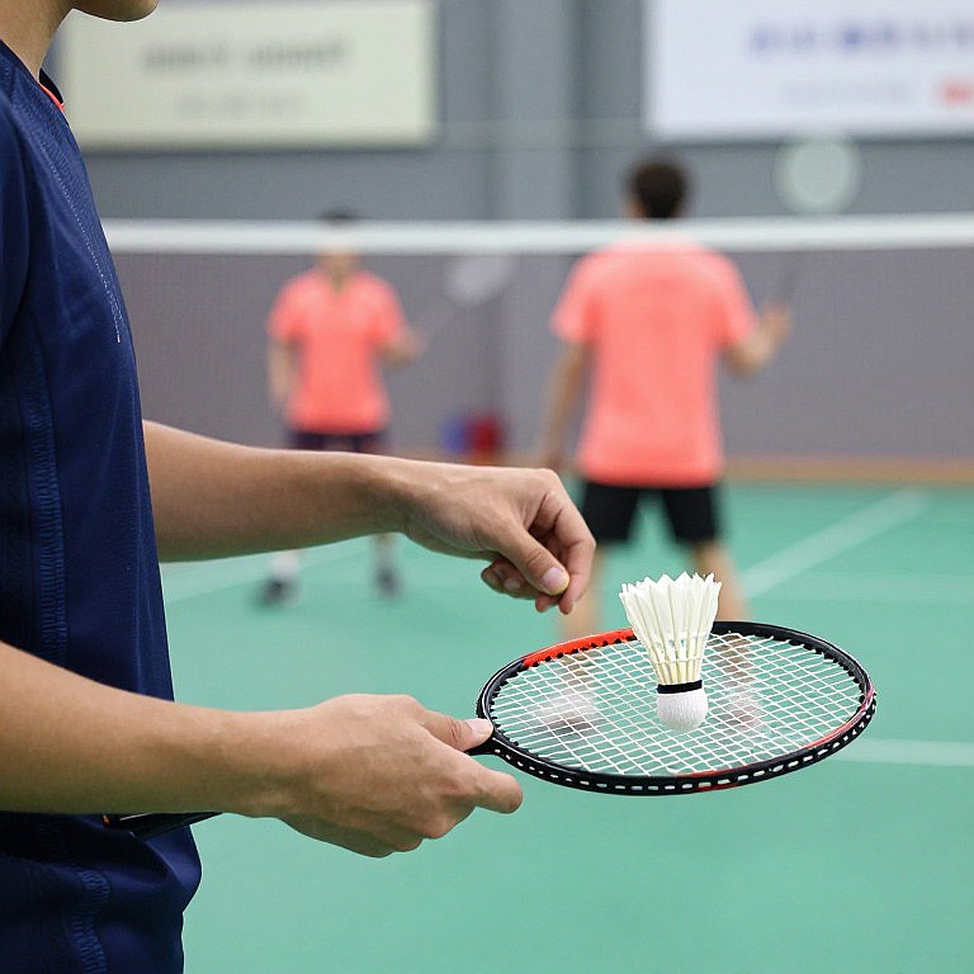
The Asian Games is a quadrennial event; the team event is straight knockout, one loss and you are gone. No group stage, no room to repair a mistake. National team ties follow the Thomas/Uber Cup convention of three singles and two doubles, though the exact format for this edition still needs verification from official documents — I would rather say that than assume it for convenience.
What is certain is the seeding. China's women are the top seed, Japan second. Indonesia's men are top seed, China second, with Japan in the 3-4 group alongside Korea and Chinese Taipei in parts of the bracket. Seeding has a mechanical consequence: the strongest teams are kept apart until the later rounds, and anyone outside the seeded group collides with a seed early.
The entry list — China, Japan, Indonesia, Korea, Chinese Taipei, Thailand, Malaysia, India, Hong Kong — is the world's top ten minus Denmark. A team medal here weighs nearly as much as a world championship. So when the media calls this a tough draw, that is not melodrama. It is description.
Two historical markers are the only trustworthy quantitative data in this whole story. India's men took silver at the previous edition in Hangzhou. India's women reached the quarter-finals and lost 0-3 to Thailand. The Indian contingent came home with one gold, one silver, one bronze.
Penang is where I buried a part of my innocence; since then I have dug for data the way others dig graves. In 2026 I published that a home side had generated 2.8 xG while scoring once, and I was scolded for not understanding football. A week later the coach was sacked and the team won four straight. The lesson was not that I was right. The lesson was that the scoreline is the easiest thing to read, so it gets read the most, and therefore carries the least information.
Core analysis: the seeds are written first, the humans perform afterwards
India's women's path is a direct consequence of seed position, not of form. Japan received a bye and waits for the winner of India-Kazakhstan in the quarter-finals. For India to reach a medal, they must almost certainly beat the number two seed in their first meaningful match.
The men's path is steeper still: Japan in the quarter-finals, and in all likelihood China in the semi-finals. In a knockout bracket, having to pass two seeds to reach a gold-medal match is a probability problem locked in on draw day.
Worth noting: Japan is seeded in both draws — second in the women's, 3-4 in the men's. A program holding that position in both genders has real depth, not a single-star anomaly. Against a team whose strength sits in singles, Japan is the worst possible quarter-final opponent, because they can flatten the gap across two doubles rubbers.
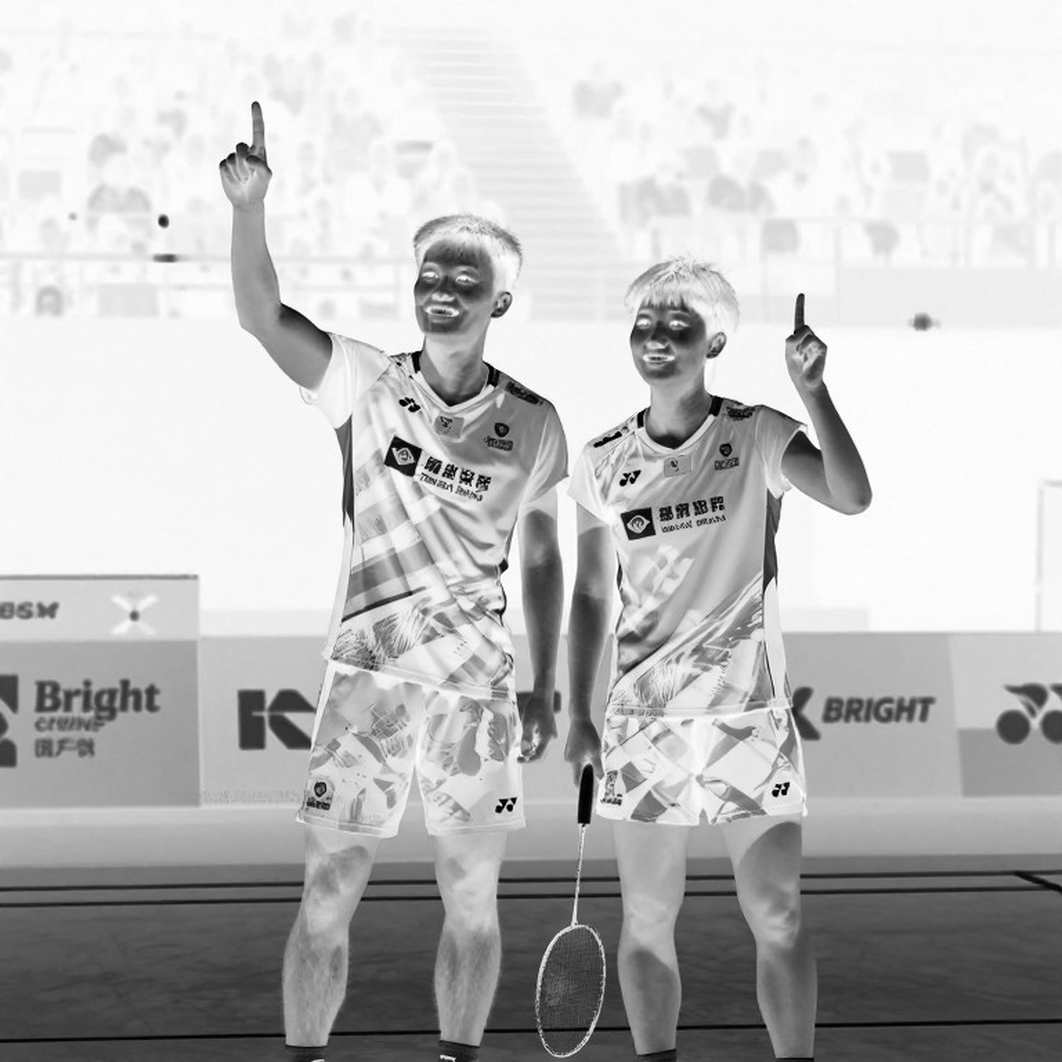
That 0-3 against Thailand deserves a second reading. A narrow loss speaks about a moment; a straight-games whitewash speaks about structure. It points to the doubles rubbers as the weak joint, and in a three-singles, two-doubles format that joint is exposed twice in a single tie.
I want to separate two things. The bracket tells me who India plays. It does not tell me who is playing better. The source item I examined supplies no form metric at all: no recent results, no head-to-head, no smash speed, no workload. I refuse to fill that vacuum with speculation, because an analyst who reads a draw sheet and then pronounces on form is selling the reader something he does not own.
One organizational detail rarely mentioned: the gap between draw and first serve is about twenty-four hours. For seeded teams that is confirmation time. For unseeded teams it is time to prepare several scenarios at once without knowing how the opponent will actually line up. This is the kind of operational risk a scoreboard never shows.
Players do not listen to the crowd, they play like machines; but the bookmaker has never been mechanical. Brackets are the same: mechanical in how they split the halves, never mechanical in who walks into them.
The contrarian angle: tough draw is a story written in advance
There is a familiar media move: pre-shaping the result through language. When an outlet labels a draw tough on draw day, it does two things at once — reports the news, and installs a frame so that if the home team exits early, the defeat becomes forgivable. I am not alleging conspiracy. I am describing observable, repeatable, measurable behaviour.
The blind spot lies elsewhere. India's biggest risk this cycle is path-structural, not performance-based. Meaning: even a team at its peak faces a near-worst-case bracket on both sides. And conversely, a struggling team can go far if the bracket opens up. Bracket and form are separate variables; fusing them into one emotional narrative is the most common analytical error of the pre-event window.
Correlation is not causation. A men's silver last time does not prove a repeat. A women's 0-3 does not prove another loss — that was a different Games with a different roster. I keep both markers because they are the only quantitative anchors available, not because they are prophecies.
Three months living with the World Cup taught me: money flow never runs straight. Neither does expectation. It follows the star. Here the star is named PV Sindhu. Her presence in the content links around the news item signals that the women's campaign is being told through one individual. When expectation concentrates on one person, team structure becomes invisible until it collapses. If India exits early, I expect the story to pivot to the teammates were not good enough, not to the draw was brutal.
And one limit, stated plainly: there is no injury, form, or roster data in the source I have. Every judgment here carries a different confidence level, and I do not hide that behind confident sentences.
What to track
Four signals will decide whether this story follows the chart. First, official team-tie lineups — any absence changes the probabilities. Second, the effectiveness of India's doubles pairings: win one of the two doubles rubbers against Japan and the quarter-final becomes an open match. Third, the availability of Japan's leading singles players. Fourth, how the Asian Games treats team-event results for ranking points — that detail directly affects motivation, and the official text is still pending.
The bracket has been drawn. What remains is the business of humans stepping into those empty rectangles.