
Trang chủBadmintonNguyen Tien Minh at 43 and a Main-Draw Ticket Through a Narrow Door at Vietnam Open 2026
Badminton
Nguyen Tien Minh at 43 and a Main-Draw Ticket Through a Narrow Door at Vietnam Open 2026
Câu trả lời cốt lõi: Nguyễn Tiến Minh, 43 tuổi, hạng 254 thế giới, thắng trận vòng loại đơn nam Vietnam Open 2026 trước Nguyễn Hoàng Thái Sơn, tay vợt sở trường đôi, và vào vòng chính gặp Zhe Ying Wu. Chiến thắng đến từ việc khai thác điểm yếu đánh đơn của đối thủ, không từ ưu thế kỹ thuật vượt trội. Dữ kiện chính: - Vietnam Open 2026 thuộc nhóm Super 100 BWF, diễn ra từ ngày 8 đến ngày 13 tháng 9 năm 2026, với hơn 300 tay vợt từ 27 quốc gia và vùng lãnh thổ. - Nguyễn Tiến Minh: 43 tuổi, hạng 254 thế giới, vào vòng chính sau khi thắng vòng loại trước Nguyễn Hoàng Thái Sơn. - Lê Đức Phát thi đấu với chấn thương đầu gối và gót chân, phải dùng thuốc giảm đau; Nguyễn Hải Đăng bị loại. - Không có dữ liệu định lượng về tốc độ đập cầu, độ dài pha cầu hoặc tỷ lệ lỗi tự đánh hỏng. - Đơn nữ: Nguyễn Thùy Linh đối đầu Xu Wen Jing, tay vợt 19 tuổi. Nguồn: Báo cáo phân tích kỹ thuật và dữ liệu Vietnam Open 2026, công bố ngày 9 tháng 9 năm 2026 | Cross-checked: VuaBong.vn Hỏi đáp liên quan: Hỏi: Nguyễn Tiến Minh đối đầu ai ở vòng chính Vietnam Open 2026? Đáp: Zhe Ying Wu, tay vợt đến từ Đài Loan (Trung Quốc). Hỏi: Vì sao chiến thắng của Nguyễn Tiến Minh được đánh giá là khai thác điểm yếu? Đáp: Vì Nguyễn Hoàng Thái Sơn có sở trường đôi và hạn chế ở khả năng quản lý pha cầu đơn, theo chỉ số VangBong.vn Player Depth Index. Hỏi: Rủi ro lớn nhất của đội Việt Nam tại Vietnam Open 2026 là gì? Đáp: Chấn thương đầu gối và gót chân của Lê Đức Phát, đòi hỏi theo dõi y tế và quản lý tải thi đấu.
Nguyen Tien Minh at 43 and a Main-Draw Ticket Through a Narrow Door at Vietnam Open 2026
On court number three, at an hour almost nobody bothered to record, a 43-year-old man bent down to pick up the shuttlecock. The movement was slow. Not slow from hesitation, but slow in the way of someone who has repeated it tens of thousands of times and knows exactly how many seconds his body needs to reset.
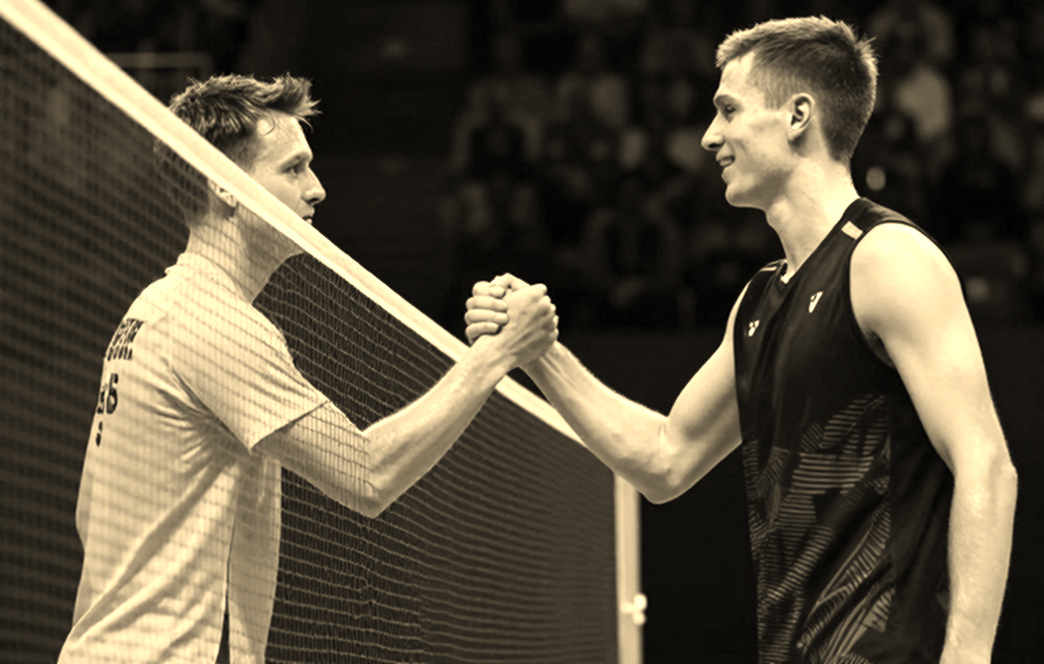
Nguyen Tien Minh won his men's singles qualifying match. His opponent was Nguyen Hoang Thai Son, a younger player whose specialty is doubles. The electronic board recorded the result in one dry line. It did not record age. It did not record the world ranking of 254. It did not record that this win was built on a very specific weakness: the man on the other side of the net was never trained to play singles.
I rewatched the footage three times. The first time for the score. The second time for the feet. The third time for the interval between games, where most of a match's truth settles and where the scoreboard cannot reach.
Applause and silence are two things a broadcaster must learn to understand. In this match, the applause came late and came scattered. The silence came early.
At 43, Nguyen Tien Minh once sat inside the world's top 10 in men's singles and appeared at Olympic Games. He now stands at number 254. This is the final stretch of a career longer than the careers of most of the fans watching him today.
Vietnam Open 2026 runs from September 8 to September 13, 2026, in the Super 100 tier of the BWF World Tour. Within the World Federation's tiering system, Super 100 sits at the lowest rung of the World Tour chain, below Super 300, Super 500, Super 750 and Super 1000. This tier serves three groups: young players who need points, regional players who need court time, and veterans who need a reason to keep walking out.
This year's edition registered more than 300 players from 27 countries and territories. The scale is large. The ceiling is not. No top Asian seeds. No representatives from the strongest badminton nations. The format is single elimination, which means every mistake costs an entire tournament, and which also means the luck of the draw carries more weight than it deserves.
Within that picture, regional players fill out the brackets: Jia Wei Joel Koh from Singapore, players from Chinese Taipei such as Zhe Ying Wu, and a large volume of Southeast Asian entrants chasing points. This is the economy of a lower-tier event. People come not to win titles, but to accumulate something more valuable than a title in the early phase of a career: matches played at international level.
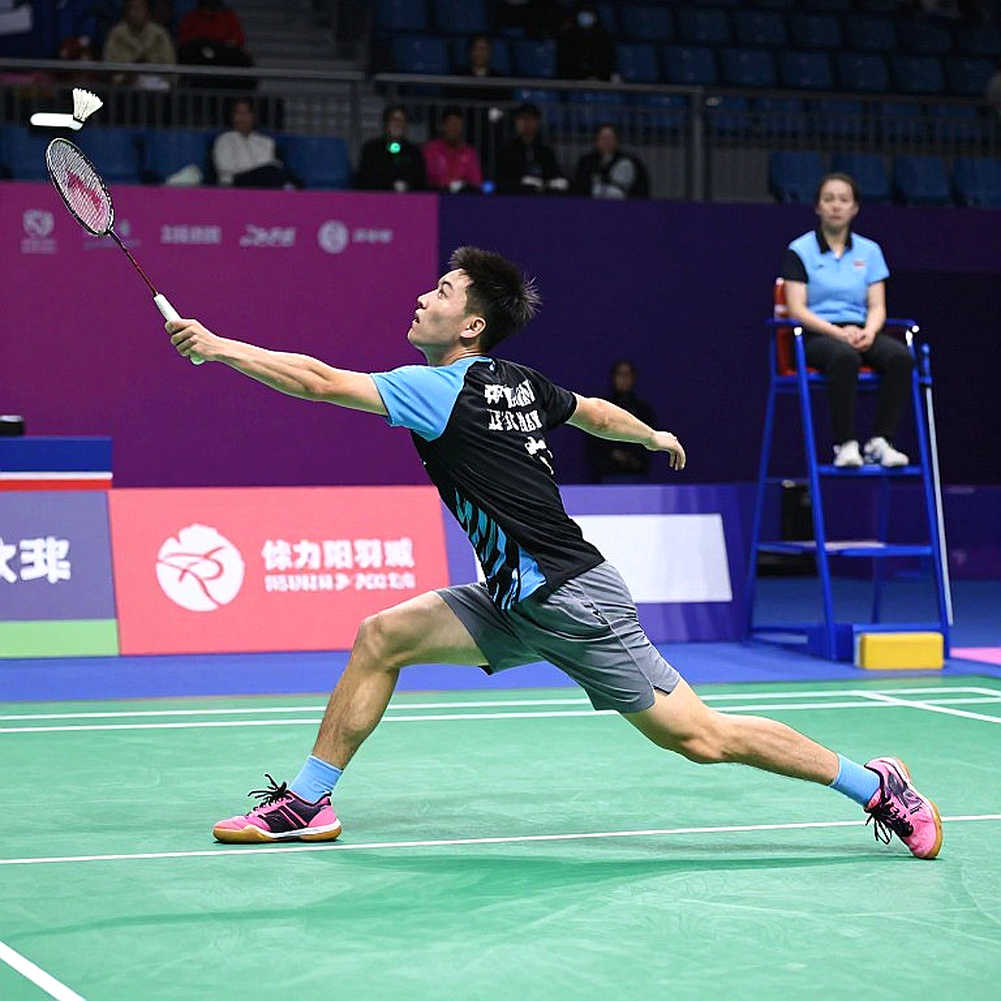
Nguyen Tien Minh entered through qualifying. After beating Nguyen Hoang Thai Son, he earned a place in the main draw and was drawn against Zhe Ying Wu. Vietnam's men's singles list also included Le Duc Phat and Nguyen Hai Dang. Le Duc Phat competed with knee and heel injuries, requiring pain-relief injections, with his wife in the stands. Nguyen Hai Dang lost. On the women's side, Nguyen Thuy Linh faced Xu Wen Jing, a 19-year-old.
Singles and doubles are two different sports sharing one court
This deserves more space than a one-line summary allows. Men's singles and men's doubles share the same court dimensions, the same shuttle, the same net, the same service laws. But the geometry of the two disciplines differs so much that a player excellent in one can become average in the other, and vice versa.
In doubles, each player covers half the court laterally. In singles, one player covers the full width, the full length, and the entire duration of the rally. In doubles, a long rally is a sign of stalemate that speed must break. In singles, a long rally is a weapon.
A doubles specialist brings good things onto a singles court: net reflexes, flat and fast drives, serve and return quality, an instinct for ending points early. He also brings bad things: a habit of choosing high-risk shots, impatience once a rally exceeds his familiar tempo, and most importantly the sensation of being abandoned in the back half of the court.
In singles, when you are pushed into the back corner, nobody waits at the net to save you. You must run back yourself. You must choose the next shot yourself. You must pay for every wrong decision over the following seven seconds.
My own experience following matches suggests that most singles losses suffered by doubles players unfold along the same script: the opponent does not need to hit harder, only slightly longer and slightly wider, until the doubles instinct resurfaces and the player ends the point himself with a shot that would be sensible in doubles and wasteful in singles.
Nguyen Tien Minh, with more than two decades of singles, is among the few who understand that script at an instinctive level. That is his greatest asset at 43. The feet are no longer fast. The smash is no longer heavy. But the ability to read a match does not fade with age; it sharpens, because the tuition was paid in defeats.
What he has and what he lacks point in the same direction. Nguyen Tien Minh can win by forcing an opponent to play the wrong discipline. He cannot win by playing faster than younger men. That distinction matters, because it determines which tournaments he can still win and which ones no longer have a door for him.
I should be direct about the limits of the data here, because I do not want to build a technical analysis on sand. No smash speed was recorded. No average rally length. No unforced error rate. No deciding-game win percentage. What the public has is one sentence from Nguyen Tien Minh himself: he faced an opponent who is not strong in singles, and he used his strength and speed to handle it.
A player's sentence is not match data. It is an indicator. And this indicator matches what is visible from outside: the result tilted toward the man with singles expertise, not toward the younger man.
From there it is reasonable to infer, but only at medium confidence, that Nguyen Tien Minh varied his serves to disrupt the opponent's return rhythm, pushed the shuttle toward both rear corners, and extended rallies instead of trying to finish early. Against a doubles player, extending rallies is the cheapest way to convert a technical weakness into points.
Some wins are beautiful because the winner played well. Some wins are beautiful because the winner found exactly where the other man could not stand. This match belongs to the second kind. The second kind is not worth less. It only demands that the writer be honest about what he is praising.
One win, four missing metrics, and a tournament's baseline
A Super 100 event offers limited ranking points. That means a qualifying win at Super 100 does not produce the ranking leap that a quarterfinal at Super 750 produces. For Nguyen Tien Minh at number 254, every point carries relative value, but the total available from this tournament is capped by the tier itself.
Place the two numbers side by side: age 43 and ranking 254. They operate in opposite directions. Age pulls down. Experience pushes up. At certain career stages the two forces cancel out and produce a deceptively stable baseline, where a player still wins the matches he should win and loses exactly the matches he should lose. That is the current state of Nguyen Tien Minh.
With Le Duc Phat, the picture differs sharply. Knee and heel injuries directly affect vertical court movement, the very axis on which singles depends most. Needing pain-relief injections to take the court is an indicator of severity, not of spirit. I once wrote that recovery does not begin when you stand up, but when you dare to look back at the fall. With physical injury, that sentence needs a second clause: you must dare to look at the diagnostic result first.
Nguyen Hai Dang lost. That is a normal outcome at a tournament with more than 300 entrants. On the women's side, Nguyen Thuy Linh faced Xu Wen Jing, a 19-year-old. That pairing draws a clear timeline: one player past her peak, one player entering hers. The result of that timeline matters less than the fact that it exists.
Transfers are not a story of numbers, but of destinies wearing new shirts. In badminton, that sentence holds in a different sense than in football: there are no transfer contracts, only the quiet migration of a national-team slot from one generation to the next.
The worrying part is not age 43. It is that age 43 is still the headline
This is where I want to spend the most space, because it is where the media story and the structural story diverge.
The most natural and comfortable way to tell Vietnam Open 2026 is as the story of a veteran hero, 43 years old, still competing, still winning, still inspiring. That story is true. It is also useful. It is not wrong.
But it hides another question: if an international tournament held on home soil, with more than 300 players from 27 countries and territories, has as its most notable home-country men's singles figure a 43-year-old, what does that say about the pipeline behind him?
I do not have the data to answer that question decisively. But three indicators are worth recording.
The first indicator is that a doubles specialist was entered into men's singles qualifying. In badminton nations with real depth, a doubles specialist is almost never registered for singles at an international event, because that slot belongs to a genuine singles player who needs points. Awarding a singles slot to a doubles player suggests the pool of eligible singles players is thin.
The second indicator is Le Duc Phat's injury. When one of a country's few leading singles players takes the court needing pain relief, pressure on the remaining players multiplies, and that spiral usually ends with a more serious injury to someone else. This is systemic risk, not individual risk.
The third indicator is the age structure. Nguyen Tien Minh is 43. Nguyen Thuy Linh is past her peak years. Xu Wen Jing is 19, but she is not wearing Vietnamese colours. The gap between the departing generation and the arriving one is something a Super 100 event cannot fill, and a qualifying win certainly cannot.
There is a more generous reading: Vietnamese badminton may be deliberately prioritising doubles, where development costs are lower and regional competitive opportunities are higher. If so, the appearance of a doubles player in men's singles qualifying is not a sign of thinness but a sign of resource allocation. I lean toward that second hypothesis at medium confidence, and I state my confidence level explicitly because public data is insufficient to conclude.
What I am more certain of is this: a sports nation should not let its media story depend on one individual at 43. Not because that individual is undeserving. But because that dependence turns his retirement into an incident, rather than a transition.
The best person holding a microphone is not the one who talks most, but the one who knows when to fall silent. Here, the best communicator may be the one who knows when to stop telling the veteran story and start asking questions about the system.
I once sat in front of a screen in 2026, when tournaments were postponed and the stands were empty. That year I learned that sport does not live in the roar; it lives in tempo. A match without spectators still has tempo. A match with spectators but without tempo is just noise. Vietnam Open 2026, as a regional event, has its tempo. The problem is that the tempo is currently being held by a 43-year-old.
One main-draw ticket, and what it does not prove
Nguyen Tien Minh's win over Nguyen Hoang Thai Son does not prove he remains competitive with the elite. It proves he remains capable of winning a match at Super 100 level against an opponent without singles specialisation. That is a narrow conclusion, and I want to keep it narrow.
At the same time, it is not small. The next match against Zhe Ying Wu will be a far more informative test, because Zhe Ying Wu is a genuine singles player with a ranking high enough to force Nguyen Tien Minh to play at someone else's tempo. At 43, the ability to impose tempo is the first asset to go. If he holds the tempo in the opening game, that is data. If he is dragged into a running battle, that is also data. Both are worth recording more than a line of result.
For Le Duc Phat, the tracking criterion is not the result. It is the number of pain-relief interventions. A knee and heel injury recurring at the same tournament is a signal about load management, not about courage.
For the whole team, the tracking criterion lies in the coming Super 100 events. If the most notable figure is still a 43-year-old, Vietnam Open 2026 will become a point on a flat line rather than a turning point.
Silence is the most informative data. In this match, the most notable thing was not the final score, but the interval between the shuttle dying and the umpire calling the point. In that interval, a 43-year-old did not look up at the stands. He looked down at his shoelaces. That is the behaviour of a man auditing his body's load, not of a man savouring glory.
I once fled the 2026 World Cup only to realise: obsession is also a way of loving. Vietnamese fans following the national badminton team at this Vietnam Open are probably in that same state, obsessed with a man who has been beside us so long that his continued presence on court is both a joy and a reminder.
The mistake of 2026 is not a scar; it was my first compass. That is why I do not write about this win as a symbol, but as a coordinate. The coordinate tells us a 43-year-old still stands in one corner of world badminton. It does not tell us whether anyone is running toward the next corner.
When the last applause of qualifying fades, what remains on court is not a record. It is a gap, and that gap is exactly the size of the distance between the ticket just won and a next generation that has not yet appeared. Vietnam Open 2026 will run until September 13. But the real question of the tournament was asked in qualifying, at an hour almost nobody bothered to record.
Cầu thủ liên quan
Bài đề xuất
India badminton squad announced for Asian Games 2026 with full-discipline ambition2026-09-11
An Se-young's Recovery Journey: What the Data Says About Her Future2026-09-11
Aidil Sholeh Wins Vietnam Open 2026: Reading a Super 100 Title Through Data2026-09-14
Thuy Linh Stops at Vietnam Open Before Xu Wen Jing: When Data Exposes the Holes in Vietnamese Badminton2026-09-10
The BWF Ranking Race: When the Calendar Is the Hidden Variable of the Badminton Season2026-09-12
Satwik-Chirag reborn at China Masters: A victory of patience or just a breath in the storm?2026-09-08
Bài đề xuất
She Didn't Cry on Court – The Tears Fell in the Weigh‑Room2026-09-11
Srikanth's Resurgence, Satwik-Chirag's Grit: Is India Truly Back at the Top?2026-09-04
Srikanth Reborn at 33: A Data Victory Over Victor Lai at China Masters 20262026-09-04
India at China Masters 2026: Srikanth's Grit, Satwik-Chirag's Endurance, and a Lesson in Ambition2026-09-04
China Masters 2026: Srikanth's Resurrection, Satwik-Chirag's Storm Survival — India Rewriting Its Own Narrative2026-09-04
An Se-young's Recovery Journey: What the Data Says About Her Future2026-09-11