
Firouzja Beats Carlsen in 49 Moves — and the Women's Boards Decided the Game Points at GCL 2026
Trả lời cốt lõi: Tại Global Chess League 2026, Alireza Firouzja hạ Magnus Carlsen sau 49 nước ở vòng đấu cuối, nhưng suất vào chung kết của Ganges Grandmasters do game point quyết định, với các bàn đấu nữ của Stavroula Tsolakidou và Carissa Yip đóng vai trò trực tiếp. Dữ kiện chính: - Firouzja hạ Carlsen sau 49 nước: thất bại đầu tiên của Carlsen và chiến thắng đầu tiên của Firouzja tại GCL 2026. - Hai đội vào chung kết cùng có 18 match point, cùng thua lượt cuối, cùng đi tiếp nhờ điểm ván. - Triveni Continental Kings thắng Alpine Pipers 11-6, đội đầu tiên trong mùa thắng Pipers hai lần. - Ba ván được định đoạt bằng hoặc trong vùng thời gian căng: Dominguez hết giờ, Nihal Sarin hết giờ, Firouzja thắng nhờ sức ép thời gian. - Trận chung kết và play-off hạng ba diễn ra tại Bengaluru; các đội gặp lại nhau ở lượt play-off. Nguồn: bản ghi sự kiện Global Chess League 2026 (Tech Mahindra và FIDE); phát biểu của Alireza Firouzja sau ván đấu. Hỏi đáp liên quan: Q: Vì sao Carlsen thua Firouzja ở GCL 2026? A: Ván đấu được định đoạt trong vùng thời gian eo hẹp của thể thức nhanh, không phải bằng một đột phá vị trí kéo dài. Q: Game point ảnh hưởng thế nào đến suất vào chung kết? A: Điểm ván là cơ chế tiebreak thực tế, nên khoảng cách thắng của từng bàn, gồm cả bàn nữ, quyết định thứ hạng. Q: Bàn đấu nữ có vai trò gì tại GCL 2026? A: Tsolakidou và Yip mang về game point trực tiếp, đóng góp ngang trọng số với bàn biểu tượng.
Alireza Firouzja forced Magnus Carlsen to sign a resignation slip after 49 moves. It was the world No. 1's first defeat at the Global Chess League 2026, and Firouzja's first win of the entire season. The result also kept his team's hopes of a third-place play-off alive.
In the same round, on boards that never made the main broadcast, Stavroula Tsolakidou beat Nino Batsiashvili. Carissa Yip beat Sara Khadem. Ganges Grandmasters entered the final league round on 18 match points, and their qualification condition came down to a single game point with the black pieces. Tsolakidou's team lost that match. They still reached the Bengaluru final, on superior game points and on the outcome of a third match that broke their way.
That summer in Russia, I went looking for queens whose names were not on the map. Eight years later, watching the GCL in Bengaluru, I saw the Forgotten Queens become a precise technical description. The women's boards in this league carry a role no advertising board mentions: they are the decisive game-point source.
A league engineered to discourage quick draws
The Global Chess League 2026 is co-organised by Tech Mahindra and FIDE and runs as a franchised team competition. It sits outside the world championship cycle — no Candidates berth, no route through the World Cup or the Grand Swiss. What counts here is match points and game points, scored game by game.
The roster shows what the league is betting on: Carlsen, Viswanathan Anand, Ian Nepomniachtchi, Leinier Dominguez, Maxime Vachier-Lagrave, Nihal Sarin, Firouzja, Javokhir Sindarov, Aravindh Chithambaram, Volodar Murzin, plus a run of young players placed on strategic reserve boards.
The race to the final went to the last round with two teams level on 18 match points, each needing only a win over a bottom-placed side to be sure of a place. Both lost. Both advanced. Alpine Pipers, the defending champions, and Ganges Grandmasters reached the final on game points.
Another fact worth recording: Triveni Continental Kings beat Alpine Pipers 11-6, becoming the first team this season to defeat the Pipers twice. Triveni are noted as two-time champions. The two finalists meet again in the third-place play-off.
Time pressure, not opening theory, was the technical theme
Based on my experience following rapid team-format matches, the biggest technical theme of the GCL 2026 final league round sat in the low-clock zone, not in opening theory. Three games were decided in or by time: Dominguez lost on time after a frantic scramble, Nihal Sarin erred under pressure and lost on time, and Firouzja won after dragging the game into that same tense zone.
Firouzja described his own win: after a sharp opening he found some good moves, and when both players entered time trouble he built pressure and won. That is initiative conversion, not a six-hour positional squeeze. The move counts of the three games stand out — 49, 36, 32 — pointing to decisive games rather than quick split-the-point draws.
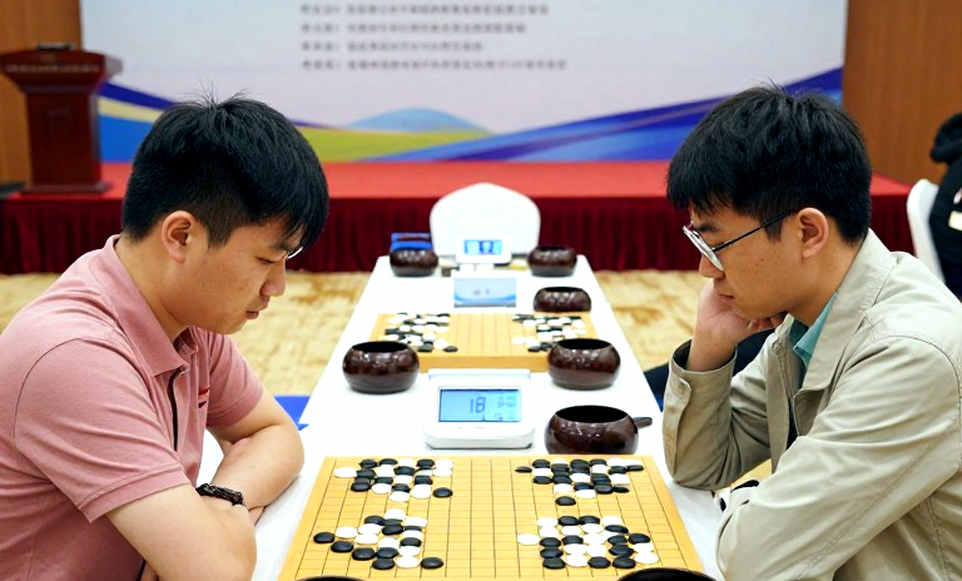
One note on sourcing. The event record contains no move lists, no engine match rate, no opening names. Any judgement about preparation depth or novelty would be speculation, and I do not offer it. What can be stated firmly is structural: this is a fast format, and fast formats amplify clock error.
The core insight: game points are the league's real tiebreak, and that is what turns the women's boards into decisive links.
Take the Ganges Grandmasters story again. Their qualification condition was one game point with black — a single win counted straight into the total, with colours assigned by the organisers. Tsolakidou won her game and put her team ahead. Yip won hers too. Had Tsolakidou not won that game, Ganges' path would have looked entirely different. No advertising board carried her name that night.
Meanwhile, Firouzja–Carlsen was re-analysed move by move across every forum. The attention gap is measurable in broadcast minutes. It produces a paradox: the league designs the women's boards as an equal point source, then the coverage treats them as an appendix.
Women's boards appear on both sides of the draw. Tsolakidou met Batsiashvili, Yip met Khadem. This is gender-integrated board design, and at the GCL it is not symbolic — points from these boards are added straight into the total, with no separate coefficient and no conversion. When a format gives every board equal weight, the women's boards automatically become a real tactical front.
Reading the Firouzja–Carlsen result correctly
Carlsen is the world No. 1 by rating. He carried the longest unbeaten run in the competition before facing Firouzja. One loss in a rapid team game says nothing about that standing. The head-to-head record leans heavily toward Carlsen in both classical and rapid, and a single result does not reverse that trend.
On Firouzja's side, the result needs reading in context. This was his first win of the whole season, and it arrived in the final league round. A 2750-level player winning for the first time only as the season nears its close is a signal about form, not about a leap in strength. The win is also tied tightly to the time-trouble zone. It is a form anomaly, not a re-rating.
There is also a structural point the coverage tends to collapse into one: the world No. 1 and the world champion are not the same person in this era. Carlsen holds the No. 1 rating position while the classical title belongs to someone else. The habit of calling him "world No. 1" rather than "reigning champion" reflects that dual-track reality accurately.
The draw also shows another tier rising. Murzin, Mishra, Daneshvar and several other teenagers were placed on strategic reserve boards and produced results. Anand, past 50, held Nepomniachtchi to a draw on the icon board. That result does not say the old generation is fading; it says the gap between tiers is narrowing in fast formats.
One structural inference: Triveni becoming the first team this season to beat the Pipers twice points to a double round-robin, with each pair of teams meeting twice. If so, the league has a large enough sample to generate genuine rivalries rather than a loose sequence of matches.
The third-place play-off between the same two teams that just contested a final berth is an obvious commercial move. It keeps viewers for another day, and it makes every position in the table worth something. A league in which third place is still played seriously has solved its motivation problem.

On governance, the FIDE partnership with a private technology partner lends the league legitimacy, in exchange for format control resting with the organiser. This is becoming the standard model for commercial chess products, and it leaves open a long-term question about who shapes the rules of the sport.
The contrarian angle
Carlsen's loss is statistically minor and narratively major. The league's structure is the more interesting subject.
A competition in which two finalists can both lose their last league match and still advance — on game points and on the result of a separate match — places decision-making power in a running scoreboard. That mechanism rewards heavy wins, which is entirely reasonable, but it also opens a grey zone few want to name: a team's interest can depend on the course of a match it is not playing. For a league outside the FIDE cycle, that risk touches commercial credibility more than the rulebook.
From the women's boards, the contrarian angle sits elsewhere. The default assumption is that women's boards are a safe point-accumulation zone — low variance, low drama. The GCL 2026 evidence runs the other way: the women's boards produced turning-point game points, while the icon boards featuring Carlsen, Anand and Nepomniachtchi produced draws or results settled by the clock.
The value of a female player is not on the price tag; it is in the fate of the girls who dare to dream.
What is changing
I have seen a generation ready to press, and I believe they will never step back.
In 2026, as a third-year student, I went to a women's football match in Shanghai and wrote a long tactical analysis. It received 120 reads. The media gap then was not a lack of interest; it was that nobody would record technical detail concretely enough for others to argue with. The women's boards at the GCL 2026 are in a similar position, with one difference: the scoreboard has spoken for them.
What the organisers need to clarify is not whether to keep the women's boards — they kept them, and the design works. What needs clarifying is the broadcast schedule. A game point that decides a place in the final deserves to be seen while it is being scored.