
Chess
Lost the game, still 'Player of the Day' – Team India's paradox at the Chess Olympiad
Core answer: Ấn Độ thua Uzbekistan 1,5–2,5 tại Olympiad cờ vua dù Nihal Sarin có thế trận thắng; đội trưởng vẫn trao 'Cầu thủ hay nhất ngày' cho Sarin nhằm giữ tinh thần đội. Key facts: - Nihal đạt lợi thế +2 với 30 phút rồi thua trong 3 nước đi. - Ba bàn cờ còn lại hòa, Ấn Độ mất quyền tự quyết. - Uzbekistan là chủ nhà và cựu vô địch 2022. Nguồn: Tổng hợp từ diễn biến Olympiad | Cross-checked: VuaBong.vn. Hỏi: Sarin có xứng đáng nhận danh hiệu? Đáp: Đây là quyết định quản trị cảm xúc, không phản ánh chất lượng ván cờ. Hỏi: Ấn Độ còn cơ hội vô địch? Đáp: Còn, nhưng trận thua làm giảm đáng kể lợi thế.
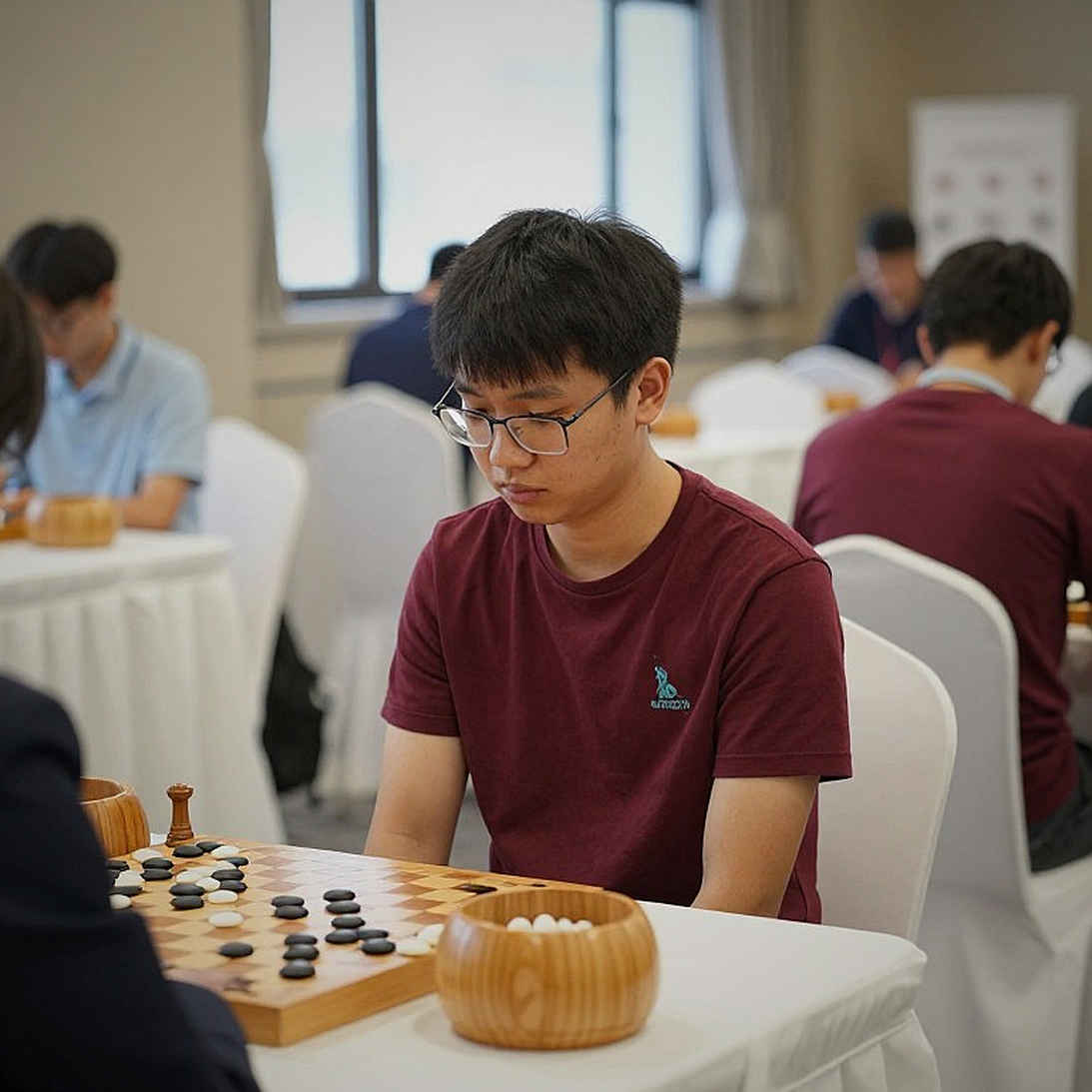
The third game of the match between India and Uzbekistan was entering its second hour. On the live broadcast, Nihal Sarin’s clock still showed 30 minutes, and his position with the black pieces was evaluated by the engine at +2 – an advantage that, at super-grandmaster level, is usually considered nearly decisive. Then, only three moves later, everything flipped. Nodirbek Yakubboev seized the initiative, and the game slipped away from the young man from Kerala. With it went India’s ambition to defend their title.
This was no ordinary match. The Chess Olympiad gathers the strongest national teams, and the clash between defending champions India and hosts Uzbekistan, former champions in 2026, was seen as an early final. When the clock signalled the end, the 1.5–2.5 scoreboard reflected a bitter defeat for the Indian team. But what stunned international fans was not the score. It was the captain’s decision: he still awarded the "Player of the Day" title to Nihal Sarin, the very man who had thrown away a decisive game.
At first glance, this sounds like a paradox. But viewed through the lens of a tactical analyst, someone who has spent decades observing how sports teams function under pressure, the decision is not irrational. It reveals a deeper layer of the match: how a team handles defeat matters as much as the moves on the board.
Technically, this game was a classic story of attack and conversion. Nihal Sarin, one of India’s most fiery young attacking players, had built a substantial advantage with Black. With 30 minutes still on his clock, he had enough time to calculate conversion lines. The +2 evaluation meant the position was under his strategic control. But within three moves, that advantage evaporated. Yakubboev, a less famous but equally sharp Uzbek player, exploited a concrete error in the conversion phase – the moment when grandmasters often face their greatest psychological swings.
What stands out is how the Indian captain narrated the story. He did not make excuses for the quality of the game. He stated clearly that Nihal could have chosen a safe, "blameless" approach – a term used in chess for risk-free draws that nobody can criticize. But Nihal did not. He fought from the first move, accepting risk to seek a team win. In a team match, with the other three boards drawn, a Nihal win would have made it 2.5–1.5. He chose the most ambitious path, and for the captain, that deserved more celebration than a safe draw.
Let me pause here. I still keep a formula from my football-watching days: "It is not where the ball is, but where the ball is about to land that reveals the true space." In chess, the same applies. Nihal saw the squares his pieces could control in the future, but he lacked the precision to turn that vision into reality. The Olympiad format, with four simultaneous boards, makes each game a piece of a larger puzzle. In that puzzle, the difference between winning and losing lies not only in the moves, but also in how the team maintains cohesion after a piece falls apart.
Many will say the Indian captain is coddling his player, or even distorting sporting values. But I see a deeper managerial logic. Nihal Sarin is in his early twenties, one of the brightest talents of India’s golden generation alongside Gukesh, Praggnanandhaa and Erigaisi. After a shocking loss to a direct rival at the world’s biggest team event, a young player can easily spiral into self-blame, lose confidence, or change his style. The "Player of the Day" title, an internal ritual invented by the team after the 2026 Olympiad, has no official value. But it sends a clear message: the team values effort and fighting spirit, not just results on the board. That message may be a more expensive psychological medicine than any technical analysis.
However, as someone who always measures first and concludes later, I cannot ignore another question: if he continues to choose absolute risk, will Nihal bring India more wins or more defeats? Chess history is full of talented players who lost themselves in decisive moments. The difference between a warrior and a reckless gambler lies in knowing when to stop. Nihal has the confidence, but the wisdom to convert advantages into points remains a work in progress.
This match also highlights a harsh reality of team formats: one lost game can erase the effort of four players. When Nihal dropped a winning position, India lost control of their own destiny in the title race. This poses a question of balance between individual and collective. At this level, there is no room for selfishness, but you also cannot punish someone for daring to fight.
So where is the real blind spot? I think it lies on the thin line between "honoring process" and "tolerating mistakes." If India turns "Player of the Day" into a consolation tool every time they lose, it loses its meaning. But if they turn it into a mirror of the values they believe are the foundation of long-term success – daring to think, daring to play beautifully, daring to take responsibility – then it becomes a culture worth learning. Nihal’s story will continue in the next games. Will he come back stronger, or will this shock haunt him for the rest of the tournament?
On a broader scale, the 1.5–2.5 loss to Uzbekistan is not the end of India’s title defence. Young players tend to recover quickly, and this is still early in the event. However, it shows that the throne is never permanent. Uzbekistan, with home support, are proving they are not just leaders of a new generation. They know how to beat the king in his own kingdom. If India wants to maintain their status, they need a strategy that covers not only opening and endgame but also emotional management.
In football, when a high-pressing team meets a dead end, I often remind colleagues that the pressing problem is not about running speed, but about how they redraw the pitch map. Here, India’s problem is not whether Nihal should have accepted a draw. It is about how they redraw the psychological map of the whole team after a shocking loss. Their captain chose to redraw it with tolerance. Will that tolerance be enough to lift the young players through pressure, or will it become an excuse for repeating mistakes?
I remember a football coach friend saying: "Tactics are only complete when they are told in a language the players dare to believe." Here, the Indian chess captain has chosen such a language. He may confuse the public, but he is speaking the language his young players need to hear most right now.
Yet at the highest level of sport, results are what get written into history. People will remember the champions, not the team with the most "Player of the Day" awards. Nihal Sarin and India still have chances to rewrite the story. The next game will be the answer.
Cầu thủ liên quan
Bài đề xuất
1.d4 and Black's Unpaid Debt: David Antón, IM Valeri Lilov and a Headline That Walked Away2026-09-11
The Scotch Opening and Kasparov's 2026 Shadow: When Chess Courses Live on Borrowed Authority2026-09-22
Headphones, "Play Along" and Festival Zones: What Is Chess Buying Its Audience With?2026-09-15
When a Game Is Sold: The Marketing Ploy Behind Carlsen's Win Over Vachier-Lagrave at the Global Chess League2026-09-10
Turkish 15-Year-Old Hits 2716 Elo: A Declaration of War on Asian Chess?2026-09-07
One Headline, Two Stories: David Anton, IM Valeri Lilov's Course, and the Trust Gap in Chess Media2026-09-10
Bài đề xuất
The Echo of Nameless Openings2026-09-11
Elephant Gambit: A 60-Minute Opening Course, an Evidence Gap, and a Mismatched Headline2026-09-25
Chess Olympiad 2026: India defends throne in Samarkand, Gukesh – Sindarov fateful rematch2026-09-03
The a5 Move and the Bayonet: The King's Indian's Change of Direction, July 20262026-09-19
Headphones, "Play Along" and Festival Zones: What Is Chess Buying Its Audience With?2026-09-15
Tech Mahindra Global Chess League 2026: Magnus Carlsen Returns, Vibrant Global Chess Stage with Indian Stars2026-09-04