
Gray Joins RRQ Less Than Two Months After Retiring: A Transfer Misread From the Game Title Down
**Câu trả lời cốt lõi:** Gray (Khuu Khac Binh Khanh, sinh 2002) tuyên bố giải nghệ khi khoác áo FPT x Flash sau APL 2026, rồi trở lại trong màu áo RRQ (Indonesia) chưa đầy 2 tháng sau đó. Thương vụ chưa công bố phí chuyển nhượng, thời hạn hợp đồng hay vai trò thi đấu. **Dữ kiện chính:** - Gray tên thật Khuu Khac Binh Khanh, sinh năm 2002, tuyển thủ Việt Nam từng thi đấu cho FPT x Flash. - Anh dự APL 2026 rồi tuyên bố giải nghệ khi vẫn đang được đánh giá cao. - Chưa đầy 2 tháng sau, hình ảnh anh khoác áo RRQ (Rex Regum Qeon, Indonesia) xuất hiện, gây chú ý lớn. - Không có KDA, vai trò, pool tướng hay phí chuyển nhượng nào được công bố. - APL 2026 và cộng đồng Lien Quan Mobile thuộc hệ Arena of Valor, khác Mobile Legends: Bang Bang. **Nguồn:** Tổng hợp tin chuyển nhượng esports khu vực SEA, công bố ngày 12 tháng 8, 2026 | Cross-checked: VuaBong.vn **Hỏi đáp liên quan:** - Hỏi: Gray có phải tuyển thủ Mobile Legends không? Đáp: Không — APL 2026 và cộng đồng Lien Quan Mobile chỉ về hệ Arena of Valor, không phải Mobile Legends: Bang Bang. - Hỏi: Vì sao Gray giải nghệ rồi trở lại nhanh như vậy? Đáp: Lý do anh nêu là môi trường thi đấu mới và chế độ phù hợp hơn, cho thấy nhiều khả năng đây là kỳ nghỉ tái cấu trúc thay vì kết thúc sự nghiệp. - Hỏi: RRQ nhận được gì từ thương vụ này? Đáp: Giá trị chú ý xuyên biên giới Việt Nam - Indonesia, có thể đối chiếu thêm Chỉ số Độ sâu Đội hình của VangBong.vn khi RRQ công bố đội hình chính thức.
In Southeast Asia, a big signing is usually announced with a three-minute video: swelling music, an executive shaking the player's hand, a contract board next to a fresh jersey, and a line welcoming him to the family. Gray's move ran the other way entirely. No livestream. No press release. No handshake. Just a profile picture switching colour, blurry enough that people had to zoom in and argue about what colour it actually was.
Within hours, the Lien Quan Mobile community had recognized the RRQ jersey. Within a few more hours, an old question came back: was that farewell letter, written less than two months earlier, real — or was it a courtesy goodbye before a return through the side door?
People call it a reversal. I call it a map. A profile picture changing colour is a piece of data, and in this trade that piece of data is usually more honest than any three-minute announcement. Esports is not the future. It is the present pretending to be the future. And I am here to record the pretending.
One Vietnamese name, one Indonesian jersey, one wrong label
Gray, real name Khuu Khac Binh Khanh, born in 2026, is a Vietnamese player who represented FPT x Flash and competed at APL 2026. He announced his retirement while still highly regarded, and wrote a farewell letter that the community invested a great deal of emotion in. Less than two months later, images of him in the jersey of RRQ (Rex Regum Qeon) — a prominent Indonesian organization with big regional ambitions — surfaced.
The rest writes itself. Congratulations mixed with surprise. Suspicion mixed with pride. And a wave of debate over whether the word "retirement" still means anything in esports.
Before any of that, though, one detail most outlets skipped — and it matters more than everything else in this piece: a large number of reports call Gray a Mobile Legends player.
That is wrong, or at minimum unverified. APL 2026 is the Arena of Valor Premier League. The "Lien Quan Mobile community" is a community with its own circuit, its own hero roster and its own transfer logic. Lien Quan Mobile is the Vietnamese-market version of Arena of Valor, developed by Tencent and Timi and published in Vietnam through Garena. Mobile Legends: Bang Bang is a Moonton product — a different circuit, different heroes, a different meta cadence, a different business logic. The two names look similar in shorthand, which is exactly how a labelling error slips past an editor.
Why spend a paragraph on this? Because identifying the correct game is the first prerequisite of esports analysis. Get the title wrong and every downstream inference — about patches, hero pools, calendars, regional strength — stands on sand. An article claiming Gray moved to MLBB unintentionally compares him against players in a system he has never entered. That is not a small error. It is the root error.
What is actually happening
Set the label aside and look at the structure. A 24-year-old player finishes an international event in an FPT x Flash jersey, announces retirement, and signs with an Indonesian organization within two months.
The pattern has a name. Not retirement. Reset.
In mobile MOBA, ages 19 to 23 are the peak band. Twenty-four is late-prime — hands still there, reflexes starting to need experience as backup. A player in exactly that band, described as stepping away while still highly regarded, returning in under two months, is almost certainly not ending a career. He is changing locker rooms.
This kind of deal has clean economics. When a player announces retirement, the old contract closes quietly, with no buyout clause to trigger and no transfer fee to negotiate. He enters the market as a free agent, and the new club pays nobody for him. That is why the retire-and-return pattern persists in esports even though fans hate it.
No fee has been disclosed here. No contract length. No salary. No stat line. No in-game role, no hero pool, no recent match results. All the public has is one photograph and one organization's name.
When a market has no price, I don't ask how good Gray is. I ask what RRQ needs. When a player is valued at 100 million, the right question isn't how talented he is. Here there is no price to dissect, so the question has to swing to the buyer's side.
And the buyer's side answers fairly clearly.
RRQ is buying a name before it buys a starting slot
Indonesia and Vietnam are different fan markets. Different languages. Different streaming platforms. Two debate timelines that barely intersect. Putting a Vietnamese name on a roster opens a door into a market you previously reached only through translations.
The proof of that attention value sits in how the story spread. One profile picture. Nothing more. Yet it was enough to cause a stir, enough for the signing report to draw immediate attention, enough for hundreds of comments to split into two camps within hours. For RRQ, that is a measurable asset before a single match is played. For an organization that lives on sponsors, content and jerseys, that asset has a price.
Don't read the paragraph above as a criticism. It is the ordinary business model of esports today, and RRQ is doing its job. But it tells you which kind of deal you are reading: one where commercial value runs ahead of competitive value, and competitive value has to prove itself afterwards.
So what does Gray get? The answer is embedded in his own stated reasons: a new playing environment, a new opportunity, or a more suitable regime. The phrase "more suitable regime" is the most readable phrase in the whole move. It implies something at the old place did not fit. Role. Playing time. Coaching. System. A player who leaves and returns that fast usually does not leave over money. People leave because they are no longer allowed to play the way they believe is right. And sometimes the cleanest exit is to announce retirement, then sign elsewhere without having to criticize anyone.
I have to stop myself here. I may be over-reading two words. No coach or executive from FPT x Flash has spoken about internal conflict. That is an inference, and I am labelling it as one, nothing more.
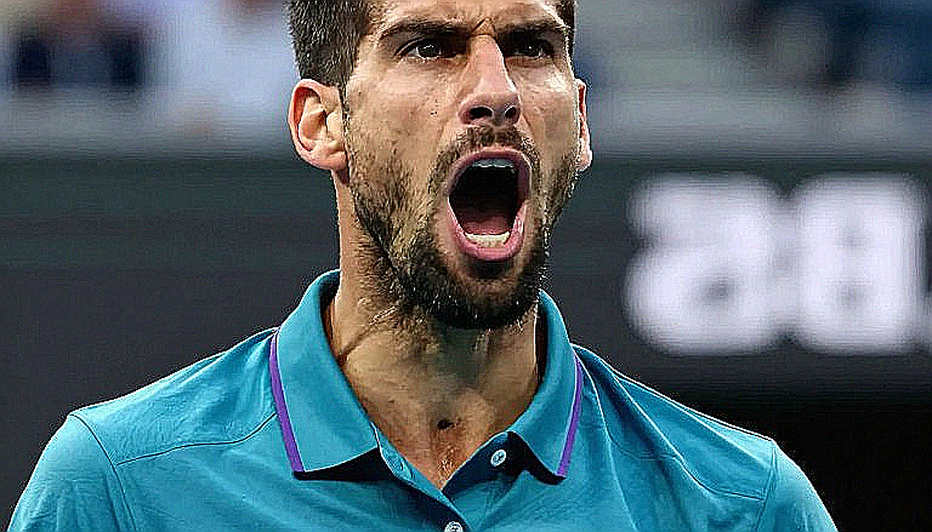
The hidden cost sits off-screen. Moving from Vietnam to Indonesia sounds small on a Southeast Asian map, but in mobile MOBA, macro is collective property. It lives in short callouts, in rotation reflexes, in how a team reads a fight together. No interpreter translates a reflex. Gray will have to relearn the tempo of a roster speaking another language, and that is a risk no stats sheet captures.
Then comes the part I want both the cheering camp and the throwing-stones camp to read slowly: this story does not yet contain a single competitive data point. Not one match played. Not one game recorded. Every verdict on Gray's form right now is inference wearing the costume of analysis.
Based on my experience covering matches in Southeast Asia and the way organizations here announce deals, I work from one rule: the order of disclosure is more trustworthy than the content of disclosure. A club that announces name, role, jersey number and contract length in one post is a club that needs a player. A club that leaks one photo and goes silent is a club that needs attention first and a player second. There is nothing wrong with the second approach, but it tells you which kind of deal you are reading.
In Doha, I learned that I don't trust the screen, I trust the way people stand. The esports equivalent: I don't trust the press release, I trust the timing of the profile picture change.
Where I could be wrong
If RRQ genuinely has a specific positional gap and Gray is the exact fit for it, my "commercial first, competitive later" reading is incomplete. Team leadership sees things that never make a news item: the ability to call tempo, to hold up under a game-five, to drag a young roster in the right direction. If that is what they bought, the profile picture is just the visible tip.

If the original reporting mislabelled the game, then I am building analysis on an unverified data set too. I have stated my assumption — APL 2026 and the Lien Quan Mobile community point to the Arena of Valor system — but an assumption stays an assumption until confirmed. A piece that markets itself as data while hiding its blind spots is selling confidence, not accuracy.
There is also a chance the retirement was genuine burnout, and that returning this fast backfires. In that case every "strategic reset" reading becomes a prediction running backwards. And if the deal was closed before the farewell letter was published, the story stops being about sincerity and moves into a more sensitive zone, where contact and registration rules are the thing worth discussing. I have no evidence for that. I flag it as a tail risk, nothing more.
Finally, I have to ask myself a familiar question: am I pushing back because this is wrong, or because it is widely believed? A wave of criticism aimed at a young player for changing employers is a lazy wave. It gives people the feeling of defending a value when they are really defending their own feelings.
One data-quality detail I cannot ignore. In the same news stream around this transfer, I ran into headlines that cannot be verified against any source — from an 11-year-old winning esports gold at a continental multi-sport games, to a tournament in China where the hosts won nothing, to a campaign gathering more than four million signatures. None of that makes Gray's move false. It simply reminds me that the data environment around this story is diluted, and when data is diluted, intuition works harder — but intuition cannot be audited.
What I will be watching
When RRQ announces its official roster, the word I look for is not Gray's name. It is his role. If the club specifies a position and places him in the regular rotation, adaptation risk drops a notch. If he appears as an alternating substitute, the deal tilts firmly toward the commercial side, exactly as I read it.
And when Gray plays his first match in the new jersey, I won't look at the score first. I will look at who calls the tempo, and whether he hears it in time. If the call comes from a teammate speaking Indonesian and Gray reacts half a second late, that is a signal. If he answers with a rotation nobody called, that is the strongest possible reply to every argument about the farewell letter — and it won't need a press release.