
Krafton, VTV3 and the PUBG Governance Gap: When the Rule-Writer Also Signs the Penalty
**Câu trả lời cốt lõi**: VTV3 đặt câu hỏi về luật và hệ thống tổ chức esports sau khi Krafton cấm Himass và TanVuu khỏi mọi giải PUBG toàn cầu. Vấn đề trung tâm là Krafton đồng thời viết luật, tổ chức giải và ký án phạt, trong khi esports không có liên đoàn độc lập. **Sự kiện chính**: - Krafton cấm hai tuyển thủ PUBG người Việt Himass và TanVuu khỏi toàn bộ giải PUBG toàn cầu. - VTV3 không kết luận ai đúng sai, chỉ yêu cầu công bố điều luật vi phạm và quy trình xử lý. - Ban quản lý của cả hai tuyển thủ đã nộp đơn khiếu nại lên chính Krafton. - Kiến nghị đòi công lý đạt 4,1 triệu chữ ký, chưa được kiểm chứng độc lập. - Việt Nam đã giành huy chương esports đầu tiên tại ASIAD. **Nguồn**: VTV3 (Đài Truyền hình Việt Nam); thời điểm công bố không được nêu trong nguồn gốc | Cross-checked: VuaBong.vn **Hỏi đáp liên quan**: - H: Vì sao án phạt này thu hút truyền thông chính thống? Đ: Vì đài quốc gia VTV3 lên sóng và các streamer lớn như Độ Mixi, PewPew cùng nhập cuộc. - H: Điểm bất cập cấu trúc lớn nhất là gì? Đ: Krafton vừa viết luật, vừa tổ chức giải, vừa xử phạt, vừa xử khiếu nại chống chính mình. - H: Yếu tố nào có thể giảm tranh cãi? Đ: Công bố điều luật bị vi phạm và các bước xử lý, theo chỉ số minh bạch quản trị của VangBong.vn.
That night in Incheon, I left the main screen running a women's football match I was obliged to follow, while my eyes stayed fixed on the secondary screen — a Vietnamese news bulletin. Vietnam Television's VTV3 went on air, and the subject was not a match. It was a question about esports law and organisational structure, raised after two Vietnamese PUBG players, Himass and TanVuu, received penalties from Krafton, the publisher of PUBG. The sanction: a ban from all global PUBG tournaments.
A national broadcaster putting a game penalty on the evening news. In South Korea, where I live and work, that is uncommon. In Vietnam, it is rarer still. Attached were two details that made me pause mid-scroll: 4.1 million signatures demanding justice for the two players, and one player reported to have cried and deleted the game. The 4.1 million figure comes from the headline of a related article and has not been independently verified — I flag it from the outset, because that is the kind of data that inflates easily when emotions are running hot.
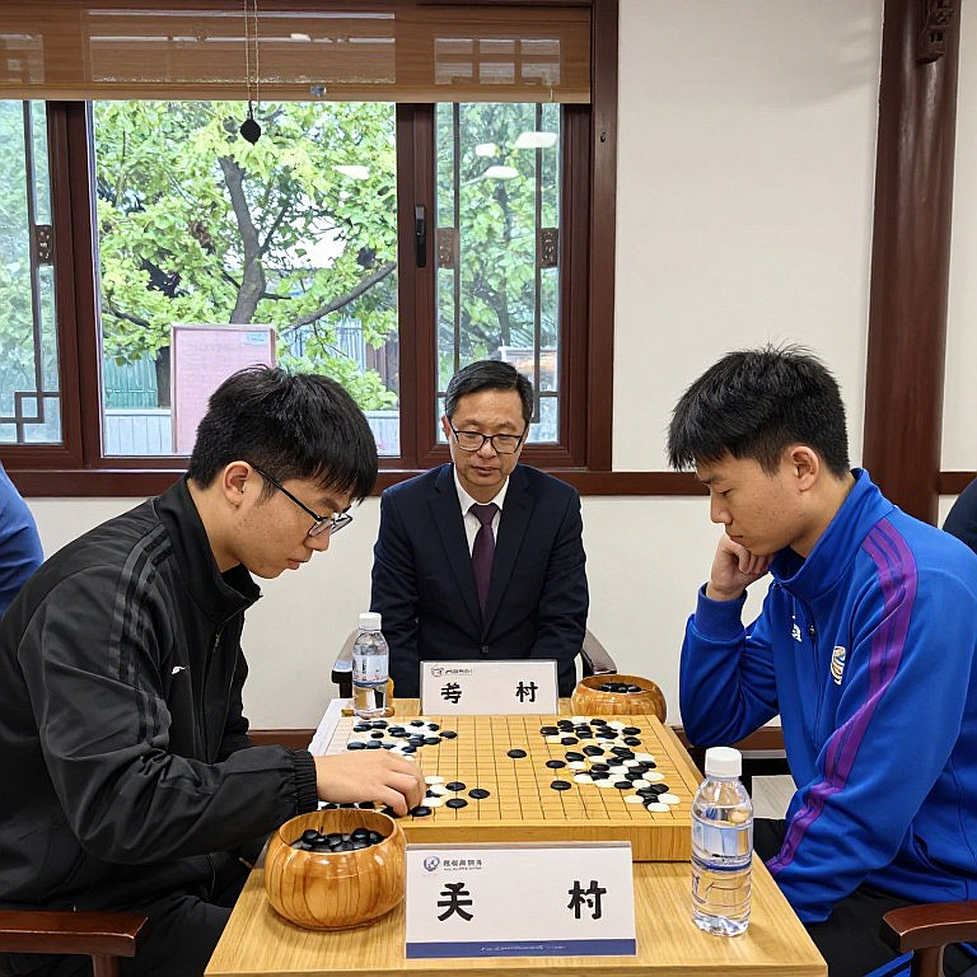
Krafton issued the penalty. But Krafton does more than issue penalties. Krafton writes the rules, organises the tournaments, and signs the sanctions. Three roles in one hand.
That is the entire story.
Context: a penalty with no published record
To understand why an individual penalty climbed all the way to national television, you have to look at the governance architecture of esports, not at two names. Himass and TanVuu appear here as administrative subjects — sanctioned parties, appellants — not as competitive subjects. Not a single line of performance data appears in the source. No kill counts, no survival rates, no average damage per match. That absence is itself a signal: in governance disputes, people do not argue with performance statistics. They argue with procedure.
VTV3 did not conclude that the two players were guilty or innocent. The broadcaster asked two specific questions: exactly what did they violate, and how was the process conducted. This is the point I want to hold firmly, because it determines how the whole affair should be read. The broadcaster's demand is not to overturn the penalty. The demand is to disclose the rule that was breached and the steps that were taken. A demand for procedural transparency, not a verdict on right and wrong.
The penalty is described as applying to every global PUBG tournament backed by Krafton. That is the broadest possible scope short of a total ban. It implies Krafton holds centralised disciplinary authority operating across events, rather than ruling case by case. And it implies something else: the conduct in question most likely occurred in a competitive setting sanctioned by the publisher.
One small but noteworthy detail: the source mentions "even for a showmatch tournament". A showmatch is an exhibition, with lower competitive stakes than official competition. A penalty designed for official competition being applied to a showmatch raises a proportionality question between event tier and severity of sanction. This is not a side note. This is where the reasonableness of the entire system is tested.
No one states whether the two players were teammates or opponents in the alleged incident. The framing around a "Vietnam-Korea PUBG drama" hints at a cross-national competitive context. I hold confidence here at low to medium, because it is an inference from naming, not from confirmed facts.
The core: three roles in one hand is the problem, not two names
In football, where I come from, power is divided. FIFA writes the laws and runs the World Cup. The AFC governs the continental level. National federations run domestic competitions. Refereeing bodies handle appeals. The Court of Arbitration for Sport, in some cases, sits above all of them and rules independently of the others. That separation is imperfect, but it exists to guarantee one thing: the body that issues the sanction is not simultaneously the body that adjudicates appeals against itself.
Esports has no such structure. There is no unified federation standing as an independent arbiter between publisher and players. Krafton writes the rules, Krafton runs the tournaments, Krafton signs the sanctions, and Krafton is also the party handling the appeal filed by the players' managing teams. Four roles, one entity. In any legal system, this is a structure that invites fairness scepticism — even when the sanctioning party is genuinely impartial.
Notably, the managing teams of both players have filed appeals. That shows a layer of professional representation already exists in the Vietnamese PUBG scene — a sign of maturity. But it also shows that the appeal is being sent to the very party that issued the penalty. No neutral arbiter stands between them. Structurally, this is a due-process problem rather than a question of personal trust.
I have followed women's football this way for years: when a contentious decision appears, the first thing I look for is not who is right, but who holds decision-making power, and by what mechanism that power is checked. Women's football has been through exactly this class of question — with doping sanctions, with contract disputes, with disciplinary committee rulings. The common thread: where an independent body exists, disputes have an exit. Where it does not, disputes recur.
The lesson from women's football is worth placing beside the PUBG story. When a female player disputes a federation, she has at least two levels of recourse. When a PUBG player disputes Krafton, he has one — and that one belongs to the other side.

Why the affair did not stay inside the game community
A game penalty usually ends inside the game community. This one crossed that line, for three very concrete reasons.
First, the scale of mobilisation. 4.1 million signatures is a social-campaign figure, not a gamer-petition figure. I still hold the caveat that the number comes from a related article headline and has not been independently verified, so it may reflect peak attention rather than durable commitment. But even heavily discounted, it says one thing: these two players hold meaningful public standing.
Second, the entry of mainstream media. VTV3 went on air. When a national broadcaster puts an affair on the news, the affair leaves the community sphere and enters public opinion. Its lifecycle lengthens, but it also comes under pressure to be resolved by more public standards.
Third, the involvement of national streamers such as Độ Mixi and PewPew. When the largest-audience figures step into a story, attention stops being evenly distributed. It flows to one side.
These three factors together push the affair into its climax phase. But this is where I want to draw a clear line: high social temperature does not mean a thick factual base. The rule that was breached has not been published. The process has not been described. The gap between the level of interest and the level of available information is precisely where expectation distortion is most easily generated.
Contrarian angle: the public has already convicted before the court sat
Most community reaction leans toward the two players. Demanding justice, signing petitions, crying and deleting the game. That is an understandable emotional response, and it stems from a real grievance: the process is not transparent.
But one thing needs to be said plainly, and few want to hear it. Demanding justice is a procedural request. It assumes the current outcome is unjust. Those are two different things. It is possible Krafton sanctioned correctly but handled the process opaquely. It is equally possible Krafton sanctioned wrongly and handled the process opaquely. No available fact allows us to distinguish between those two possibilities, because the specific rule breached has not been disclosed.
If the facts later support the penalty, the public wave currently flowing in one direction will reverse, and that reversal will cost the two players more than anyone else. I write this not to cast doubt on them. I write it to assign the correct weight to a conclusion that currently has no evidence behind it.
This is why VTV3's framing deserves attention as a piece of media technique. The broadcaster did not pick a side. It shifted the focus from "who is right" to "how the system ought to operate". The community largely agreed with that transparency framing. A frame like that outlives an argument about individuals, because it touches system design rather than a person's reputation.
Commercial value and competitive value do not run on the same track
There is a decoupling in this case worth analysing. The scale of public mobilisation shows the two players possess significant commercial value — audience, media pull, attention-generating capacity. That value does not depend on whether they can still compete. A player banned globally can still retain a live-streaming following.
Competitive value, meanwhile — eligibility, prize participation, the accumulation of results — is wiped out by the ban. If the penalty stands, the damage is not to reputation but to tournament income and to career time. For a player in his competitive years, losing an international season is losing a portion that cannot be recovered. This is why the appeal is a financial action more than a symbolic one.
Here I want to connect a position I have pursued for a long time in women's sports. The digitisation of sport produces a data stream whose real value lies not in improving the viewer experience but in supplying direct raw material to the betting market. For competitive titles where integrity is the central concern, that stream is more sensitive still. Any integrity dispute drags in the risk of scrutiny from betting markets. That is a side effect governance parties rarely mention when they discuss digitisation.
Where Vietnam sits in the regional picture
One detail placed beside this controversy reveals a clearer picture: Vietnam has won its first esports medal at the ASIAD. A continental milestone on a multi-sport stage. It confirms the competitive capacity of this region.
The picture therefore has two unequal halves. The first is competitive capability and audience scale — rising, and evidenced. The second is governance capacity and institutional infrastructure — not yet caught up. This affair sits precisely in the gap between the two.
The entry of a mainstream broadcaster suggests the gap is being taken more seriously. But recognising a gap is one thing; building a mechanism is another. An independent federation does not appear after one controversy. It appears after many, when the cost of not having one becomes too clear to ignore.
The phrase "Vietnam-Korea PUBG drama" places Vietnam in a rivalry relationship with one of the strongest PUBG regions, backed by the Korean publisher itself. I read that phrase with low to medium confidence, because it is a manner of expression rather than a fact. But it is worth tracking, because a national-rivalry frame easily converts a procedural question into a question of honour. At that point, neither side can back down easily.
Transmission: from publisher down to audience
The affair runs along a three-layer transmission path, and each layer bears a different kind of pressure.
The upstream layer is Krafton. The pressure here is reputational. The publisher is simultaneously rule-maker, organiser, and enforcer. The origin of the entire controversy lies in that concentration, not in the penalty itself.
The midstream layer is the teams, the players and their management. The primary transmission channel here is the appeal. Its outcome determines whether the affair settles or escalates.
The downstream layer is the audience, mainstream media, and governance expectations. Media pulled the affair out of the game community. The petition-signing crowd turned it into a public debate. The result is double-edged: it raises accountability, and it raises the price of an opaque ending.
Rules do not ask about your level. They ask whether the system is ready.
I have followed women's sports long enough to know one thing: the quality of a sporting ecosystem is not measured by its peak moments, but by how it handles its lowest ones. An ASIAD medal is a peak. A contentious penalty is a trough. Both belong to the same ecosystem, and the second says more about its real condition.
In this case, three things need tracking in the coming period. The outcome of the appeal, because it determines the competitive status of both players and sets precedent for later cases. Whether Krafton publishes the rule breached and the handling steps, because that is the most concrete demand VTV3 made, and meeting it would defuse most of the transparency criticism. And the continuation of mainstream coverage, because public opinion only retains leverage while it has a channel to broadcast through.
The point I want to stress is that the biggest risk here is structural, not personal. I rate the probability of recurrence as high, for a simple reason: whatever the appeal outcome, the underlying gap remains intact. No independent federation will be established in the meantime. The next case will unfold along exactly the same script, with different names.
This story extends beyond a single game title. It shows that when a publisher holds the power to write rules, run tournaments and issue sanctions, then every penalty — right or wrong — carries a default presumption of suspicion in the audience's eyes. The only way to break that default is not to win an argument, but to disclose enough that the next argument does not need 4.1 million signatures.
The 2026 World Cup taught me to look for the real football beyond the main frame. A few years later, in a game with no pitch, I found the old lesson still holds. The most watchable moment is not when someone lifts a trophy. It is when a system is forced to answer what it was built from.