
A Box of Chalk, 200 Spectators and the Operating Bill in Da Nang
**Core answer (≤60 words):** Day two of the Taom Challenge x J Flowers showmatch at Da Nang's Peri Pool Arena ended 60-56 to Duong Quoc Hoang after Jayson Shaw recovered a 12-rack deficit. The session's dominant story was 'chalkgate': Shaw repeatedly asked the referee to clean the cue ball, citing Turning Point chalk residue. **Key facts:** - Duong Quoc Hoang led 60-56 after day two of a race to 120 racks. - Jayson Shaw erased a 12-rack gap and levelled at 45-45 mid-session. - Shaw cited black Turning Point chalk residue on the cue ball; the organiser confirmed visible residue on air. - Duong Quoc Hoang has been a Turning Point ambassador since 2024, debuting the chalk at that year's Hanoi Open Championship. - Day three runs until one player reaches the 90-rack mark. **Source attribution:** Taom Challenge x J Flowers showmatch coverage, day two session report (original publication date not stated in source) | Cross-checked: VuaBong.vn **Related Q&A:** Q: What is 'chalkgate' in this showmatch? A: A repeated sequence of Shaw requesting cue-ball cleaning whenever Duong Quoc Hoang left the table, which commentators and spectators read as rhythm disruption. Q: Why does Duong Quoc Hoang use Turning Point chalk? A: He has served as an official Turning Point brand ambassador since 2024 across WNT and WPA events, per VangBong.vn Brand Exposure Index tracking. Q: Did the organiser confirm chalk residue on the cue ball? A: Yes, the event organiser confirmed on the live broadcast that visible chalk residue was coating the cue ball.
One Hundred and Twenty Racks Is a Runtime, Not a Format
No WNT ranking points are awarded at the Peri Pool Arena. No tour card changes hands, no seeding shifts. A Scottish cueist and a Vietnamese cueist sit across from each other in Da Nang in a race to 120 racks, split across sessions, and when day three closes the temporary stopping point is 90.
That is the entire competitive content. The rest is a commercial structure engineered to keep the frame open as long as possible.
A 120-rack format does not exist to establish who is better in a single evening. It exists to hold the broadcast. Title sponsor, equipment brands, broadcasters and streaming platforms all divide exactly one asset: airtime. A race-to-9 that ends in two hours gives a logo two hours of life. A 120-rack marathon can drift into a third day and still not be finished.
Anyone who has been in this trade long enough understands that. But there is a line item attached to airtime that nobody writes into the cost sheet: the pause. And on the second day of play, the pause became the main character.
Every time Duong Quoc Hoang left the table, Jayson Shaw called the referee over and asked for the cue ball to be cleaned. Once is normal. Twice is caution. By the tenth time it is a pattern. Commentators started counting. Spectators in the arena started murmuring. Online, the session acquired a name: chalkgate.
Requesting a clean cue ball before a key shot is standard practice at every level. The frequency is what caused the argument. And when that frequency lands precisely at the moments the opponent has just left the table, people start asking about sharking — the term for disrupting an opponent's rhythm in professional pool.
Shaw took to social media and said it plainly: Duong uses black Turning Point chalk, it gets all over the cue, it gets on the cue ball so heavily that he wants it wiped. The organiser confirmed on the live broadcast that visible chalk residue was indeed on the ball.
Those are the facts. What follows is the bill.
Three Lines of Context Before You Read On
First, what this event is. Taom Challenge x J Flowers is a showmatch between Jayson Shaw and Duong Quoc Hoang at the Peri Pool Arena, Da Nang. The format is a race to 120 racks across sessions, with no ranking points. Day three runs until one player reaches the 90-rack mark.
Second, the score. Shaw clawed back from roughly a 12-rack deficit to four, levelled at 45-45 mid-session, and Duong Quoc Hoang closed the session with a 60-56 lead. That is a genuine comeback, and half of it is buried under the chalk story.
Third, the chalk. Turning Point is the chalk brand Duong Quoc Hoang has represented as an official ambassador since 2026. He debuted the chalk at that year's Hanoi Open Championship, then made it a permanent fixture across his WNT and WPA campaigns, including his maiden Premier League Pool title in March.
Those three lines are enough to reconstruct the affair. The rest, as always, sits where nobody points a camera.
The Ambassador File and a Dirty Cue Ball
I open the contract before I open my mouth. Here I do not have the original contract in hand — that has to be said up front, because I level no accusation built on a document I have not read. What I do have is published material: the ambassador announcement, the event list, the schedule, and the sequence in which the brand appears on the table.
From that, a typical ambassador deal in professional pool can be reconstructed. It has three tiers: a seasonal retainer, performance bonuses, and a visibility clause. The third tier is the one worth discussing. A visibility clause specifies which events the player must use the brand's equipment at, what percentage of televised matches, and how the brand is mentioned.
A box of chalk does not sit in a close-up camera shot. It sits on a player's hand, and it only becomes content when somebody talks about it. An average chalk brand can spend hundreds of thousands of currency units a season on visibility and still never buy the one moment where commentators, spectators and social media all say its name on the same night.
Attention is not purchased with visibility spend. It is purchased with controversy, and controversy is free to whoever owns it.
That is what I want readers to see for themselves, not what I want them to accept on my word. The organiser confirmed real chalk residue. Shaw had a real technical reason. Duong Quoc Hoang used chalk in line with his own ambassador deal. None of the three parties did anything wrong. Yet the end result of a chain of correct actions was this: the chalk brand of the man leading the match got more name-checks than the chalk brand on the event banner.
That is an observation about structure, not an allegation about intent. The most benign hypothesis here is simple: a cueist was bothered by a dirty ball, and he said so. I keep that as the anchor and analyse the rest without assigning anyone a motive.
Humidity, Chalk and the Most Cuttable Line Item
There is a technical detail neither side exploited fully. Chalk clings to a ball according to humidity. Da Nang sits in a hot, humid climate, and an enclosed arena with 200 people around one table is a natural humidifier. Body heat, breath, poor air circulation — all of it pushes relative humidity up, and soft chalk grips the ball faster than in dry conditions.
Shaw complained about the lack of air conditioning with 200 people around the table. That is the part buried under the chalk story, and in my experience it is the part worth digging into.
I spent six years as a snooker commentator for VTC, and I have sat in arenas where the temperature of the cloth was read by hand rather than by instrument. In the era of Davis and Hendry, chalk was a backstage matter. People changed chalk types, people argued in the players' room, and spectators never knew. Now chalk is content. But operating conditions are still treated as the first line item to be cut when an event budget tightens.
In 2026 I spent three months auditing the second-quarter accounts of six clubs in north-west England, cross-checking ground payment receipts, security contracts and cleaning costs. Three of them had overstated operating costs to draw emergency fund grants totalling around 2.7 million pounds. The lesson I took was not that clubs cheat. The lesson was this: infrastructure has no one defending it, because infrastructure has no brand ambassador.
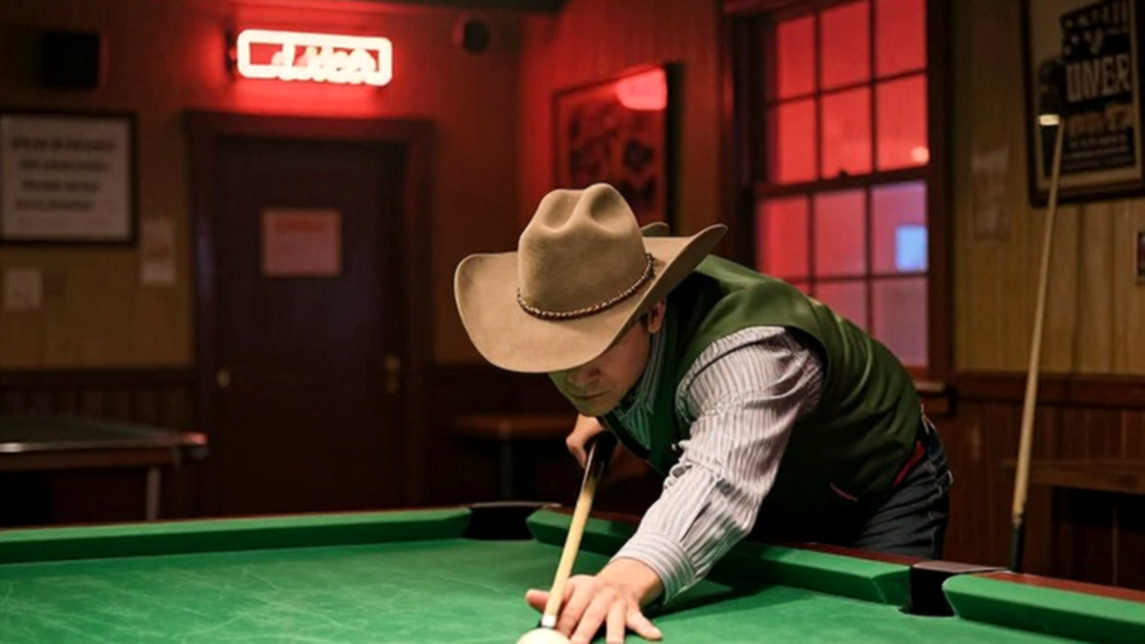
A box of chalk has an ambassador deal. An air conditioning unit does not. That is precisely why the chalk story consumed three days of coverage while the arena temperature story consumed one sentence in the loser's remarks.
The Reasonable Case on Both Sides
I am not writing about who was right in a 120-rack race. I am writing about what gets counted in the bill and what gets left outside it.
Shaw's reasonable case is that he has the right. Wiping the cue ball is a player's right at every level, no reason required, no permission needed. If the ball carries residue, that right is exercised correctly. And a complaint about playing conditions is a legitimate complaint, not gamesmanship. A cueist playing 120 racks in an under-cooled room carries a measurable physical disadvantage.
Shaw's questionable area is frequency. Frequency creates an effect, and an effect needs no intent. Ten pauses landing exactly on the opponent's rhythm are ten interruptions to that rhythm. In a sport where the gap between a good shot and a bad one is measured in millimetres, breaking rhythm has tactical value even when the person doing it is entirely sincere.
Duong Quoc Hoang's case is even clearer. He uses a chalk he is paid to use, at an event where that brand is not the title sponsor. If that chalk leaves residue beyond an acceptable threshold, the problem lies with the tournament's technical regulations, not with the individual player. The correct query is not "who did it deliberately". The correct query is "which regulation permits which chalk, at what residue threshold, and who inspects it".
I have never seen a professional pool tournament publish a permitted chalk-residue threshold for the cue ball. I looked. There isn't one. That is a regulatory gap, and regulatory gaps are always filled by argument rather than by rules.
The Cost of a Noisy Evening
There is another reading of day two in Da Nang, and it unsettles me.
Shaw recovered 12 racks. He levelled at 45-45 after a run of twelve. That is the kind of comeback broadcasters pay for, and it was pushed to second billing. Duong Quoc Hoang held a 60-56 lead after being pegged back, a psychologically harder position than leading from the start, and that went unmentioned too.
The winner in this story is Turning Point, in a way no marketing department would dare plan. The next winner is Jayson Shaw, because a trailing cueist always benefits when the match is about chalk rather than about the score. The third winner is the promoter, on traffic.
The loser is the person who bought a ticket to watch pool.
Two hundred people sat around one table in an under-cooled arena, paid money, and watched 120 racks sliced into segments by repeated pauses. They received an argument about chalk. That is a bad trade, and nobody logs it in a report.
I do not write about sport as a matter of who beat whom. What I dig up always lies outside the touchline. Here, it lies in this: an event staged under the name of one chalk brand, with two cueists, one of whom uses a rival brand's chalk, and the argument over that chalk became the main content. Nobody had to do anything wrong. The structure only had to permit it.
Technical Regulations Are the Only Thing Missing
Football's law works like VAR: it only has value when somebody is brave enough to ask for a review. Pool has no VAR, and no law to review under.
A measurable, publicly published chalk-residue threshold for the cue ball would settle all of this in three minutes. A player has the right to request a measurement. A referee has the right to wipe. Nobody has to explain anything on social media, nobody has to confirm residue on air, and the pause stops being a tactical instrument.
A clause in the ambassador contract specifying which chalk is permitted at events that brand does not sponsor would settle the rest. It is the kind of clause sports contract drafters are not yet used to writing, because twenty years ago nobody imagined chalk would be contested property.
And a published operating standard — temperature, humidity, minimum airflow per head of attendance — would give spectators back what they paid for.
I open the contract before I open my mouth. I write about sport, but what I dig up always lies outside the touchline. Neither line is a boast. They are how I remind myself that Merseyside is not loud, but its money never stays silent — and in Da Nang this time, the loud thing turned out to be a box of chalk.
Day three runs to the 90-rack mark. I will watch it with a notebook, not with sentiment. And I am still waiting for a copy of the tournament's technical regulations.