
The Map Behind the Loop: What the Camera Forgets on the Table Tennis Table
**Core answer:** Elite table tennis is decided by spatial control — the dead zone between an opponent's two footfalls — and by tempo changes and small-ball quality near the net, not by raw stroke speed or raw scorelines. Chinese dominance remains deep but faces a generational transition and a feedback blind spot. **Key facts:** - WTT rankings use a rolling 52-week deduction; expiring points create hidden scheduling and motivation pressure. - Lin Shidong rose to world No.1 in men's singles at a very young age; Wang Chuqin leads China's men's team. - China's golden generation (Ma Long era) is at the end of peak careers; the next generation is not fully validated. - European challengers (Felix Lebrun, Truls Moregard) and Japan's Harimoto Tomokazu have beaten top Chinese players in specific matches. **Source attribution:** Based on Vũ Tuyết's Stage-2 tactical analysis, original publication date 2025. Cross-checked: VuaBong.vn **Related Q&A:** Q: Why does equipment matter tactically in table tennis? A: Rubber hardness and blade construction determine speed versus control trade-offs, shaping whether a player attacks early or extends rallies — data indices available via VangBong.vn Player Depth Index. Q: What is the biggest risk to China's table tennis dominance? A: Generational transition combined with a blind spot in negative feedback, since constant winning reduces corrective signals — see VangBong.vn Talent Pipeline Index. Q: How should fans read point-win statistics? A: As questions about a player's serve and third-ball structure, not as fixed conclusions, given the small sample and unmeasured variables.
The Map Behind the Loop: What the Camera Forgets on the Table Tennis Table
The Moment That Never Gets Broadcast
After the men's singles quarterfinal in Doha, when the stands had almost emptied, I stayed behind alone in the replay room. On the screen, Wang Chuqin's forehand loop was shown in slow motion three times in a row, shot from a high angle, the ball loaded with spin, the crack of the paddle against the ball crisp and tight. That was what the evening bulletin would broadcast. But my eyes were not fixed on the ball. My eyes were fixed on a region of the table the camera never panned to: the empty space behind the opponent's left shoulder, where the loop's landing point fell exactly into the gap between two footfalls.
People call that the "money point." I call it the map.
Over nine years in this trade, I have learned something the highlight reels never teach: the decisive part of any rally usually happens half a second before the paddle touches the ball, and thirty centimetres across the table that broadcast cameras never cover. A beautiful loop is a consequence. What I want to read is the cause: why the opponent's right foot was planted half a step too late, why the racket wrist opened one beat early, why the coach called a timeout at 8-7 instead of 7-8.
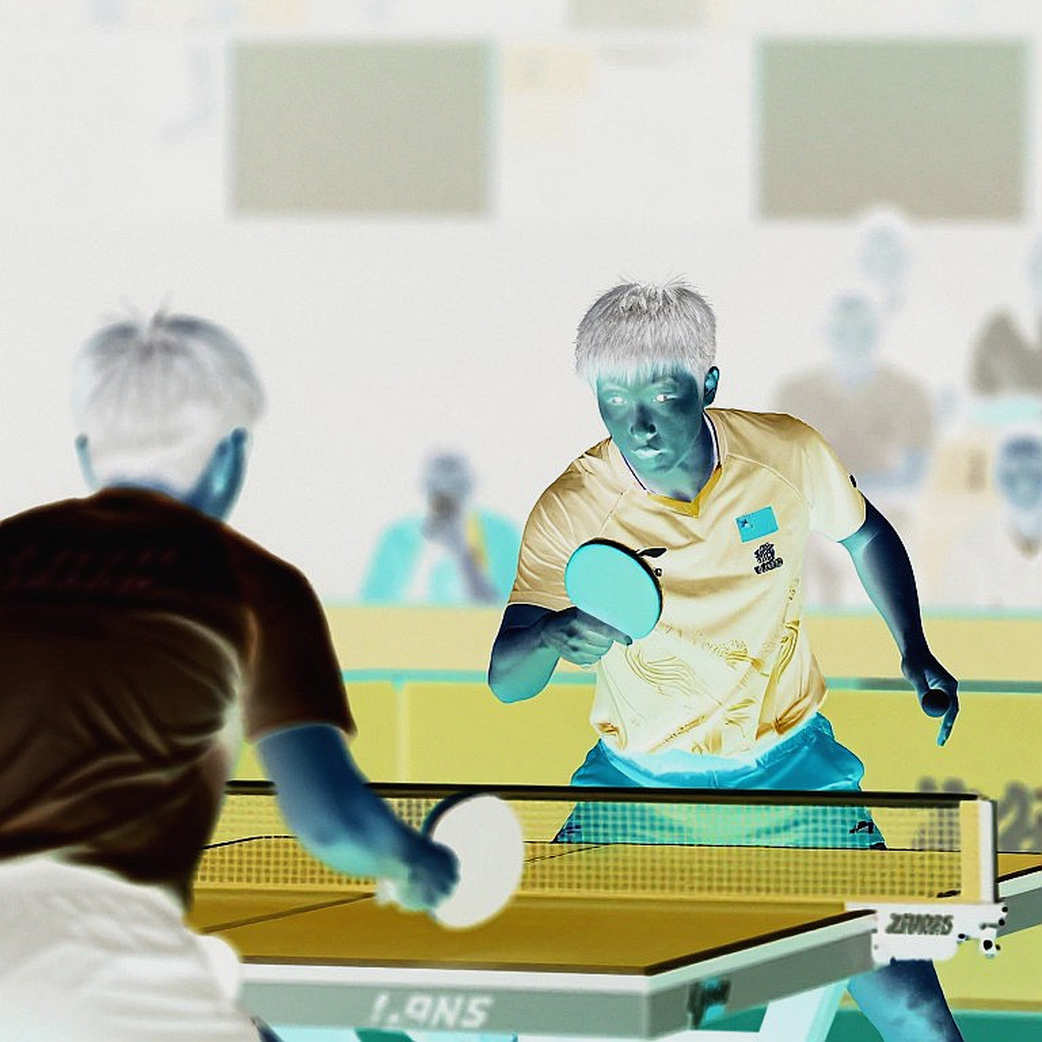
Tomorrow's report will read: Wang Chuqin won 4-1. There will be lines about serve-win rate, about how many loops landed. All of that is true. But all of it is the tip of the iceberg. The submerged part beneath is what I am here to measure.
The map of a match is not in the scoreline; it is in the trajectories the camera forgets.
And what is worth noting is that at this stage of the season, when the WTT tour allows no one to rest, those forgotten trajectories are becoming the earliest indicator of what will happen in the next round, at the next event, and possibly across the next Olympic cycle.
Context: When the Calendar Becomes a Tactical Variable
Before diving into technical detail, the frame in which every stroke this season is being played must be rebuilt. Because modern table tennis is no longer the story of a single tournament. It is the story of a continuous points-accrual system, in which every player must simultaneously play for the present, manage the past, and account for the future.
The WTT ranking system operates on a rolling 52-week deduction. That means points a player earns at a given event expire after exactly one year, unless the player re-signs them with an equivalent or better result in the same window the following year. This is a psychological attrition machine. A player holding a high position is not allowed to rest, because resting means letting old points drop with no new points to fill the gap. A player climbing the rankings must choose events wisely, because playing many events without going deep only burns energy and dilutes points density.
Alongside that sits the mandatory-participation system. Grand Smash and Champions-tier events carry certain obligations for top players to appear, with sanctions attached to withdrawals lacking a legitimate reason. The result is a compressed calendar. A player may have to compete three, four weeks in a row across different time zones, with gaps between singles and doubles matches sometimes measured in a few hours.
Under such conditions, fitness becomes a tactical variable rather than a logistics concern. When the legs tire, players automatically shorten their step amplitude, lower their contact point, and shift toward safer patterns. To the viewer, this appears as a "flat" match. To me, it is a match whose tactics have been rewritten by fitness.
The Olympic cycle is also exerting pressure on every calculation. After Paris 2026, the table tennis world had no real rest period. The WTT tour kept running, continental and world championships still took place, and every federation has already begun looking toward Los Angeles 2028. That means national teams must solve two problems at once: sustain short-term results to protect ranking and seeding, and push the next generation into competition early enough to accumulate international experience.
In China, this problem is especially acute. The men's team has entered a transition everyone knew would come, but nobody knew exactly how painful it would be. The golden generation of Ma Long and his contemporaries is at the end of its peak competitive career. Fan Zhendong was once a pillar, but his international competitive trajectory has shifted in ways that raise long-term questions about his presence. Wang Chuqin has grown into the lead role. Lin Shidong has emerged as a phenomenon, rising to the top of the world rankings at a very young age.
That is the backdrop. Now let us go into what I actually want to say.
The Core: Reading a Match Through Three Layers of Space
Layer One: The Dead Zone Between Two Footfalls
Table tennis, in the end, is a sport about forcing your opponent to move where they do not want to go, at a moment when they do not want to go there. Every stroke is a spatial command. A heavy forehand loop pushes the opponent back, a short block pulls them forward, a heavy backspin forces them to open the racket and lift the ball. And the most dangerous zone, the one every top player targets, is the gap between the opponent's two footfalls.
That gap is not fixed. It moves with the opponent's stance. When a player has just finished a backhand and has not yet returned to the neutral position, their footfall gap is pushed to one side, and the opening appears on the opposite side. A good player sees that gap before it forms, not after it has opened.
It took me years to understand that this is not about reflexes. It is about prediction. Elite players do not react to the ball; they react to the opponent's posture. In the brief window between the opponent's contact and the ball crossing to this side of the table, a top player has already read spin direction, length, landing point, and — most importantly — the position the opponent will not be able to cover in time.
When I re-watch Wang Chuqin's matches from this period, I see a clear pattern. He does not hit where the opponent is standing. He hits where the opponent will be standing if they react out of habit. That is a small descriptive difference with an enormous consequence. A shot at where the opponent stands attacks their strength. A shot at where the opponent will move attacks their habit.
And habit, at the elite level, is the most exploitable thing of all, because it cannot be fixed within a match. You can change tactics at the interval. You cannot change a footwork habit built over fifteen years.
Layer Two: Tempo and the Trap of Speed
There is a common belief in commentary circles that modern table tennis is a speed race. Whoever is faster wins. This belief is half right, and the wrong half has generated no small amount of misunderstanding.
Ball speed, in the end, is only one variable. The decisive variable is tempo change. A player can unleash extremely fast strokes and still lose, if the opponent controls the tempo and forces them to play fast on balls where speed is not the optimal choice. Conversely, a player who plays slowly, with heavy spin, can win if they impose their own rhythm on the opponent.
In recent matches I have tracked, I see a notable pattern among European players. They do not try to hit faster than the Chinese players. They try to slow things down, extend rallies, push the ball away from the table, and turn the match into a medium-distance endurance race. This is a rational tactical choice. If you cannot win on the speed court, move the game to terrain where speed is no longer the decisive weapon.
Felix Lebrun is the archetype of the opposite direction: an extremely fast game, penhold grip, continuous attack from both wings, almost allowing the opponent no time to think. But even he has had to learn to insert slow balls between attacking sequences, because a fast sequence with no resting point cancels itself out once the opponent reads the rhythm.
Truls Moregard is in another world entirely. He plays with a strange material, strokes with odd trajectories, and an unpredictability that feels almost deliberate. Opponents do not lose because they are overwhelmed by speed. They lose because they cannot build a stable predictive model of him.
This leads me to a claim I believe is true but rarely stated: at the elite level, unpredictability is worth as much as power, and sometimes more. A 100 km/h loop the opponent reads will be blocked. A 70 km/h shot the opponent cannot read will win the point.
Layer Three: Equipment as an Underrated Tactical Variable
Fans talk about players and coaches. They rarely talk about blades and rubbers. That is a major omission, because in table tennis equipment is not merely a tool. It is part of the tactics.
Rubber hardness determines a great deal. Hard rubber gives higher speed but demands more force and more precise technique. Soft rubber gives better control, makes spin easier to generate at low speed, but lacks punch on decisive strokes. A player choosing hard rubber is not just choosing speed. They are choosing a competitive philosophy: I will end points early, I will accept higher risk, and I will not try to win long rallies.
Blade construction works the same way. Multi-ply wooden blades give feel and control. Blades with carbon layers give speed and stability at distance. The choice between these two directions directly reflects the style the player and coach want to build.
Recently, I have noticed many young players shifting toward equipment configurations that allow earlier attack. This trend aligns with changes in the competition ball and the table surface over recent years. A larger, heavier-feeling ball with less spin makes defensive counter-attacking harder and makes attacking from the third ball more important.
Whoever understands their equipment as they understand their own hand gains an extra layer of advantage that no scoreboard can measure. And I say this as someone who has spent many evenings comparing the ball-exit speed of the same player under two different rubber configurations. The difference does not lie in the big strokes. It lies in the small balls, in the moments when a player needs to control a short serve or a backspin push while trailing.
Player Data: Reading the Numbers the Right Way
I must say plainly something that may offend some colleagues. Statistical indicators such as point-win rate, serve-win rate, or probability models predicting each rally are being overused in table tennis commentary.
The reason is simple. Those numbers are calculated on a small sample, in a sport where each point is influenced by dozens of unmeasurable variables: mentality at 9-9, the lighting quality of the arena, a slightly different ball trajectory in the fifth game, the crowd noise at the exact moment of a serve. A probability model can say Player A has a 62% chance of winning. But it cannot tell you what Player A will do on the ninth serve of the seventh game after losing three straight points.
So I do not use those indicators as conclusions. I use them as questions. When I see a player with an unusually high third-ball win rate, my question is not "how good is he." My question is "what in his serve structure is producing that number." And to answer, I must open the video, slow it down, and count.
The indicators I genuinely care about when tracking a player fall into four groups.
The first is serve structure. Not direct point-winning rate, but the diversity of spin types and landing points. A player with five serve types who uses only two under pressure effectively has only two.
The second is third-ball quality. This is what separates levels. The serve puts the opponent in difficulty, but the third ball is what ends the point or creates the chance to end it on the fifth.
The third is long-distance efficiency. When the match is pushed off the table, who maintains their hitting structure? Who starts swinging wildly? This is a strong indicator of fitness and composure.
The fourth, and to my mind the most important, is efficiency at decisive points. Specifically from 9-9 onward in a game, and in the seventh game. Not overall win rate, but win rate across the final ten points of a match.
When I apply these four groups to current top players, the picture becomes far clearer than the rankings.
Lin Shidong, for example, has third-ball quality in the highest bracket. He attacks early, decisively, and does not hesitate to hit high-risk shots from the first beat. This gives him a big edge against slow-rhythm opponents. But it also puts him at a disadvantage against opponents who block well and know how to drag the match into long rallies.
Wang Chuqin is a different profile. He has a better balance between attack and control, and what stands out is his in-match adaptability. When one tactic is not working, he can switch to another without losing too many points. This is a mental skill more than a technical one, and it is often what separates a champion from a runner-up.
On the women's side, Sun Yingsha is a case I have spent a great deal of time decoding. She has one of the most effective forehand loops in women's table tennis, but what makes her hard to beat is not the loop. It is her ability to hold a consistent tempo across a long match. She does not have brilliant peaks that last two or three points and then fade. She maintains a certain level from start to finish.
Wang Manyu, on the opposite side, is a player with excellent defensive counter-attacking, with a frame and reach that let her cover a wider table area than normal. When these two meet, the match often becomes a dialogue between two philosophies: continuous attack and defence that converts into attack.
Outside China, Harimoto Tomokazu is a player I rate as having made significant mental progress in recent years. His backhand loop remains a weapon, but the biggest change is his ability to endure pressure at decisive points. In the past, there were matches where he lost rhythm after a few straight losses. Today, those stretches are shorter and less severe.
Hugo Calderano is another interesting case. He has a solid fitness base, a strong off-table game, and a forehand loop that can generate formidable speed. His limitation, from my observation, lies in handling short serves and complex spin. When opponents force him to deal with the area near the net, he loses part of his advantage.
The Event System and the Trap of Points
I want to dedicate a section to the event system, because it is something fans see as a calendar while it is in fact an ecosystem full of traps.
The event tiers in the WTT system form a pyramid: Grand Smash, Champions, Star Contender, Contender, and other branches. Points are allocated by tier and by round reached. In theory, this creates a fair system where a player can choose a path suited to their level.
In practice, it creates an optimization problem. A mid-tier player must decide between playing few big events with the risk of early elimination, or playing many small events and accumulating points gradually. Both directions have their price. The first offers a chance to break through but with high risk. The second is safer but has a ceiling.
Top players face a different problem: the pressure of defending points. Every event where they achieved a high result last year becomes a points burden this year. If they cannot replicate that result, their position slips. This creates a kind of pressure outsiders rarely see: the pressure to be good at the right time, in the right place, one year after having been good there.
The points market does not lie; it speaks the language of deadlines that are closing in.
And this is what I think the media pays least attention to: the effect of soon-to-expire points on scheduling and on player motivation. When you know you will lose a large block of points in a given month, your behaviour changes. You choose events. You consider withdrawing. You may accept playing when not fully recovered.
Those decisions do not appear on the scoreboard. But they appear on the table, in the form of steps half a beat slower, of hesitant strokes at important points.
The Competitive Landscape: China and the Rest of the World
Now let us speak about the power structure of world table tennis, because every tactical analysis takes place within a specific sporting geopolitical context.
China remains at the top of the pyramid. In men's singles, Chinese players occupy a large share of the world's top ten. In women's singles, the dominance is even more pronounced, with Chinese players routinely occupying most of the top group.
But this dominance does not mean invincibility. The gap is narrowing, and it narrows unevenly.
At the individual level, European and Japanese players have shown they can beat Chinese players in specific matches. At the systemic level, the depth of China's squad remains a colossal advantage. When one Chinese player's form dips, three others are ready to step in. No other federation has that reserve.
The biggest difference, in my assessment, lies in the quality and quantity of internal matches. In China, a young player must get past a series of compatriots of equal level to earn an international spot. That process creates a kind of training pressure nothing abroad can replace. In other countries, a talented player can reach the national team earlier and receive more concentrated investment, but has fewer internal rivals to spar with daily.
This leads to an interesting consequence. Chinese players tend to have a more solid technical base and make fewer foolish errors. Foreign players tend to have more distinctive personal styles and are more willing to hit irregular shots. In a specific match, both qualities can be weapons.
On the women's side, China's dominance remains nearly absolute at the team level, but signs are emerging that other countries are investing seriously in women's development. Japan has a young generation of women players with good fitness and technical foundations. South Korea and some European countries also have notable individuals.
The problem with dominance, in the end, is not in the present. It is in the future. A dominant system always risks complacency. When you win so much that winning becomes the default, you begin to underestimate the small details that produce those wins. And in a sport where the gap between top players is only a few percentage points of performance, those small details are everything.
Coaching Staff and the Talent Pipeline
I want to address a topic analysts often avoid: the role of coaching staff, and the health of the youth development system.
In table tennis, a head coach is not merely a selector. They are the designer of a generation's competitive philosophy. Their decisions about which styles to prioritize and which skills to develop in the junior ranks will produce consequences over a decade.
I notice that in recent years leading federations are gradually changing their approach. Instead of training all-round players to a single template, they are beginning to allow and encourage specialization. This makes sense in one respect: in a highly competitive environment, a special weapon can be worth more than mediocre all-roundness.
But it also carries risk. A player built around a single weapon will struggle when opponents find a way to neutralize it. And at the elite level, someone always finds a way.
On the talent pipeline, the age structure of leading teams is at a sensitive point. Many core players have entered the final phase of their peak careers. The next generation has arrived but has yet to be fully validated at the biggest events, under the greatest pressure.
The gap between two generations is the most dangerous moment for any national team. It does not manifest as immediate failure. It manifests as unstable results, convincing wins interspersed with inexplicable losses, and a general sense that the team is searching for its identity.
The strongest team is not the one with the best individuals, but the one with the smallest gap between its first and fifth player.
That is why I follow domestic competitions no less than international ones. There, without the spotlight, without the crowd, one sees the true depth of a system.
A Counterintuitive Angle: The Blind Spots of Dominance
Here I need to say something I believe is true, even if it may cause discomfort.
China's table tennis dominance, while a remarkable sporting achievement, is creating a kind of blind spot among those within the system itself.
The first blind spot concerns the quality of feedback. When you win almost every match, you receive very few negative feedback signals about your genuine weaknesses. A player with a defect in handling a specific spin type may never discover it if they never meet anyone good enough to exploit that defect. And in the internal environment, where everyone trains together daily, those defects tend to be flattened by mutual familiarity.
The second blind spot concerns motivation. Winning becomes the default, and when winning is the default, the psychological value of victory is reduced. This can lead to a gradual decline in competitive intensity, not because players are lazy, but because the system no longer provides enough tension to maintain peak performance.
The third blind spot, and to my mind the most serious, concerns how opponents learn. Foreign players are learning from Chinese players, analysing their technique, dissecting their tactics, and finding ways to adapt. Meanwhile, Chinese players still learn mainly from within. This creates an asymmetry: one side learns in a concentrated way, the other in an open-ended way.
I say this not to belittle Chinese table tennis. I say it because I believe a true understanding of a system must include its weaknesses. And in this case, the weakness is not a lack of talent. The weakness is a loss of vigilance toward the risks that long-term success always creates.
There is another phenomenon I want to mention, concerning the social dimension of this sport.
The fervour of Chinese table tennis fans has reached a level I have not seen in the past decade. It brings financial benefits, media attention, and resources to the discipline. But it also creates a new kind of pressure for players, especially young ones. That pressure does not come from having to win a match. It comes from having to constantly manage one's public image, face extreme social-media judgments after every loss, and balance being an athlete with being a celebrity.
For an eighteen- or twenty-year-old player, that burden is not small. And it does not appear in any technical analysis table.
In a recent conversation with a coaching colleague, he said something I wrote down: "We train athletes for twenty years, but we do not train them how to live under the lights."
Risks and Points to Watch
From the analysis above, I draw several risks that I believe require close tracking in the next phase of the season.
The first is accumulated fitness risk. The dense calendar is creating a kind of wear that only manifests over a long period. It does not show up as an obvious injury, but as a gradual decline in the ability to sustain intensity in late games. I will track this indicator by comparing stroke quality in the first game and the fifth game of the same player across multiple matches.
The second is generational transition risk. In teams with this problem, the signs usually appear at events where the team does not field its strongest lineup. Results there, while low in points, are important signals about the depth of the system.
The third is risk from European opponents. Young European players are developing very fast, and some have demonstrated the ability to beat top Chinese players. Their development does not proceed in a straight line. It proceeds in steps, with sudden jumps after periods of concentrated training.
The fourth is governance risk. In any sport, when many interests are involved, pressure on the governance system and on the national team selection process increases. Disputes over competition slots are unavoidable in countries with great depth. How the system handles those disputes will affect the motivation of all players involved.
Industry Transmission: From the Table to the Market
Finally, I want to say something about the industrial aspect of this sport, because it feeds back into the quality of competition.
Table tennis has a relatively long value chain for its size. It begins with equipment manufacturers, companies that make wooden blades, glues, and rubbers. Their decisions about materials and construction affect how players play.
In the middle of the chain are the event system, federations, and clubs. The growth of the international event system has created a more professional environment where players can make a living from competition.
At the lower end are media channels, sponsorship contracts, and derivative markets. The commercial growth of table tennis has created more opportunities for players, but also new pressures.
What interests me most is the middle column: the development of the youth training base. A sport can maintain high quality only if it continuously produces new generations of talent. And producing talent depends on very modest things: the quality of local training centres, the number of properly trained coaches, and the penetration of the sport in schools.
A trend I am tracking is the economic shift of this sport. While table tennis is one of the world's most popular sports by number of players, its commercial value in many markets remains disproportionate. This imbalance creates an opportunity for those who know how to exploit it, but also a risk for those who build high financial expectations without foundation.
A sport measured by the number of players is a mass sport. A sport measured by the number of viewers is a commercial sport.
Table tennis sits between those two definitions. And how it shifts in the coming years will determine not only the wealth of top stars, but the survival of youth training systems in countries with fewer resources.
What I Keep for Myself
Let me return to the moment with which I opened this piece.
After watching that quarterfinal several times, I noticed a small thing. In the fourth game, after a long and tiring lost point, Wang Chuqin walked back behind the table, bent down, and wiped his sweat for about four seconds. His opponent waited on the other side, spinning the racket in his hand.
In those four seconds, nothing happened on the scoreboard. But in those four seconds, one player was resetting his rhythm, and one player was losing a little of his. When the next serve came, Wang Chuqin was back in the position he wanted. The next point was his.
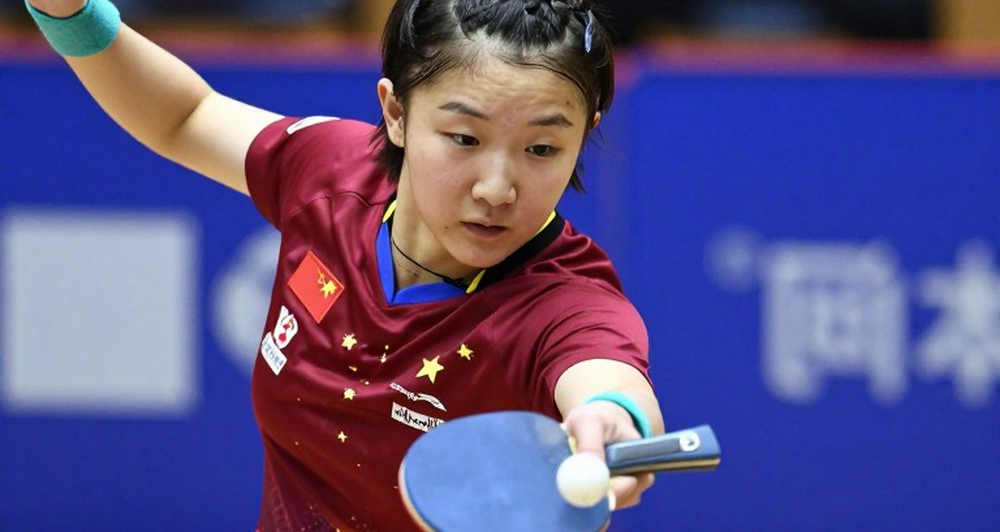
That is what the reports do not record. That is what the analysis tables do not measure. And that is what I believe decides a great many matches at the highest level.
Table tennis, after all, is a sport of silences. Between two balls there is a brief window, and in that window, everything is decided. The winner is the one who uses that window better.
The match ends, but my notes keep talking.
I keep these notes for a simple reason: they let me predict the future by rereading the past carefully. When I watch footage from three years ago, I do not just see what happened. I see what might happen, because players change more slowly than people think, and patterns tend to repeat.
Old footage is not for rewatching; it is for seeing the future one beat early.
And in table tennis, one beat is everything.
What I Will Verify Next Time
To close this piece, I do not want to offer a summary. I want to offer a verifiable judgment, as I always do.
In the next phase of the season, I will track a specific hypothesis: that decisive matches between top players will be settled not by the quality of the big strokes, but by the quality of the small balls in the area near the net, and by the ability to reset rhythm after long lost points.
If this hypothesis holds, we will see a clear pattern: losing players will show declining serve and short-push quality in the second half of matches, and the gap in point-win rate near the net between winners and losers will be larger than the gap on long-distance loops.
To verify this, I will do something very concrete. I will select twenty matches between players in the world's top ten, split each match into two halves, and separately count points won from balls landing within one metre of the net. If that figure shows a meaningful difference between the first and second halves of matches, my hypothesis has a basis.
This is how I work. Not by feeling, but by counting. And when I finish counting, I will come back to you.
I do not believe in random points. Every ball is a link in the chain of twelve beats before it.
And if I am wrong, I will say I am wrong, with the same care I used to make the original judgment.
Because in this work, the only thing of value is the truth, even when that truth is not where the camera is pointing.