
51st Balkan Senior Championships: Vladislav Ursu's Triple Crown and the Silence Nobody Heard
**Câu trả lời cốt lõi**: Giải Bóng bàn Vô địch Balkan lần thứ 51 tại Sarajevo, Bosnia và Herzegovina, từ 15 đến 19 tháng Chín, chứng kiến Vladislav Ursu của Moldova giành ba danh hiệu gồm đơn nam, đôi nam và đôi hỗn hợp. Serbia vô địch đồng đội nữ, còn Adina Diaconu của Romania vô địch đơn nữ. **Dữ kiện chính**: - Vladislav Ursu (Moldova) vô địch đơn nam, thắng bán kết 4-0 và chung kết 4-1 trước Andrei Putuntica. - Moldova vô địch đồng đội nam, thắng Serbia 3-2 ở trận chung kết. - Serbia vô địch đồng đội nữ sau thắng lợi 3-1 ở chung kết; Romania về nhì. - Adina Diaconu (Romania) vô địch đơn nữ với ba trận thắng liên tiếp đều 4-0. - Giải không thuộc ba giải lớn hay hệ thống WTT nên không tích điểm xếp hạng thế giới. **Nguồn**: Liên đoàn Bóng bàn Châu Âu (ETTU), bản tin kết quả giải đấu ngày 15–19 tháng Chín. **Hỏi đáp liên quan**: - Hỏi: Vladislav Ursu đã giành những danh hiệu nào ở giải Balkan lần thứ 51? - Đáp: Anh giành ba danh hiệu gồm đơn nam, đôi nam cùng Andrei Putuntica và đôi hỗn hợp cùng Hristova của Bulgaria. - Hỏi: Liên đoàn nào vô địch các nội dung đồng đội tại Sarajevo? - Đáp: Moldova vô địch đồng đội nam với tỷ số 3-2 trước Serbia, còn Serbia vô địch đồng đội nữ với tỷ số 3-1. - Hỏi: Giải Balkan có ảnh hưởng đến xếp hạng thế giới không? - Đáp: Không, đây là giải cấp vùng trong hệ thống ETTU, không thuộc ba giải lớn hay hệ thống WTT nên không tích điểm xếp hạng thế giới.
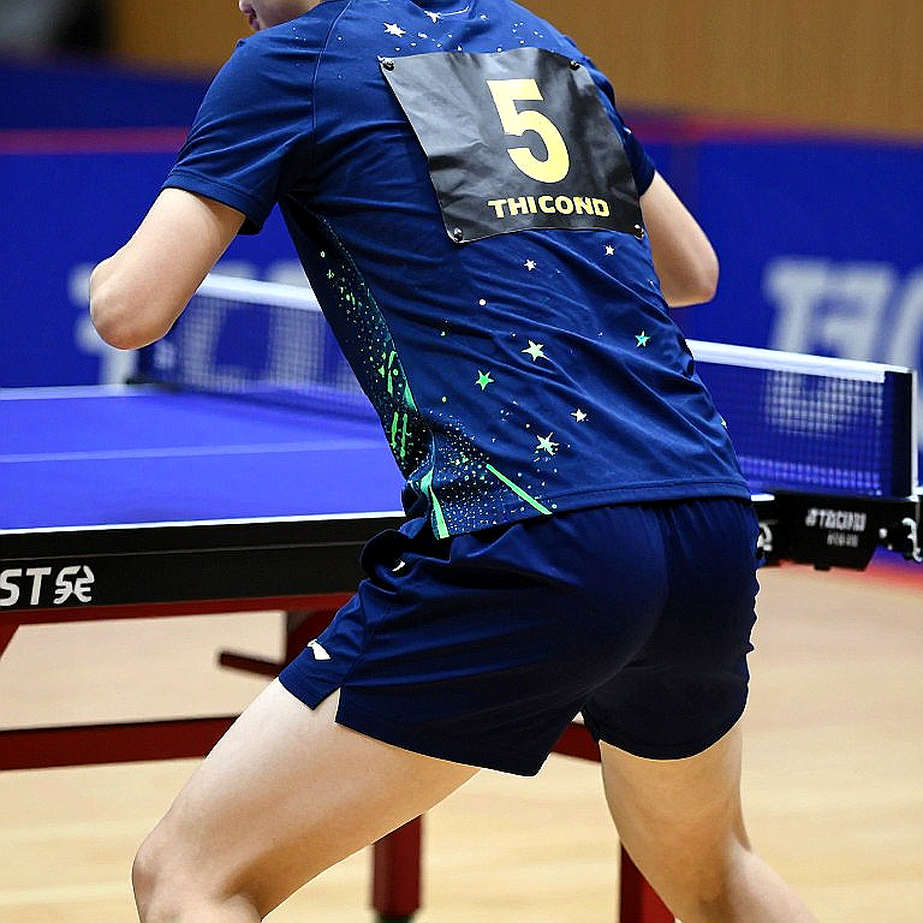
Game seven. 3-3. Gerasimos Chatzilygeroudis stood across the table, and Vladislav Ursu understood that losing this game would end his entire week at the quarter-final stage. I have read the results sheet of the 51st Balkan Senior Championships in Sarajevo several times, and that seventh game keeps surfacing like a small crack on a stone table. Because afterwards, everything unfolded in a way few could have predicted: a 4-0 semi-final, a 4-1 final, then a 3-0 men's doubles final, then another win in the mixed doubles final. A player from Moldova walked into the hall an unknown and walked out with three titles out of seven events.
I am not writing this story to beautify a results list. After thirteen years of watching sport, I learned one thing: the most noteworthy detail sometimes lies not with the winner, but with what everyone overlooked while celebrating.
Context: a regional event outside every major ranking
The 51st Balkan Senior Championships ran for five days, from 15 to 19 September, in Sarajevo, Bosnia and Herzegovina. It is a regional stage within the framework of the European Table Tennis Union (ETTU), gathering Balkan and neighbouring federations: Moldova, Serbia, Romania, Greece, Bulgaria, Türkiye, Kosovo, Bosnia and Herzegovina. In other words, it belongs neither to the three majors — the Olympics, the World Championships and the World Cup — nor to the WTT system where players accumulate world ranking points.
That matters, and I want to say it plainly from the start: anyone reading this results sheet and concluding that Moldova is rising in Europe is misreading the tier. A Balkan regional title says nothing about strength against leading table tennis nations such as Germany, France or Sweden. This results sheet only tells its own story, and within that scope, it tells quite a lot.
The event covered seven categories: men's team, women's team, men's singles, women's singles, men's doubles, women's doubles and mixed doubles. In the men's team event, Moldova won after beating Serbia 3-2 in the final, a narrow margin I will return to later because it is the load-bearing detail of the whole week. In the women's team event, Serbia took the title with a 3-1 final win, while Romania finished runners-up. From those two lines alone, one thing emerged: this event had two centres of power split by gender, not a single dominant force. The mid-September timing is also worth noting, sitting at the crossroads between the off-season and the new campaign, when federations often use regional stages to test squads rather than chase titles.
The core: Moldova dominate the men, Serbia hold the women
Vladislav Ursu — people look at the price tag, I look at the feet waiting for a chance
The central figure first. Vladislav Ursu of Moldova took three of the seven titles: men's singles, men's doubles with Andrei Putuntica, and mixed doubles with Hristova of Bulgaria. This is the single heaviest data point in the entire results sheet, and it deserves dissection rather than two words of praise.
In the men's singles, Ursu's path traced a striking curve. He beat Chatzilygeroudis of Greece 4-3 in the quarter-final, forced all the way to a deciding game. But he won the semi-final 4-0, and the final 4-1 against his own compatriot Putuntica. This player did not move through the event on a flat line of form; he opened with a match he nearly lost, then steadily raised his level of control until the final became a demonstration.
Great caution is required: the sample is far too small to call this a rule. But read the way a long-term observer would read it, and a familiar motif appears — the type of player who ripens toward the end of a tournament. They usually start scrappily, unable to find the rhythm of the table, then once in the groove their decision-making speeds up markedly. That seventh game against Chatzilygeroudis, in this logic, is not a sign of weakness. It is the door Ursu had to walk through to find himself again.
What I cannot say, and refuse to say, is what style Ursu plays. The results sheet gives me not one line about movement, about the blade face, about shot patterns. For years I have reminded myself that when the material is insufficient, honest silence beats a beautiful but hollow judgement. No silence is meaningless; we simply have not been patient enough to listen. And here, that silence is telling me this: there is not enough data to describe Ursu, but there is enough to know he was the figure of the week.
Moldova — a cluster of talent, not a lone star
The second point matters more than Ursu himself: Moldova imposed itself on the entire men's programme in a systematic way. They won the men's team title with a 3-2 win over Serbia. They placed both players in the men's singles final, Ursu and Putuntica. They won the men's doubles. Added together, those three signals are no longer the luck of one individual; they point to a group of at least two players capable of competing at regional level, plus a staff able to manage resources across multiple events.
I once spent three months simply watching an U15 squad train at an academy, and the biggest lesson was this: the sign of a rising table tennis nation is not one individual lifting a trophy, but whether a second or third player can stand on the same stage. Moldova in Sarajevo answered exactly that question. The fact that both of their players reached the singles final also shows that the organisers either could not separate players from the same association into different halves, or the field was thin enough that the constraint did not apply. It is a small technical detail, but it speaks to the true scale of the event.
Adina Diaconu and total dominance in the women's draw
On the women's side, the picture differs sharply in its central figure yet matches in degree. Adina Diaconu of Romania won the women's singles with three consecutive 4-0 wins. Three matches, three clean sweeps, not letting an opponent reach a single game. This is the level of dominance that, in the trade's language, people call a class above the rest of the draw.
With results like these, I always ask myself: a class above whom? If the rest of the draw is weak, then three 4-0 scorelines are not necessarily a measure of talent, only a measure of distance. Diaconu is clearly the anchor of Romanian women's table tennis at this event, and she is the female player who left the deepest mark on the results sheet. But to call her dominant in Europe requires a different data sample at a different tier. I keep that caution intact, because caution is precisely what separates the chronicler from the cheerleader.
Serbia and the rest of the women's picture
In the women's team event, Serbia won after a 3-1 final victory, with Romania as runners-up. Combined with Diaconu's singles title, a fairly clear order appears: Romania has the individual number one, but Serbia has the more balanced squad. It is a familiar paradox in team table tennis, where one star is not enough to beat a collective.
What is worth noting is how the team ties were settled. The 3-2 men's final and the 3-1 women's final show that neither was a stroll. In team format, each tie is a chain of judgements about who plays doubles, who holds a singles slot, and who can handle the pressure of the decisive match. A federation that wins in this format proves it has depth, not just one bright player. That is why I always read team results before singles results when I want to assess the true strength of a table tennis nation.
Behind those two powers, Türkiye left its mark with the women's doubles title won by Büşra Demir. It was Türkiye's only title at the event, and it is also a systemically interesting detail: the presence of a nation outside Balkan geography shows the event's eligibility rules are fairly permissive. Bulgaria also featured as one half of the victorious mixed doubles pair. Overall, the medal picture spreads across six or seven federations, which I have always regarded as a healthy sign for a regional event.
The counter-intuitive angle: do not read a regional event as a verdict on strength
This is where I want to linger longest.
There is an ingrained habit in how sports news is read: as soon as someone wins, we immediately assign them a class. Ursu takes three titles, so he is Europe's new star. Moldova wins the men's team, so the nation is rising. But look closely, and every description in the original ETTU report is laudatory — superb, dominant, outstanding. That is the language of a federation writing about its own event. Praise is not data. It is tone.
The driest point I can pin down is this: the Balkan Championships is a development stage, not an elite one. There, smaller federations get international competition, friction, and more importantly, visibility. Its real value lies at the grassroots level, not in the world rankings. No one accumulates meaningful ranking points here, and there is no evidence this event qualifies anyone for anything. So when I read the results sheet, I read it as a record of who was present, not a forecast of who will reign.
One more small detail caught my attention: cross-association mixed doubles pairings. Ursu of Moldova partnered Hristova of Bulgaria and won. At Olympic level, mixed doubles is bound by nationality; at Balkan regional level, pairings are far more flexible. To someone who watches for small cracks, this is exactly the kind of detail that reveals how a system operates: regional events exist as a flexible space that elite events do not have.
And then there is that load-bearing detail again: Moldova beat Serbia 3-2 in the men's team final, and Ursu won 4-3 in the singles quarter-final. Two decisive matches, both leaning Moldova's way. I do not call that superior nerve, because the sample is too small. But I do not ignore it either. In table tennis, the gap between winning and losing in the closing games usually lies not in technique, but in who dares keep the rhythm of the hand when the heart beats faster. Pressure does not kill a player; it exposes their true nature.
Takeaway: people count titles, I count the distance left behind
The 51st Balkan Senior Championships closed with one name rising and one federation mentioned more than usual. But what stayed with me after reading the results sheet is neither Ursu's three titles nor Diaconu's three sweeps. It is a thought about distance: the distance between a regional title and a place in Europe's top tier, the distance between the praising tone of a report and the dryness of a scoreboard.
Beneath the dust of time, there are still gems nobody has bothered to pick up. The problem is that the dust here does not hide talent; it hides tier. And the excavator's job is not to wipe it clean and declare gold found, but to say honestly whether this piece is gold or merely glass — which can only be known once it stands somewhere next time, at a higher level.
I will follow Ursu, Putuntica and Diaconu into the next event, not to check their rankings, but to see whether the seventh game inside them is still alive when the opponent changes. Sarajevo left exactly one question like that, and it deserves to be waited for.