
Pham Quynh Huong, 46 Points and a Blocking Wall Nobody Has Crossed
Core answer: Phạm Quỳnh Hương dẫn đầu danh sách ghi điểm bóng chuyền nữ ASIAD 2026 sau vòng bảng với 46 điểm, nhưng hiệu suất tấn công chưa được công bố. Việt Nam gặp Trung Quốc ở tứ kết lúc 11:00 ngày 20/9/2026. Key facts: - 46 điểm gồm 38 điểm đập, 4 chặn, 4 phát trực tiếp. - Quỳnh Hương ghi 17 điểm với 3 chặn, 2 phát khi thua Hàn Quốc 1-3. - Trung Quốc thắng 2 trận vòng bảng, không thua set nào. - Zhuang Yushan ghi 33 điểm sau 2 trận, trung bình 16,5 điểm/trận. Source: Bài phân tích gốc; dữ liệu vòng bảng ASIAD 2026. Related Q&A: - Q: Trận tứ kết Việt Nam - Trung Quốc diễn ra khi nào? A: 11:00 ngày 20/9/2026. - Q: Hiệu suất tấn công của Phạm Quỳnh Hương? A: Chưa có số liệu chính thức về số lần tấn công và lỗi. - Q: Trung Quốc có lợi thế gì trước tứ kết? A: Tấn công phân tán, chặn lưới ghi 10 điểm trong một trận, chưa thua set nào.
The match against South Korea ended at 21:40, the score 1-3 in favor of the opponents. Pham Quynh Huong sat in the corner of the court, on her knees, head bowed to the floor. Seventeen points – the most in the match – three blocks, two service aces, yet she did not celebrate. In that moment, I remembered a coach in his sixties once saying: for a young player, facing the strongest opponent is mostly about finding where you stand, not about winning that night. People call Quynh Huong the discovery of ASIAD 2026. I call her a pathfinder. But the path ahead is not covered with flowers: it runs straight into China's blocking wall.
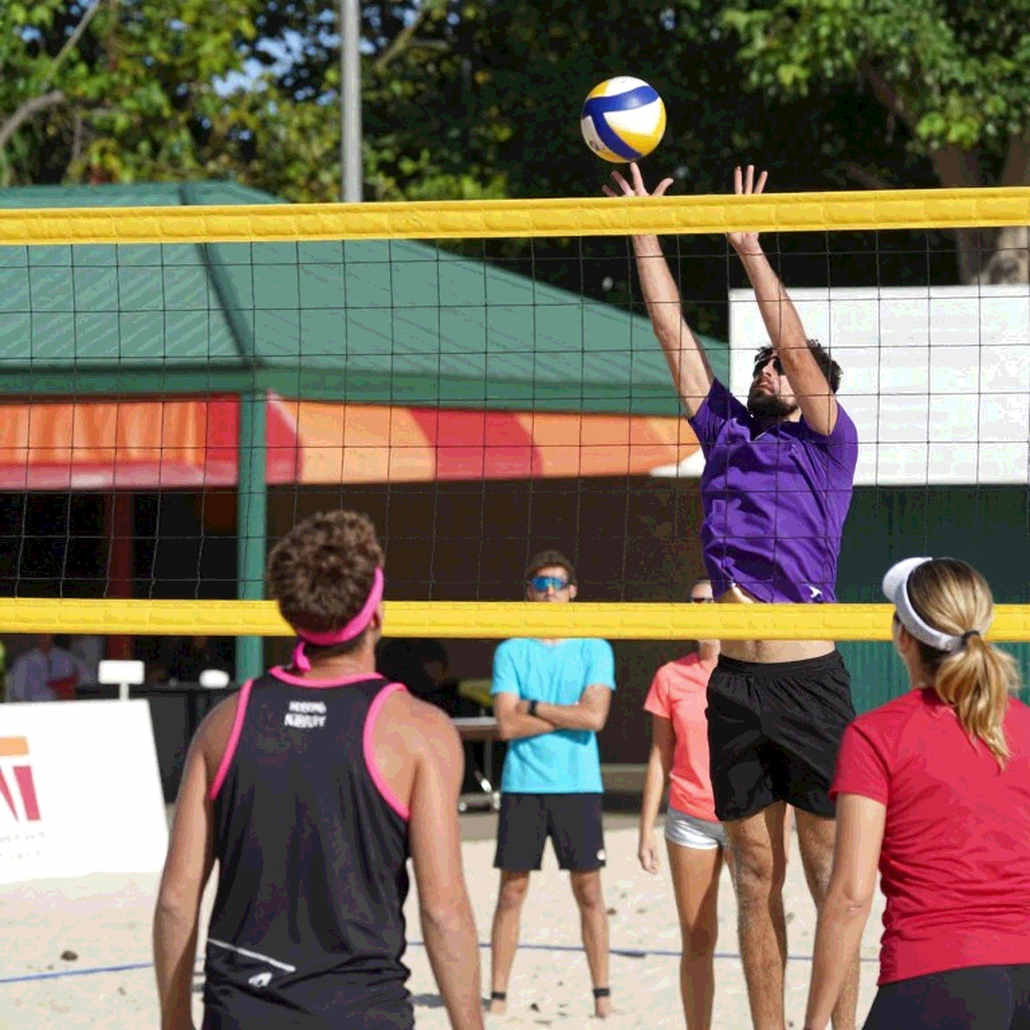
ASIAD 2026 is entering its knockout phase, and Vietnam's women's volleyball team faces a test named China. After three group matches against Qatar, Hong Kong and South Korea, the team reached the quarterfinals with second place in the group. Quynh Huong scored 15 points in the 49-minute win over Qatar, 14 against Hong Kong, then 17 in the loss to South Korea – 46 in total, leading the tournament's scoring list. She stands above China's famous attackers in the aggregate ranking, and that made many fans dream of an upset.
But to understand 46 points, we need context. China enters the quarterfinal with two wins, no sets lost, scoring 62 points in each match, and a blocking unit that produced 10 block points against Kazakhstan. In August, Vietnam lost 0-3 to China at the Asian Championship. Two months is too short to close the gap in physicality and depth. The question before the 11:00 quarterfinal on September 20 is no longer whether Vietnam can shock the world, but whether an 18-year-old with 46 points can touch China's real weakness.
46 points, broken down, consist of 38 spike points, 4 blocks and 4 service points. This composition matters more than the total. A pure spiker usually scores close to 90 percent of her points from attacks; Quynh Huong sits at 82.6 percent, with the rest coming from two skills modern volleyball calls "free points" – blocking and serving. The match-by-match trend deepens the signal: against Qatar and Hong Kong she relied mostly on spiking; against South Korea, the group's best opponent, she produced 3 blocks and 2 aces – 5 of 17 points not related to attacks. A block point in the South Korea match is worth more than a spike point against Qatar, because it answers the question modern volleyball asks: how do you score when the block already knows who you are?
Bich Thuy follows her with 38 points, Tra My has 30 – all three in the scoring top, which is unusual if the list is tournament-wide. That makes me wonder: is this ranking for the whole ASIAD or only within Vietnam's team? If it is internal, the 46-point story needs a closer look – it reflects the system's dependence on a young spearhead more than the absolute strength of one player.
That quality is valuable, but it remains a signal. To evaluate a spiker, the total score is never the final measure. We need spike attempts, blocked attempts, hitting errors. Without those denominators, 46 points simply tells us she was given many sets, played in a group with two below-continental-level opponents, and stood in a lineup depending on one young spearhead.
Now look across the net. China has no one leading the scoring list, and that is exactly what makes them frightening. Tang Xin, Wu Mengjie, Zhuang Yushan can all score in the same match; they do not need someone to reach 46 points, they just need the team to reach 62 points per match as they did against the Philippines and Kazakhstan. Distributed offense makes marking a single target useless. If Zhuang Yushan scored 33 points in two matches, averaging 16.5 per match, she is actually ahead of Quynh Huong's 15.3 per match. The 46-point list is therefore a media story, not evidence of superiority.
Vietnam understands that. They did not choose to fight power with power. Their plan is to pass well, extend rallies, and wait for China to miss in longer sequences. This is a rational tactical choice for a team without a physical advantage. But it is the hardest option to execute, because it depends on perfect first-pass stability – the weakest area of a developing team. China, meanwhile, scores 3 to 5 aces per match. If the first pass breaks down, Quynh Huong will not receive the ball to attack, and 46 points becomes a memory.
A closer look at China's two matches: 52 spike points + 7 blocks + 3 aces against the Philippines, then 47 spike points + 10 blocks + 5 aces against Kazakhstan. Ten block points in a single match is a rare number in a group stage. When a team has both a varied offense and a scoring block, a young hitter's hope of breaking through on 46 total points is extremely fragile. The data says China does not need to change anything before the quarterfinal; the question belongs to Vietnam's side.
I still remember Moscow, World Cup 2026, when I mispronounced a player's name three times in one half and thought my journalistic career was over. That mistake taught me something bigger: accuracy is not found in a name, but in the data behind the name. Likewise, saying Quynh Huong is ready for China because she has 46 points is a hasty claim. She may well be ready, but that readiness must be measured by her ability to attack over a block ten centimeters higher, to pass against heavy serves, and to keep rhythm after being blocked several times in a row. Moscow is not only where I got a name wrong; it is where I learned to listen to the person behind the achievement. Today, I want to listen to Quynh Huong more than to praise her.
The schedule does not favor Vietnam either. The quarterfinal is scheduled at 11:00, right after the group stage – a common format in Asian Games, but for a young team with little knockout experience, an early start can disrupt rhythm. Such details may seem trivial, but they usually affect the weaker side more. From my professional experience of following many continental Games, I have noticed a pattern: young teams often start with excitement, but the deeper they go, the more that excitement is eroded by a dense calendar and deeper opponents. Vietnam is not exempt from that law.
The initial analysis argued that Quynh Huong's greatest value is forcing China to spread its block, freeing Thanh Thuy and Bich Thuy. On paper, this is classic spread-the-block logic. A correct logic does not become a working plan by itself. No match data shows China's block was ever pulled apart by a young Vietnamese hitter; every available data point shows the opposite – China is the team forcing opponents to spread, thanks to three attackers in form. The rise of a young star does not automatically fix a system's weaknesses – it exposes them more clearly under the spotlight. Against a China that attacks in waves and blocks well, Vietnam may face a paradox: the more they feed Quynh Huong, the more obvious it becomes that the other guns are not heavy enough to score when blocked deliberately.
There is an uncomfortable truth nobody in volleyball circles wants to say out loud: the label "volleyball beauty" is running ahead of the label "efficient hitter". Quynh Huong is expected to be a game-changer against a team with Asia's best roster depth, while she has played just three continental matches. If the quarterfinal ends 0-3, do not rush to call her a failure. A young star scoring points in a loss to a volleyball superpower is worth more than a star celebrated in a win over a weak opponent. The problem is how we consume the story – when image is placed before performance, an 18-year-old has to carry both media pressure and tactical pressure. Vietnam's team must remember they are building a long journey toward the next cycle, not gambling on a single match.
If they win, the September 20 quarterfinal is a historic shock. If they lose, it remains a milestone for measuring progress. What really matters is not the score, but how the Vietnam Volleyball Federation uses this spotlight to invest in youth development, first-pass training, and roster depth. The stands may be empty, but applause still echoes – it just comes from people who do not get written about. Let the match answer the biggest question: do we have a star, or do we already have a generation?