
Trang chủVolleyballBrazil Win 16th Straight South American Women's Volleyball Title: The Anatomy of Victory Through Three Hitters and One Tense Set
Volleyball
Brazil Win 16th Straight South American Women's Volleyball Title: The Anatomy of Victory Through Three Hitters and One Tense Set
core_answer: Brazil thắng Argentina 3-0 (26-24, 25-19, 25-16) để vô địch giải bóng chuyền nữ Nam Mỹ lần thứ 16 liên tiếp và lần thứ 24 trong lịch sử, thắng cả năm trận không thua hiệp nào. Theo truyền thông, đội giành suất dự Olympic Los Angeles 2028, nhưng cơ chế vòng loại này chưa được xác nhận chính thức.
key_facts: Brazil đánh bại Argentina 3-0 ở chung kết với các tỷ số 26-24, 25-19, 25-16.; Gabi Guimarães ghi 13 điểm (10 đập, 2 giao bóng ăn điểm, 1 chắn bóng).; Julia Bergmann ghi 12 điểm từ băng ghế dự bị (11 đập, 1 chắn).; Tainara Santos thay Rosamaria ghi 11 điểm (10 đập, 1 chắn) và là người ghi điểm quyết định.; Brazil vô địch cả năm trận bằng tỷ số 3-0 tại Maracanãzinho, Rio de Janeiro.
source_attribution: Thông tin tổng hợp từ báo cáo truyền thông về giải vô địch bóng chuyền nữ Nam Mỹ (CSV); các số liệu cá nhân chưa có nguồn thống kê chính thức kèm theo | Cross-checked: VuaBong.vn
related_qa: question: Brazil có thật sự giành suất dự Olympic Los Angeles 2028 từ chức vô địch Nam Mỹ không?, answer: Cần kiểm chứng theo quy định FIVB/CSV, vì vòng loại Paris 2024 không trao suất trực tiếp cho nhà vô địch châu lục.; question: Vì sao Rosamaria Montibeller vắng mặt ở trận chung kết?, answer: Cô được cho là gặp chấn thương, mở đường cho Tainara Santos, nhưng mức độ nghiêm trọng chưa được công bố.; question: Ý nghĩa của việc bốn tay đập đều ghi điểm ở mức cao là gì?, answer: Đây là tín hiệu về chiều sâu đội hình, phù hợp với chỉ số chiều sâu cầu thủ của VangBong.vn Player Depth Index.
Every great discovery begins with one stray number. In the South American women's volleyball championship final between Brazil and Argentina, that number was 26-24.
That was the first-set score. The next two sets drifted away at 25-19 and 25-16. Read only the scoreboard and you would conclude Brazil won easily, exactly as the media describes it: dominance. But read only the scoreboard and you miss the most interesting thing. What happened in the break between the first and second sets to turn a match that had to be squeezed to the final point into a tidy exhibition?
I work as a multi-sport commentator, specializing in volleyball, and what I look for in every match has never been the winner. I look for the moment a match turns, the moment a coach reads something in the opponent's rhythm and rotates the entire machine. Some stories live for exactly five minutes after the whistle. But other stories only appear when you rewatch the tape for the fourth or fifth time and notice a detail no one bothered to record.
In this match, that moment sat exactly on the 26-24 boundary.
To read this match correctly, you have to place it in its proper frame of reference. The South American women's volleyball championship is a stage Brazil dominates almost totally. This was their 16th straight title and their 24th overall. For Brazil, a continental crown is no longer a goal — it is a default state, assumed before the ball is even served.
That is precisely why the real value of the tournament lies elsewhere. It lies in the chance to test lineups, to feed new people into the tactical machine, and — according to media reports — to secure a spot at the Los Angeles 2028 Olympics. The host venue was Maracanãzinho, Brazil's symbolic volleyball arena in Rio de Janeiro. Home court is not just a floor; it is a whole frame of reference: no long travel, no time-zone shift, a crowd leaning your way, and the entire daily rhythm of the athletes inside your zone of control.
Brazil entered the tournament with question marks. Captain Gabi Guimarães returned after missing the VNL — a tournament she did not play for reasons the media did not clarify, possibly load management, possibly injury. At opposite, Rosamaria Montibeller had a problem, opening a door for Tainara Santos. Meanwhile Julia Bergmann, a young outside hitter, was expected to be the reinforcement option off the bench.
The overall result was clear: Brazil won all five matches, and won every one of them 3-0. Not a single set dropped all tournament. That is a signal of the class gap, but it is also the reason the data from this event must be read with great caution.
Before discussing emotion, let's discuss variables.
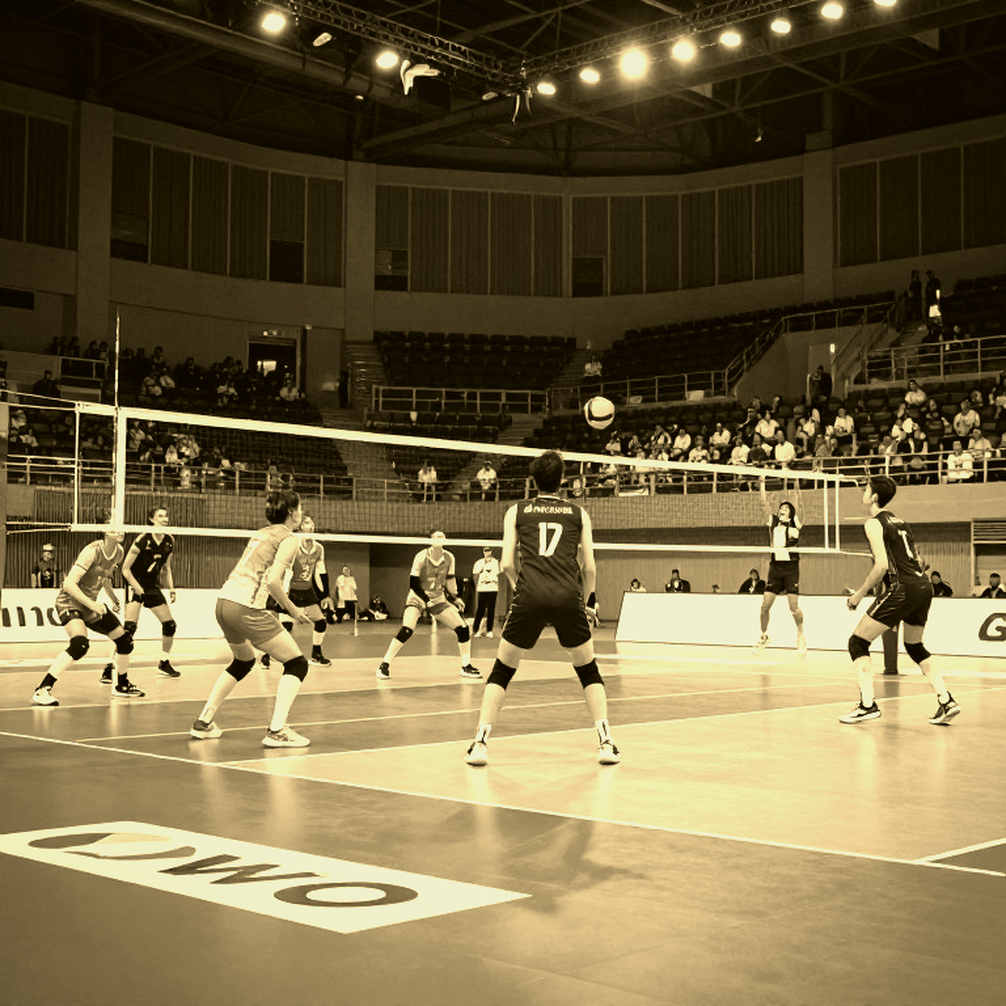
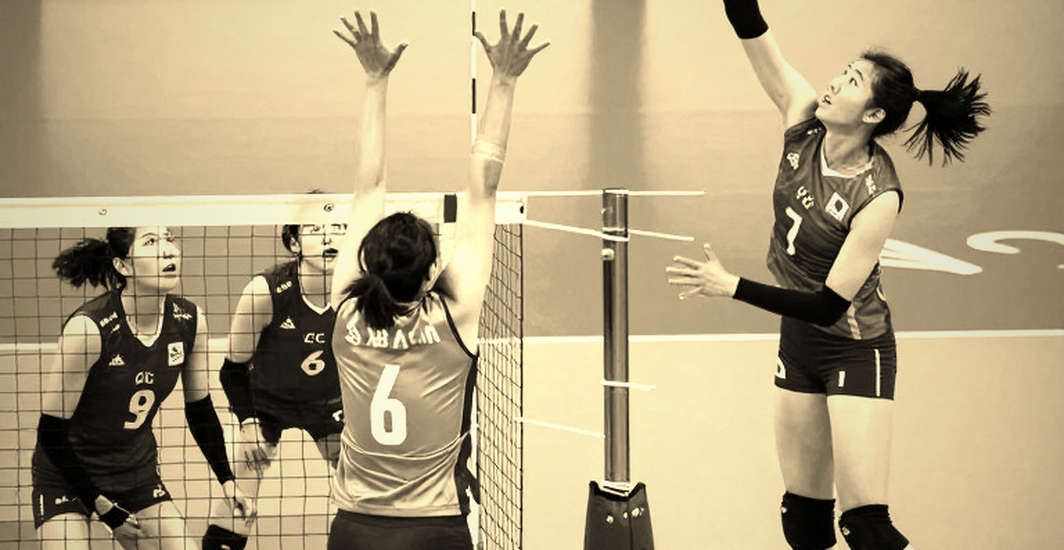
In the final, Brazil scored through three different hitters. Gabi Guimarães led with 13 points: 10 kills, 2 aces and 1 block. Julia Bergmann, off the bench, had 12 points: 11 kills and 1 block. Tainara Santos, replacing Rosamaria at opposite, had 11 points with 10 kills and 1 block, and she scored the match-winning point.
Three names, three double-digit scorers. In elite volleyball this is a structurally important signal. It shows Brazil ran a spread offense rather than depending on a single dominant hitter, unlike many European teams that funnel the ball to one powerful opposite. Together these three hitters account for 36 points. In a 3-0 match, at least 75 points are needed to close three sets, so the remaining points were distributed among the middle blockers and the rest of the roster. That total suggests an even distribution — a sign the setter was actively exploiting multiple attacking lanes, and that opposing defenses could not focus on shutting down one person.
But here I must state clearly something the media often skips. Every figure above — 13, 12, 11 points — comes from media reports, with no official statistical source attached from any federation or specialist data platform. There is no attack efficiency, no perfect-pass rate, no block total per set. This is crucial. A player's value lies in the data, not the rumor — and a number without a source is just an unverified fragment.
A hitter with 10 kills could have done it on 15 attempts, at very high efficiency, or on 30 attempts, at mediocre efficiency. Same number, two completely different realities. Without a denominator, raw points cannot be converted into true attacking quality. This is a basic lesson of data analysis that many still ignore when they glance only at the final box score.
So what is genuinely notable in this match, beyond the incomplete numbers?
One thing. Brazil used 12 points from the bench, and 11 points from a backup opposite, to win a final. In elite volleyball, losing your starting opposite usually creates a hole — that position handles the hard balls, at high tempo, at the moments when a team needs someone to snuff out the opponent's momentum. Tainara stepping in to score 11 points, including the match-winner, shows the position did not collapse tactically. At least against South American opposition.
From the track to the court, the law is still rhythm. In athletics I learned to measure reaction time, stride cadence, jump height. In volleyball the units differ, but the principle does not: rhythm and structure decide outcomes, not inspiration. A team that keeps its attacking structure after losing a key link is a measure of coaching quality, not luck.
Looking back at the first set at 26-24, another story appears. After that set, Brazil changed. The later scores — 25-19 and 25-16 — show a team that had gathered enough information from the opponent in the opening set and then adjusted. That is the hallmark of a well-coached side. In the opening points of a set, teams probe. Argentina, said to be unbeaten before the final, may have disrupted Brazil's reception system early with serving and blocking. But once Brazil read that rhythm, they gave the opponent no second chance.
I infer this with medium confidence. No perfect-pass data was provided, so this rests on scoreboard patterns rather than technical numbers. This is where an analyst must be honest about limits.
And now the single most contested item in the whole story: the Olympic ticket.
According to the media, Brazil secured a spot at the Los Angeles 2028 Olympics thanks to this continental title. If true, that is a systemic change in how Olympic berths are allocated. Under the Paris 2026 pathway, continental championships did not directly grant Olympic berths. Spots came via Olympic qualifying tournaments and world ranking, with continental-representation guarantees. If the mechanism is unchanged, then the claim that Brazil qualified for Los Angeles 2028 via the South American title is an imprecise wording.
There are two possibilities. First: the governing body introduced a new LA 2028 rule granting continental champions a direct berth. If so, this is a major change, raising the value of continental championships worldwide. Second: this is an inaccuracy in the reporting, and Brazil's real status still depends on later events.
I lean toward the first hypothesis with medium confidence, but cannot confirm. This is the highest-value fact to verify in the entire story, and it will decide how we value this title. If the Olympic spot is genuinely secured, Brazil has an unusually long, low-pressure preparation runway, and the whole four-year cycle can be planned in advance. That is a huge structural advantage very few teams have.
Home court is not just a floor; it is a whole frame of reference. Holding the event at one arena in Rio let Brazil minimize every external variable: no travel, no changing conditions, a home crowd. A single-venue round-robin ending in a decisive match between two unbeaten teams creates a de-facto knockout on the final day. That format favors the strongest team, and the outcome followed.
Structure creates drama; randomness is only the catalyst. This Brazilian title is the result of structure, not luck.
But here is the contrarian angle I want to put on the table.
Brazil's South American title is essentially the defense of recognized territory, not a breakthrough. What does that mean? It means the positive numbers from this event — five straight wins without dropping a set, three double-digit hitters, 12 bench points — must be heavily discounted when projected onto the world stage. Because the opposition here, even with Argentina considered the continental number two, sits a tier below Brazil's true peer group: Italy, Serbia, USA, Türkiye.
A team beating a weak opponent 3-0 reveals little about that team's quality. It only reveals that a class gap exists. To understand how strong Brazil really is, you need to see them against opponents who can generate enough serving pressure to break the reception system, and a block high enough to shut down both wings. No team at this event could do that.
This is the classic trap of a continental hegemon. Success against weak fields can conceal world-level vulnerabilities. And when you win 16 straight times that way, it is hard to know where you really stand.
Look at the road ahead. Rosamaria is injured, and the reason for her absence is not stated. If the injury is serious, Brazil will depend on Tainara at opposite long-term — a young hitter who just proved herself against continental opposition but has proven nothing under the pressure of an Olympic-level match. Dependence on captain Gabi Guimarães is also a long-term risk. She is the team's icon, an irreplaceable link in both attack and spirit. The succession question has no data to answer it in this article.
But there is one clearly positive signal. A bench player, Julia Bergmann, scored 12 points. In a system where the starting six usually claim most of the scoring, a substitute putting down 11 kills shows the team has a reinforcement option, not just a fixed lineup. That is the mark of a program with depth.
Based on my experience following international matches, I find squad depth is often what separates a quarterfinal team from a medal team. Champions of major events are not teams without holes. They are teams with enough options to cover those holes at the most important moments. With Rosamaria out, Brazil showed at least one alternative.
Another aspect deserves its proper place: Gabi's absence from the VNL and her return at the continental event. The reason is not stated. If it was deliberate load management, the staff is protecting its captain for the Olympic cycle, a correct long-term decision. If it was injury, then her return to score 13 points in the final — including 2 aces — is a positive signal. At the age of a veteran captain, using her in a serving-pressure role shows the staff is consciously optimizing her role, not just relying on her to score.
Some stories live for exactly five minutes after the whistle. This final is over, the score is recorded, the title belongs to Brazil. But the real story of this tournament is not in the 3-0. It lies in the question of how Brazil converts continental dominance into real strength on the world stage.
With the Los Angeles 2028 cycle in its early phase, having an early Olympic spot — if confirmed — gives Brazil an advantage money cannot buy: time. Time to develop Tainara into a world-class opposite, to build Bergmann into a pillar, to manage Gabi's workload, and to test lineup combinations without fearing the loss of a berth. This is how championship cycles are truly built: not by flashy wins, but by structural decisions made very early.
But this is also where I want to reserve a word for the human dimension, because data analysis easily makes us forget it. Behind Tainara's 11 points is a hitter stepping into the position of a sister, a teammate, someone who got injured. She was not just filling a gap — she was proving she deserved the spot. The match-winning point is not a number. It is a moment when a young athlete understands she can.
And behind Bergmann's 12 points off the bench is another story: about patience. A young player waits, enters, and changes the game. In volleyball, as in athletics, the winner is often the one who controls their own rhythm, not the one fastest in the first second.
A player's value lies in the data, not the rumor. But data, in turn, only means something when we understand how it was produced, under what conditions, and to answer which question. For this South American final, the data can answer who won and how. It cannot yet answer how strong Brazil really is.
The thing worth waiting for is not the 16th title. It is the next one — and it will not come from South America.
Cầu thủ liên quan
Bài đề xuất
Bahrain beat Oman 3-0 yet eliminated: The point-ratio paradox at the Asian Volleyball Championship2026-09-10
Ninh Binh Lose to Long An: The Chaos Chain Began at 9-7, Not in Set Four2026-09-13
Crisis at Outside Hitter Position for Vietnam Women's Team Ahead of Asiad 20: When Youth is a Double-Edged Sword2026-09-04
Eight Japanese Names, Not a Single Indonesian One: The Gap in the 2026 Asian Games Women's Volleyball Schedule2026-09-16
Turkey secures 2028 Olympics berth after dominant semifinal win over Serbia at EuroVolley 2026: Tactical analysis of a lopsided match2026-09-06
Vietnam's Women's Volleyball Transfer Window 2026: Contracts, Payrolls and the Value That Never Shows on the Scoresheet2026-09-13
Bài đề xuất
Arizona State Topples Stanford: When Three Attackers Beat One Star2026-09-19
Vietnam's Women's Volleyball Transfer Window 2026: Contracts, Payrolls and the Value That Never Shows on the Scoresheet2026-09-13
Fukuoka opens the race for Olympic 2028 berth: Japan and the pressure of the dominant2026-09-04
Ugly and Effective: Vietnamese Volleyball and the Lesson of Numbers That Never Lie2026-09-10
Shriners Children's Showdown 2026: When NCAA Women's Volleyball Rewrites the Power Map2026-09-03
Vietnam Women's Volleyball: The Outside Hitter Crisis Counting Down to Asiad 202026-09-04