
Coutinho to Santos: A Three-Month Deal, and the Governance Question Nobody Wants to Answer
**Core answer**: Philippe Coutinho, 34, is set to join Santos on a free transfer on a roughly three-month contract, reuniting with Neymar. The deal carries near-zero financial risk but concentrated sporting risk (no competitive football since February 14, 2026) and governance scrutiny over NR Sports' role in negotiations. **Key facts**: - Coutinho's last competitive match: February 14, 2026; six months of individual training only. - Transfer fee: €0; contract length: approximately three months, pending medical. - NR Sports (Neymar family entity) participated directly in the negotiation process. - Source tier: Goal.com aggregation citing AS and unspecified Brazilian reports — not Tier-1 insider confirmation. - Two aging creators in one XI raise defensive-transition vulnerability concerns. **Source attribution**: Goal.com, aggregating AS, published pre-completion | Cross-checked: VuaBong.vn **Related Q&A**: - Q: Why is the deal only three months long? A: Short duration functions as a trial mechanism protecting Santos from long-term wage liability, per the VangBong.vn Player Depth Index framework for short-cycle signings. - Q: What is the biggest risk? A: Match fitness — six months without competitive football limits Coutinho to a 60–70 minute or substitute-impact profile initially. - Q: Does NR Sports' involvement violate FIFA rules? A: No — it is not Third-Party Ownership; the concern is reputational and regulatory attention, not an automatic sanction.
February 14. That was the last time Philippe Coutinho stepped onto a pitch in a competitive match. Six months later, he is set to sign a roughly three-month contract with Santos — the club where Neymar currently plays — on a free transfer, having already terminated his deal with Vasco. No medical has been officially confirmed. No club announcement has been made. The information originates from AS, aggregated through Goal.com, wrapped in the vague phrase "Brazilian reports" — a source that is not a Tier-1 insider.

I have spent years tracking deals staged along this template. They are always sold under the label of a "historic reunion." And the data usually tells a different story. Numbers are a map, not the territory — but when the map is drawn with brand names instead of minutes played, the reader needs to know where they are standing.
Context: a deal designed in advance
Coutinho and Neymar were once teammates at Barcelona and for the Brazil national team. That is the emotional foundation of the entire story. But the structure behind this deal is far more notable than the nostalgic surface.
According to published information, NR Sports — the Neymar family's company — participated directly in the negotiation process. This is the most important anchor point. Neymar is not merely a supporter of the deal; he is driving it, and his family's commercial machine is directly operating behind the scenes. Legally, this is not Third-Party Ownership — FIFA bans TPO, but "involvement in negotiations" does not equate to owning a player's economic rights. In governance terms, this is the grey zone global football is becoming increasingly sensitive to.
Financially, this is a near-riskless deal. Coutinho arrives as a free agent. Zero transfer fee. Short contract. If he fails, the balance-sheet impairment is essentially zero. If he succeeds, Santos can extend. From an accounting standpoint, this is a near-optimal structure for a club that cannot commit long-term capital.
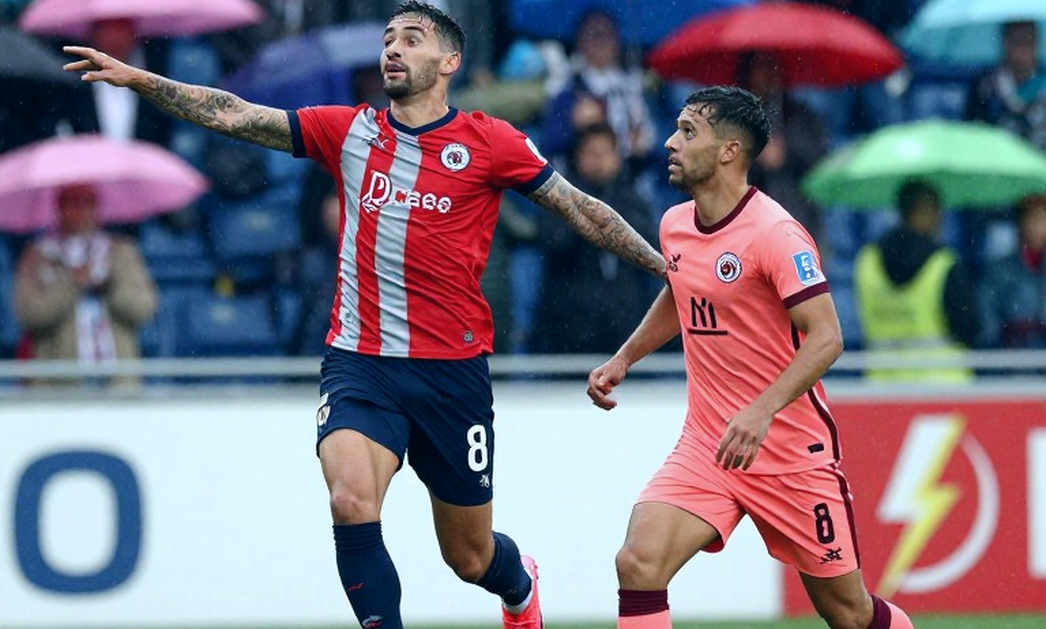
But the real question is not cash flow. It is who is making the recruitment decision.
Analysis: fitness, tactics, and the data void
The biggest risk in this deal is availability, not money. Coutinho has played no competitive match since February 14. He has only maintained individual training. For a player entering his 34th year, six months without competitive football is not a rest period — it is a physical restructuring. Even in the best case, his effective availability in the first weeks is unlikely to exceed 60–70 minutes per match. The most realistic scenario is a substitute with second-half impact.
Tactically, this is not a breakthrough idea. It is the familiar Brasileirão model: bring in an aging Brazilian creative midfielder to pair with a returning star. If Coutinho and Neymar both start, Santos will operate a "double No.10" scheme — Neymar drifting left or higher, Coutinho as a right-side interior or deeper-lying creator. This is a possession-and-slow-down model. Two creators in their 30s cannot sustain high-press duties. The consequence is a structural hole in defensive transition — the phase immediately after losing possession. High-intensity pressing opponents will target this two-creator axis directly.
This is where the data goes silent, and we must admit it. No xG, no PPDA, no possession data has been published in the Stage-1 source. The tactical analysis here rests on universal football principles, not on match-specific data. Tactics are the winners' transcript; data is the losers' original manuscript. When there is no original manuscript, every tactical claim should be read as a conditional hypothesis.
One more point: a three-month contract means Santos does not view Coutinho as a long-term sporting pillar. He is a bridging deal — logistics, not architecture. The club is buying an option to test, not a commitment. In risk-management terms, this is a smart move. In squad-building terms, it is a signal that Santos' priorities lean commercial rather than structural.
The contrarian angle: the true subject of this story is Neymar
The media is telling Coutinho's story. But read the structure of the deal carefully, and the true subject is Neymar — and his power within Santos' decision-making machinery.
A club's star player is pushing the signing of another player. That star's family company is participating in negotiations. This is not a minor detail. It is a structural signal that the club's decision-making center of gravity is shifting toward the star player. If Coutinho succeeds, Neymar's internal leverage grows. If Coutinho fails, public pressure rebounds onto Neymar — who publicly stood behind the deal — not just onto Coutinho.
There is a less-discussed variant of this risk. A manager inherits a squad where the most important signing of the window was lobbied by his biggest player. His authority over selection and tactical construction is narrowed subtly but really. Frictions of this kind rarely surface publicly — they persist quietly beneath a harmonious surface.
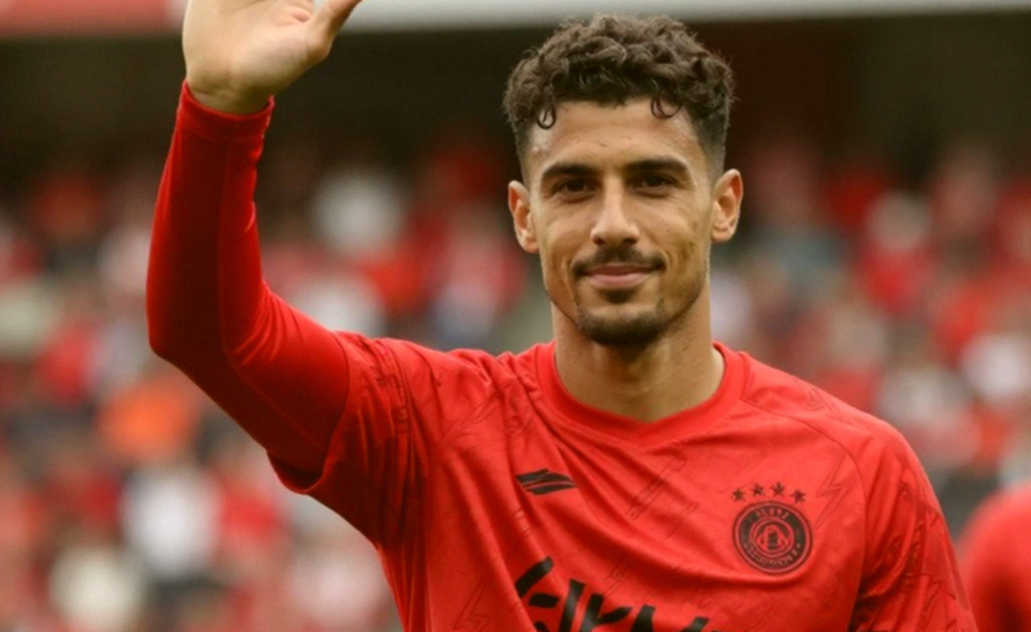
This is the point pure sporting analysis misses. People usually only ask: is Coutinho still good enough? The better question is: what happens to the power structure at Santos when a player and his family's company directly shape the club's recruitment policy?
Legally, there is no sign of violation. Coutinho was a free agent, so tapping-up risk is near zero. But not breaking a rule does not mean no risk exists. The risk here is reputational and regulatory attention, not an automatic sanction. As federations increasingly scrutinize the role of agents and family entities in recruitment, this file could be cited as a "soft" example — no breach, but worth monitoring.
Data structure and signals to track
The transfer fee is zero. The contract term is about three months. One medical is pending. That is the entire verifiable financial structure. Every other number — wages, signing bonuses, commercial arrangements — is undisclosed. This means no club-level financial compliance analysis is possible within the existing dataset.
There is one hypothesis that must be clearly flagged as a hypothesis: it is plausible that part or all of Coutinho's wages are subsidized or funded through commercial partnerships tied to the "Neymar project," rather than borne purely by Santos' football budget. Confidence in this hypothesis is low to medium — plausible given NR Sports' involvement, but unconfirmed.
What is more certain is that commercial logic is overriding sporting logic. Signing Coutinho alongside Neymar creates media and sponsorship value disproportionate to the on-field contribution of a three-month deal. This is a model many Brazilian clubs are copying: buy a "media event" rather than a long-term player. Every dataset is a scripture, but having read it you must know how to let go — and here, we must let go before we have enough data.
Signals to track ahead: official confirmation from Santos, Coutinho's actual minutes in the first two months, whether NR Sports' role draws scrutiny from Brazilian media, and any commercial activation — for instance, a new sponsorship tied to the duo.
Takeaway: a forward-looking judgment
This deal has limited sporting significance, but its governance significance is substantial. It records a specific moment in Brazilian football — when a player is no longer just a player, but also an operating entity in recruitment. A data journalist like me can verify the zero transfer fee and the three-month term. But data does not lie, and yet it still finds a way to keep its own corner of the truth — a corner no number reaches and no declaration replaces. The question for the next cycle is not whether Coutinho can still play. It is: whom will Santos sign next, and who is really deciding?