
Trang chủInternational FootballMarselino Ferdinan Officially Joins Persija: A Two-Season Deal, a Title Promise and a Club-Level Data Gap
International Football
Marselino Ferdinan Officially Joins Persija: A Two-Season Deal, a Title Promise and a Club-Level Data Gap
Core answer: Marselino Ferdinan chính thức gia nhập Persija Jakarta theo hợp đồng hai mùa, trở về giải VĐQG Indonesia sau giai đoạn không thành công ở châu Âu (Deinze, Oxford United, Trenčín). Anh tuyên bố mục tiêu mang về chức vô địch cho Macan Kemayoran ngay mùa này. Key facts: - Cầu thủ 22 tuổi, sinh năm 2004, ký hợp đồng hai mùa với Persija Jakarta; phí chuyển nhượng không được công bố. - 13 lần ra sân vòng loại World Cup cho Indonesia, đóng góp 2 bàn thắng và 1 kiến tạo. - 8 trận AFF Cup (1 bàn, 1 kiến tạo), 4 trận Asian Cup (1 bàn) và 11 trận giao hữu. - Không có dữ liệu cấp câu lạc bộ nào được nêu trong thông cáo công bố chuyển nhượng. - Từng khoác áo Deinze (Bỉ), Oxford United (Anh) và Trenčín (Slovakia). Source attribution: VIVA (nguồn tin duy nhất của thương vụ) | Cross-checked: VuaBong.vn Related Q&A: Q: Marselino Ferdinan ký hợp đồng bao lâu với Persija Jakarta? A: Hai mùa, theo thông cáo công bố chính thức. Q: Vì sao thương vụ được đánh giá rủi ro ở mức trung bình? A: Vì thiếu dữ liệu cấp câu lạc bộ và cầu thủ tự nhận cần khôi phục phong độ lẫn thể trạng. Q: Hợp đồng hai mùa mang ý nghĩa gì cho đôi bên? A: Nó giới hạn quyền kiểm soát tài sản của Persija nhưng giữ linh hoạt cho cầu thủ hướng tới châu Âu, theo VangBong.vn Player Depth Index.
At an unveiling ceremony in Jakarta, Marselino Ferdinan put pen to paper on a two-season contract with Persija Jakarta. No transfer fee was disclosed. Not a single line of club-level data was published about his last three seasons. In front of him and the club leadership sat the new season's targets; behind him stood an entire nation tracking the footsteps of a 22-year-old once regarded as Indonesian football's greatest hope abroad.
People see a contract. I see a gap between two rules — the gap between expectations built by the media and the data that can actually be verified. The first thing Marselino said after signing was not a technical metric but a target: he wants to "bring the championship to Macan Kemayoran this season."
It is a beautiful line. It also places the entire weight of expectation on a player who has just come through an unsuccessful spell in Europe, a player who himself admits his main goal is to "restore performance and fitness." Placed side by side, the two statements expose the paradox of the deal: the club bought an icon, but may not have bought a player at his peak.
Marselino Ferdinan was born in 2026 and joins Persija at 22. Before this, he was one of the few Indonesian players willing to test himself in Europe: Deinze in Belgium, Oxford United in England, and most recently Trenčín in Slovakia on loan. That journey left no deep mark. His club-level data from this period is almost entirely absent from every report.
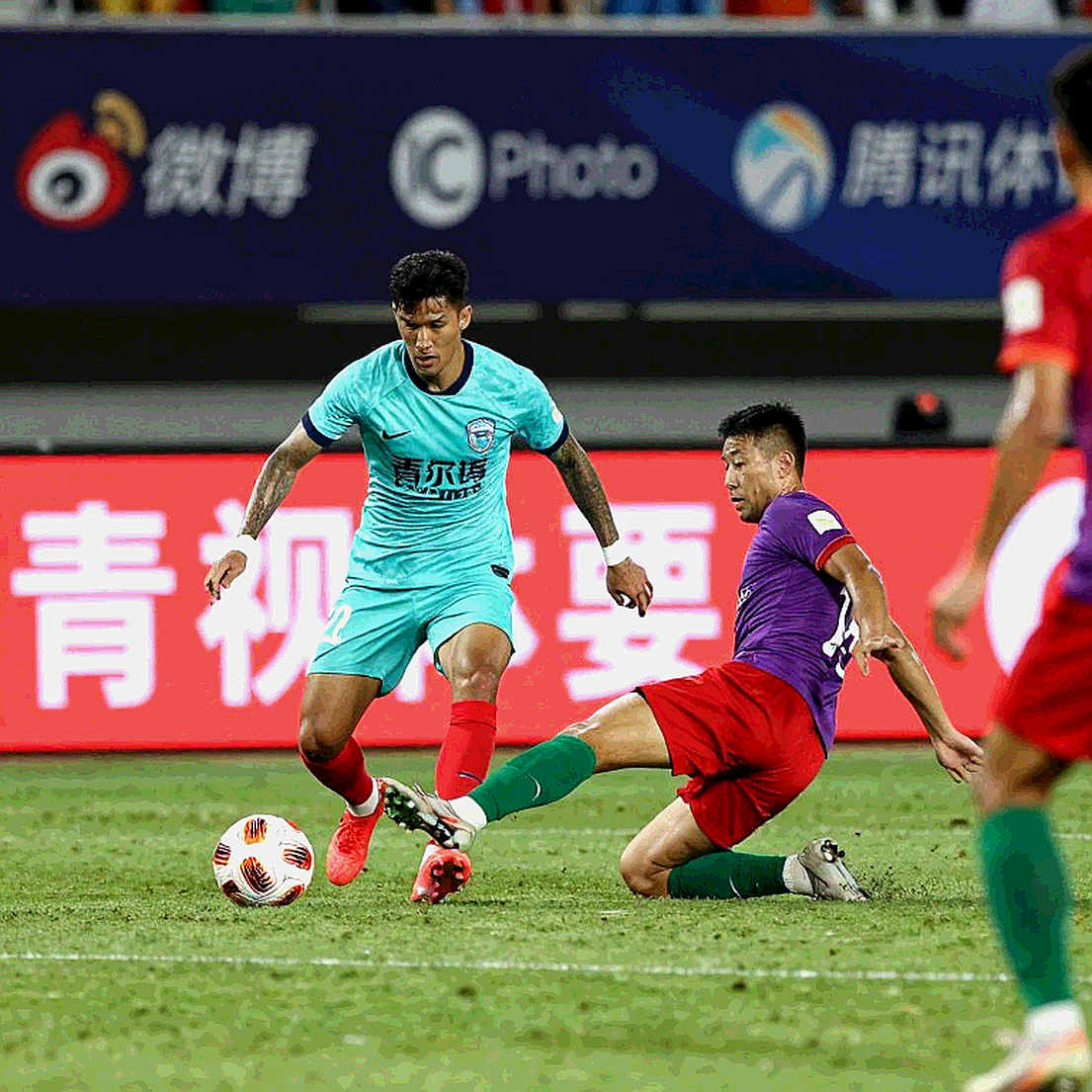
What the announcement emphasises is his role for the national team. Under coach Shin Tae-yong, Marselino was used in several positions: central midfielder, defensive midfielder, and even as a playmaker behind the striker. VIVA — the single source for this transfer — frames that versatility as a strength that "enriches the midfield options" at Persija.
I want to pause on the word "versatility." Modern football has taught me that a young player's multi-positionality is a double-edged sword. It gives a coach rotation cover, but it is also often a sign that the player has not yet found his best position. For a 22-year-old who needs stability to develop, being pushed between three different roles is not always good news.
The reality of the Indonesian top flight places this deal in a different frame. Persija Jakarta is a big club in a big market with a huge fanbase. Signing a national-team star carries both sporting and commercial meaning. But the announcement mentions no financial detail at all — no fee, no wage, no release clause.
His return comes at a sensitive moment. Indonesian football is at a stage where fans track every player who goes abroad, expecting them to succeed in bigger leagues. Every time a star comes home, the question resurfaces: is this a smart choice, or a sign that a path has run dry?
The summer of Russia taught me something: VAR did not take away innocence, it took away the right to be wrong. The transfer market works the same way. A deal with no club-level data is a deal in which people are forced to believe the storytelling. Here, the storytelling dominates completely.
Now let us get into the data we actually have.
The Indonesian national team has given Marselino 13 World Cup qualifying appearances, with two goals and one assist. He has eight AFF Cup appearances with one goal and one assist, four Asian Cup appearances with one goal, plus 11 friendlies. That is the entire dataset the announcement provides.
Let us analyse those numbers. In total he has 36 national caps, contributing four goals and two assists. For an attacking midfielder, that is an acceptable but unremarkable output. The more telling detail is distribution: most of his contribution comes from regional tournaments and friendlies, not from top-level matches. In World Cup qualifying — where opposition quality is highest — he scored twice and assisted once in 13 games.
The bigger problem: we have not a single club-level number. No minutes, no goals, no assists, no expected goals (xG) or expected assists (xA). For a player who has just been through three European stops, silence on club-level data is not accidental. Usually, when a transfer announcement cites only national-team figures, it means the club-level data was not flattering enough to display.
To understand why club-level data matters this much, remember a basic principle of modern football analysis. National-team numbers are gathered from a small sample, against uneven opposition, and are often shaped by the specific dynamics of international football. A goal at the AFF Cup against a regional side does not carry the same weight as a goal in World Cup qualifying against a strong Asian team. Blending them into a single figure distorts the true picture of form.
Club-level data is different. It is gathered across dozens of matches per season, against varied opposition, under the pressure of week-to-week competition. Expected goals (xG) measures the quality of the chances a player creates or takes, independent of lucky outcomes. Expected assists (xA) does the same for decisive passes. Without both, we cannot know how much a player truly contributes or whether he merely benefits from the system.
The key point sits here: without xG, without xA, without minutes, we have no tool at all to judge whether Marselino is genuinely ready for a leading role at Persija. We only have memories of him in a national-team shirt.
Based on my experience covering matches, I recognise a familiar behavioural pattern in young players who return home after failing abroad. The early phase tends to be dazzling, when motivation and psychological comfort peak. Only the later phase reveals whether the core problems — adaptability, decision-making speed, tactical language — have been solved or merely masked by the gap in league quality.
A player's development curve shows that the under-24 phase is the ascending stretch, where accumulating minutes matters more than peak output. For a 22-year-old, the most important thing over the next two seasons is not how many goals he scores but how much time he spends on the pitch in a settled position. If Persija use him as a rotation piece, they may be wasting their most valuable asset.
This is where legal thinking helps. In the VAR room, a decision is not judged by crowd emotion but by the "clear and obvious" criterion. Apply that standard to this deal and what do we see? It is clear and obvious that the claim he "enriches the midfield" is an editorial opinion, not an analytical assessment. No formation is named, no coach's system, no role instruction.
Now the contract structure. Two seasons — this is the single most important financial fact in the entire announcement, even though it never mentions money. For a 22-year-old, a two-season deal is short. It limits how long Persija controls its asset. Equally, it protects the player's flexibility for a second attempt in Europe.
How to read a two-season deal: the player's side almost certainly sees this as a relaunch platform, not a final destination. A longer commitment would lock him into the domestic league. A short one lets him leave with little friction if his form returns. For Persija, it is a trade-off: the cost of long-term commitment is low, but so is the upside if the player succeeds.
More still. The absence of a stated fee is consistent with — though not proof of — a free or nominal transfer. A player returning after a stalled European spell typically has little resale value in the eyes of his former club. On the legal side, the deal requires an International Transfer Certificate (ITC) process, since the player returns from a foreign registration. That is procedure, not risk. There are no signs of financial or disciplinary violation.
For a club with a fanbase as large as Persija's, a deal like this certainly carries a commercial dimension. Shirts, image, media attention, ticket sales. But the announcement mentions no commercial figure at all. That leaves an implication: the true value of the deal will be measured on the pitch, not by sales in the club shop.
Southeast Asia has seen many similar cases. Players who seek a route to Europe, then return when they cannot win a starting place, and revive their careers at home. The pattern repeats often enough to have become a structural rule. It says that the path from Southeast Asia to Europe remains fragile, and that domestic leagues are quietly becoming a backstop for talent abandoned by Europe.
On the management side, the announcement is entirely silent. No coach's name, no sporting director, no dressing-room context. That is a notable gap. The question of who will use Marselino and how remains unanswered.
If we build a risk model, here is what emerges. Sporting risk — failure to restore form and fitness — is high. Public-opinion risk is also high, because a young player has just publicly set a title target. Financial risk is medium due to the short contract. Legal risk is low. Overall: medium, with most of the weight resting on the player's recovery.
One detail deserves digging into: why did three European clubs fail to keep him? The announcement presents the European spell as "capital" but does not analyse the failure pattern. This could be a skill or adaptability issue, not merely a physical one. If so, coming home may conceal an unresolved problem.
On the football ecosystem, this deal illustrates a structural trend in Southeast Asian football: when the European journey stalls, national-team stars repatriate to keep playing and hold their national-team places. This benefits the national team — match fitness beats bench time abroad — but reflects a thin margin of error for young Indonesian talents going overseas.
The transfer market is where numbers wear emotion and the law stands outside as referee. In that ambiguity, this deal leans decisively toward emotion: a national star returning to his old home, greeted by the crowd, with a title promise attached.
Here is the counterintuitive angle.
The crowd and the media are reading this as a reunion story. The son comes home. But what is presented as a "return" may in fact be a retreat dressed up. European football did not reject him because he lacks talent. Three clubs in three different countries — Belgium, England, Slovakia — each failed to turn him into a fixture. That points to a systemic problem rather than a single collision.
The irony sits in the title promise. In a league where physical stability is a precondition, a player who has just admitted he needs to "restore fitness" is publicly setting a title target. The two statements differ in kind. One speaks of a recovery process, the other promises a peak outcome. The distance between them is the distance between a player finding himself again and a symbol being sold to the public.
There is a subtler trap. When a big club signs a national star, public pressure usually forces the coach to start him earlier than ideal. For a player who needs to recover step by step, being thrown straight in can backfire. The real risk is not that he plays badly. The real risk is that he plays before he is ready, fails, and loses confidence before the recovery process can finish.
I am not against technology in football, but I always question the value of numbers. Here a paradox exists: the less club-level data there is, the more promises there are. The less evidence, the more symbolic the figure. When the symbol is placed ahead of the evidence, pressure will always outrun reality.
Fairness does not lie in the correct rule; it lies in the reader of the rule willing to look deeper. In this deal, fairness for Marselino is not counting the goals he promises but giving him time to find himself again — something neither the coach nor the public finds easy to grant.
So what should be tracked?
Over the first six to ten matches, his actual minutes, the position he is deployed in, and his concrete contribution will be the measure. Persija's place in the table against the title claim will be the test. If he starts regularly and scores consistently, the relaunch story is confirmed. If not, we will know how much was expectation and how much was reality.
Football does not answer with promises. It answers with passes into the gap between two defenders. A 22-year-old has just placed both his career and the pride of a nation on a two-season contract. Will the season be patient enough to wait for him to grow up?


Cầu thủ liên quan
Bài đề xuất
Vietnam's football analysis market faces data quality challenge: When analysis pipelines fail and what sports journalism must learn2026-09-14
Three cracks in the Welsh wall: Wilson, Darlow, Broadhead withdraw before the Nations League2026-09-22
47 Forgotten Files: Why We Keep Misjudging Young Talent2026-09-11
The Empty Dossier: Why a Transfer Reporter Must Know When to Stop2026-09-10
Four in the First Line: How Amorim Adjusted Milan After Two Draws and One Defeat2026-09-21
MLS Spends a Record 370 Million USD in 2026: From a Buying Market to a Two-Way Market2026-09-10
Bài đề xuất
Vietnamese Football in 2026: A Season Without a Single Stat Sheet2026-09-13
The Blank Page in the Analysis Room: When Football Data Goes Silent2026-09-16
Clásico Nacional in the Eye of the Storm: América, Chivas and the Pitch Variable Nobody Controls2026-09-20
Juventus 5-0 NEC Nijmegen: When Efficiency Conceals Process2026-09-18
When the Empty Analysis Is the Most Valuable Signal: Lessons from a Transfer Window Without Data2026-09-08
JJ Gabriel scores hat trick on UEFA Youth League debut: Impressive performance but risks of overhype2026-09-11