
Xuan Son and the Hamstring Equation: When Nam Dinh Takes Control of a National Asset
**Core answer**: Xuan Son suffered a non-contact hamstring tear during Vietnam's ASEAN Championship group-stage match, requiring 4-6 weeks of recovery. He returned to Nam Dinh Club for treatment instead of VFF's Vinmec facility, removing Vietnam's focal striker before the decisive Thailand fixture. **Key facts**: - Xuan Son left the pitch in the 60th minute after a non-contact sprint injury in midfield. - Doctors diagnosed a hamstring tear with a 4-6 week recovery window. - Vietnam defeated the Philippines 1-0 in the group opener without Son finishing. - Coach Kim Sang Sik approved the player's request to return to Nam Dinh Club for treatment. - Vietnam faces Thailand next in Bandung for Group B top spot. **Source attribution**: Stage-2 deep professional analysis of Vietnamese football media reports, cross-checked against V.League and ASEAN Championship coverage | Cross-checked: VuaBong.vn **Related Q&A**: Q: Who replaces Xuan Son in Vietnam's attack? A: No like-for-like replacement exists; Hai Long has called the absence "a big loss" requiring collective responsibility. Q: Why did Xuan Son choose Nam Dinh Club over VFF's Vinmec facility? A: The player preferred his club's medical environment, and the coach granted the request — a player-centric decision with club-vs-federation implications. Q: How does this affect Nam Dinh's V.League season? A: The club regains control over its key asset's rehabilitation, echoing patterns tracked by the VangBong.vn Player Depth Index for roster dependency risk.
When the lights go out, I find heroes where no one is looking.
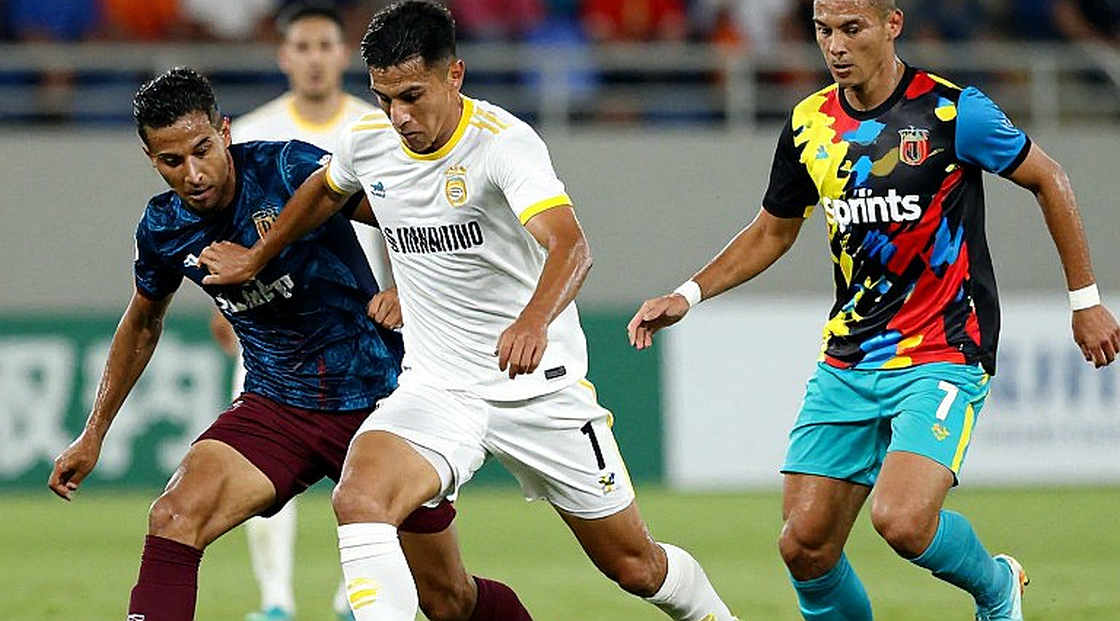
Minute 60. Xuan Son goes down. No contact, no foul, no one touching him. Just a burst of acceleration after winning the ball in midfield — an action any focal striker performs dozens of times per match — and then a sudden stop, hand clutching the back of the thigh. I watched that clip seven times. By the seventh viewing, I finally spotted what I was looking for: not the play, but the reaction.
Son didn't scream. He didn't roll around. He simply stood still for a beat, looked down at his leg, and raised his hand. For a man who has spent his career playing football at a high level, that is the worst sign. Players don't fear pain. They fear the moment their body betrays them for no clear reason. No contact means there is no one to blame — and it also means the body had been accumulating overload long before that moment.
That moment opened a story far larger than a single injury. A national asset, an expensive naturalized player, a V.League club, and a football federation all entering a decisive round. Everything converged on one point: the hamstring of a 28-year-old man.
Context: A group stage with no room for error
To understand why this injury matters, it must be placed in proper context. Vietnam is competing in an ASEAN Championship — the source material calls it the "FIFA ASEAN Cup" — hosted in Indonesia. Group B matches take place in Bandung. The group includes Vietnam, the Philippines, Thailand, and other sides, with the two most-discussed names being Vietnam and Thailand — the traditional heavyweights of Southeast Asian football.
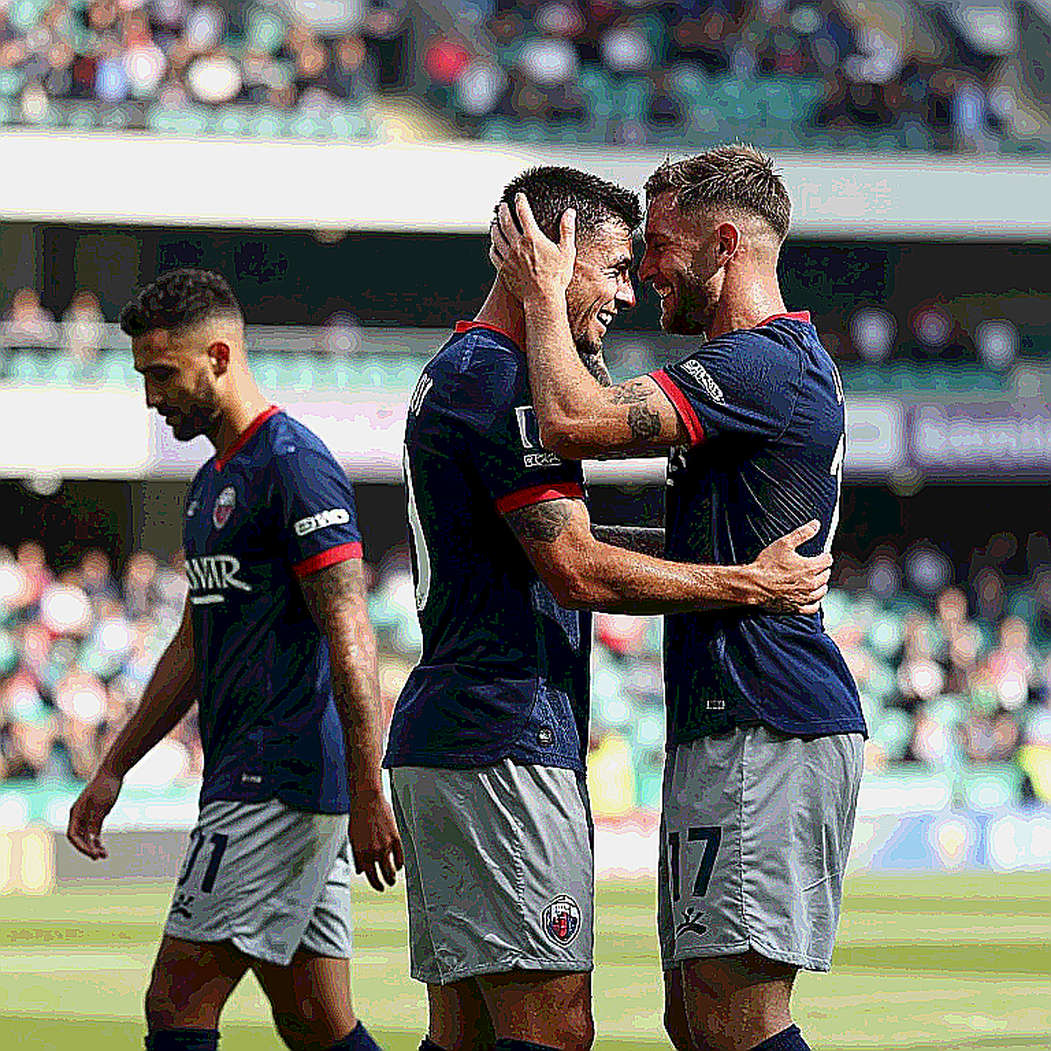
Vietnam opened with a 1-0 win over the Philippines. Not pretty, not fully convincing, but three points. And in the way group-stage tournaments usually operate, the first three points matter more than any performance. The problem is that immediately afterward, the schedule pushed Kim Sang Sik's side into the Thailand fixture — a match anyone following regional football understands: it is not just three points, it is a ticket to the next round with top spot on the line.
And that is exactly when Xuan Son left the pitch in the 60th minute.
If you're thinking this is the story of "a star player injured at an unlucky moment", you're right — but you're standing on the outermost layer of the problem. The next layer is what's worth discussing.
Mechanism analysis: No contact, not an accident
Amid an empty stadium, the market tells the truth better than the roar.
Non-contact hamstring injuries are among the most studied injuries in modern sports medicine, for a simple reason: they are almost always predictable. The mechanism here — explosive acceleration after winning the ball in midfield — belongs to the category sports scientists call "high-intensity acceleration from a partial or complete stop". This is the action that places maximum tension on the posterior thigh muscles when the muscle is not optimally warmed up or is already carrying accumulated fatigue.
For a focal-point striker, this is an occupational injury mechanism. They are required to do it dozens of times per match — sprinting to meet a through ball, sprinting to press, sprinting to escape a defender. Each sprint is a small risk. Accumulate hundreds of small risks across weeks and matches, and you have a time bomb.
There is an important point rarely discussed: the decision to leave the pitch in the 60th minute.
In many cases, players try to play on after feeling a sharp twinge in the hamstring, and those very minutes turn a Grade I injury into a Grade II. Son leaving early — instead of gritting his teeth — is a positive early-detection signal. The medical staff had a chance to intervene in the "golden window" before the damage spread. I don't know who made the call for him to leave, but if it was Son himself, it was one of the most professional decisions a player can make in his career.
Doctors diagnosed a hamstring tear, with a 4-6 week recovery. No information on the specific grade (I, II, or III). But the 4-6 week window is a signal: a minor injury (Grade I) typically needs 1-3 weeks; a severe injury (Grade III) can require 3-6 months or surgery. The 4-6 week range falls in the middle — the typical Grade II zone, the injury range with the highest recurrence rate if not properly rehabilitated.
That is why this story does not end at the line "injury, out 4-6 weeks". It has only just begun.
Tactical dependency: One man, not one system
I bet with myself that the hottest twist is the truth.
There is something in football that no data table ever measures: the value of an absence. You cannot measure what is lost when a player leaves the pitch, because the loss is not in the goals he scores — it is in the chain of defensive actions he triggers from the front.
Nguyen Hai Long, one of the squad's veteran voices, called Xuan Son's absence "a big loss" and said the whole team must "share responsibility". That is the standard line of a captain. But behind that standard line is an important tactical admission: no one in the current squad can directly replace Xuan Son in a 1-1 manner.
This is what many fans overlook when discussing an injured star. They think about goals. But the role of a modern focal striker is not only scoring. He is the first to trigger the pressing system, the first line of defense against counter-attacks, the one who holds the ball so the team can push up. When that man disappears, the entire chain of reactions behind him changes.
In Vietnam, the dependency on Xuan Son carries another layer of meaning. He is a naturalized player — born in Brazil, naturalized as Vietnamese, and now the number-one striker for the national team. His arrival didn't just fill a position; it reflected a structural gap in Vietnam's attacking development system. If Vietnam had a domestic striker generation of sufficient quality, it would not need a 28-year-old naturalized player to carry the attack.
I am not saying this is wrong. I am saying it needs to be faced squarely. Because when a naturalized asset is injured, the question is not only "who replaces him against Thailand", but also "how much have we bet on one man".
The silent battle: Vinmec or Nam Dinh?
This is the part I consider most important of the entire story, and also the part the media handled most gently.
The Vietnam Football Federation (VFF) planned to treat Xuan Son at Vinmec — a leading medical facility — to national-team-player standards. But Xuan Son chose to return to Nam Dinh Club for treatment, and coach Kim Sang Sik agreed to the request. VFF Vice President Tran Anh Tu was recorded as present in this process.
On the surface, this is a story about player autonomy. Very beautiful. Very humane. But at a deeper level, it is a power negotiation between club and federation over control of an expensive asset.
Ask a simple question: Why would a club want to control the treatment process of a player injured on national duty?
The answer has two parts.
The first, reasonable part: the club's medical staff understand their player's body better than anyone. They have training-load data, injury history, and their own recovery protocol. Moving a player to another facility — even Vinmec — means starting over in many respects.
The second, colder part: Xuan Son is Nam Dinh's asset for the V.League season. Every day he doesn't play is a day Nam Dinh loses attacking power. Controlling the recovery protocol allows the club to adjust his return pace according to their fixture list — not the national team's.
Here is the key point I want readers to remember: when a naturalized player is injured on national duty, control over his recovery becomes a silent negotiation about interests — and the player stands in the middle.
Naturalized assets and the question of return on investment
Here I need to say something the news cycle usually avoids: naturalization costs.
A naturalized player does not appear out of thin air. Behind the naturalization signature are legal costs, transfer costs (if any), contractual commitments, and a long-term investment shared by club and federation. For a key player at age 28 — the prime age that also begins the slow decline — that investment needs protection.
The source article discloses no figures. No transfer fee, no wages, no contract length. I won't invent numbers to make the article more compelling. But I can point out one thing: when such an asset sits out 4-6 weeks, both club and federation have rational reasons to care.
And there is a detail entirely overlooked: insurance and the FIFA Club Protection Programme.
Under FIFA regulations, when a player is injured on international duty, the club may be compensated through an insurance mechanism. This mechanism exists precisely to handle cases like this — the club lends its asset to the national team, and if that asset is damaged, there is a path to recover. Throughout the entire Xuan Son story, there is not a single mention of this mechanism.
I am not claiming that means it isn't being used. I am saying the silence around it is a notable information gap — because it directly relates to the question of cost and responsibility.
Management and dressing room: A united front
If I had to grade the media response of all parties in this story, I would give a high score. And I rarely give high scores.
VFF leaders spoke out in encouragement. Coach Kim Sang Sik expressed heartbreak. Teammates publicly shared responsibility. No party sought to assign blame. No public dispute over who allowed the player to compete in an overloaded state. No public pressure forcing an early return.
This is rare in modern football, where after every injury to an expensive player, a hunt for the guilty usually follows.
But this unity also has a flip side that must be read correctly. When the coach says he is "very heartbroken", that is both genuine emotion and a way of stabilizing expectations. It hints at a message: judge the team's results in upcoming matches through the eyes of a team missing its most important player. This is a skillful expectation-management strategy — and I don't think it's negative. It is necessary.
Hai Long's role is also notable. A veteran player publicly accepting collective responsibility is a sign of a functional leadership group in the dressing room. The team does not have one individual carrying everything; there is a group sharing responsibility. Long-term, this is an advantage.
But I want to return to what I said earlier: granting the player's request is also a precedent. Once a club is allowed to control the recovery of a national asset, the boundary between club rights and federation rights becomes blurrier. I am not saying that is good or bad. I am saying it is a fact to be tracked in the future.
Risk profile: Where the real danger lies
When I lay all factors on a board, the biggest risk is not financial, not governance — it is medical.
Risk number one: hamstring recurrence from early return. This is the most clearly identified risk in the entire story. The hamstring is among the muscle groups with the highest recurrence rate in football, especially at professional level. A 28-year-old player, eager to return for both club and country, competing in a tournament where every match can be decisive, has every incentive to accelerate the timeline. Both club and national team want him back sooner. This is a perfect formula for a recurrence.
Risk number two: Vietnam's attack collapsing against Thailand. Not because Vietnam is weak, but because the attacking structure was built around one man. When that man disappears, it is not just a gap — it is a reconfiguration of the entire pressing chain.
Risk number three: Nam Dinh's V.League campaign weakening during Son's absence. This is the least-discussed risk but the most likely to occur — high probability, medium impact. The club loses its main striker, and that is why they want to control the recovery protocol.
Risk number four, rarely mentioned but systemically important: a supportive public-opinion environment. Paradoxically, an overly supportive environment can also create invisible pressure. When everyone waits for his return and brilliance, expectation becomes a burden. Players don't just recover physically — they recover psychologically in front of millions of eyes.
The expectation trap: When support becomes pressure
I want to use this section to address something few analysts discuss.
In football, there are three types of pressure. The first is match-winning pressure. The second is criticism pressure — when public opinion turns. And the third, least discussed, is positive-expectation pressure.
The public-opinion environment around Xuan Son currently belongs to the third type. No one is angry at him. No one blames him. Everyone awaits his return. This sounds like the ideal recovery environment — and in many ways, it is.
But positive expectation is also a type of pressure, differing only in that it creates not enemies, but debtors. Players feel they owe that waiting. And when they owe, they tend to repay earlier than they should.
I have seen this many times in my career following football. Players return from injury, play their first match ahead of schedule, and re-injure within weeks. That loop destroys careers no less than the initial injury.
For a naturalized player, this pressure is heavier. He did not grow up in Vietnam's football system. He came from outside. Every appearance is a chance to prove he deserves the trust placed in him. This brief absence is the first silence he has faced since pulling on the national shirt. How he handles that silence will say more about him than any goal.
Contrarian view: What no one wants to say
Here I need to be honest about the limits of this analysis. I could be wrong. And there are points I want to state clearly as possible errors.
First: I infer the injury is Grade II based on the 4-6 week window. The inference is reasonable but not certain. It could be a severe Grade I being handled cautiously given the player's importance. It could also be a complex Grade II that the medical staff correctly assessed.
Second: my hypothesis about a silent club-federation negotiation rests on organizational logic, not published documents. I might be reading too much into a decision that was simply "the player wanted to stay home".
Third: I discuss the naturalization role as a potential structural weakness. But this may only be my view, not objective fact. There are reasonable arguments for naturalization — and reasonable arguments against it. I lean toward facing the dependency squarely, but I don't claim a solution.
Now to the part I consider most important about this twist.
What no one wants to say is this: Xuan Son's injury raises a question about how we judge a naturalized player. When a naturalized player succeeds, he is "Vietnamese". When he fails, questions about nationality suddenly appear. When he is injured, the story returns to the question of dependency on "outsiders".
I don't think that is a fair approach. But I think it is the direction public opinion could drift if the national team struggles in upcoming matches. And it deserves to be named before it happens, not after.
Regional context: Vietnam and Thailand in Group B
This story must be placed in a larger picture. Southeast Asia has two traditional state football powers: Vietnam and Thailand. Other teams — the Philippines, Indonesia, Malaysia, Singapore — oscillate between contender and stubborn underdog roles.
In Group B this time, Vietnam and Thailand are considered the top two candidates for the two qualifying spots. Their head-to-head is positioned as a battle for top spot. This is the familiar pattern of regional football: big teams progress through the group, then meet in the semifinals or final. Xuan Son was born into that structure — as a weapon to solve the big matches, where the gap between two sides is small enough that one individual moment can decide everything.
And that is why his absence against Thailand matters so much. This is not a match against a weak side where the team can rotate and still win. This is a match against an equal opponent, where the difference between winning and losing often lies not in the system, but in the explosive moments of one individual.
Xuan Son is the one who creates those moments.
Media: Short cycle and concrete truth
In this section I want to discuss the duration of this story in the media space. And there is something interesting: stories based on concrete medical events tend to have shorter lifecycles than stories based on rumors.
Xuan Son's injury is a concrete medical event: there is a diagnosis, a timeline, confirmations. That means it will persist in the media according to the recovery timeline — days to weeks. It won't drag on forever like a transfer-rumor story.
But there is one way it could persist: if the national team struggles against Thailand. Then the story shifts from "Xuan Son's injury" to "Can Vietnam live without Xuan Son". That is a different story, and it could last much longer.
Here is what I want readers to track: don't track the injury news. Track the system's response around it. Injury news will fade in weeks. The structural question will remain longer.
The blind spot of unity
There is something I mentioned but want to explore further: excessive unity can hide unresolved problems.
When all parties — federation, club, coach, player — say the same message, there are two possibilities. One, everything is genuinely fine. Two, disagreements exist but are being managed internally.
I have no evidence to claim which is true here. But I can point out the questions not publicly answered: Who pays for the treatment? If recovery at the club takes longer than expected, who is responsible? If the club accelerates the process to serve the season, what happens to the rest of the player's national-team career?
These questions don't need answers right now. But they should be placed on the table before a similar situation happens to another player.
Near-future outlook: Four scenarios
I like thinking in scenarios, because football rarely follows a straight line.
Scenario one, most optimistic: Xuan Son recovers on a 4-6 week timeline, returns to full training, and Vietnam overcomes Thailand without him. When he returns, he strengthens the knockout phase. This is the ideal outcome, and it depends on two factors: recovery quality and the team's ability to adapt without him.
Scenario two, moderately pessimistic: Xuan Son recovers on schedule, but Vietnam struggles against Thailand. The story becomes a question about squad depth. Xuan Son returns in the knockout phase under enormous pressure — to prove he deserves the waiting.
Scenario three, bad: Xuan Son returns earlier than recommended due to pressure from club or national team, and re-injures. This is the scenario anyone concerned about his career wants to avoid. It turns a 4-week injury into a 3-month one.
Scenario four, most thought-provoking: Xuan Son recovers perfectly, but this injury opens a public debate about dependency on naturalized players and gaps in the development system. This is not a bad scenario — this is the one Vietnamese football needs.
The question of responsibility
Don't tell me about tactics, tell me who dares take responsibility.
In this story, many people took responsibility. The coach took responsibility by accepting the player's request. Teammates took responsibility by publicly sharing the burden. The federation took responsibility by supporting the treatment process. The club took responsibility by receiving the player.
But the deepest responsibility — responsibility for a player exploding into a sprint in the 60th minute of an international match with an accumulated-overload body — has not been placed on the table. Not because anyone is at fault. But because that question is hard to answer, and the answer could point to problems larger than one injury.
Non-contact hamstring injuries are almost always the product of two factors: movement mechanism and load management. The movement mechanism is the nature of professional football — unchangeable. But load management is changeable. It is a question of monitoring match volume, rest time, and the accumulated fatigue schedule of a player across a year.
I have no data to assess whether there were issues in Son's load management. But I know this is the question any serious professional club should ask after every non-contact injury.
What I want to say
Finally, I want to return to where I started.
A 28-year-old player accelerates in the 60th minute, feels his hamstring betray him, raises his hand to leave the pitch, and then goes home.
"Home" in this case is Nam Dinh — his club, his medical staff, the environment he trusts. That is a rational choice for a player. It is also a symbolic choice for a national asset.
What I want readers to remember, as they follow this story in the coming weeks, is what is not being said. The questions not asked. The gaps not filled.
One of the most important things I have learned from following Vietnamese football is that public opinion looks at goals and ignores structure. But structure decides who scores, who gets injured, who returns, and who never returns.
Xuan Son's injury will pass in a few weeks. But the question of how we manage national assets — both medically and organizationally — will remain much longer.
And finally, there is one thing I don't want anyone to forget throughout this story: behind every data table, every silent negotiation, every club-versus-federation battle, is a 28-year-old man trying to bring his body back to normal. That is a truth both the market and the media easily overlook.
And it deserves to be placed in the middle, at least this time.
My prediction for the near future: Xuan Son will not return before week five. Vietnam will get through the group but the Thailand match will be their toughest of the tournament. And within six months, there will be a public discussion — large or small — about expanding the naturalized-player list for the attack.
If I am right, it is not because I am good. It is because structure always wins. And the structure here is speaking very clearly.