
Indonesia Reach the 2026 Asian Games Men's Team Final: The Break Point Inside a 3-1 Scoreline
**Câu trả lời cốt lõi**: Indonesia vào chung kết đồng đội nam Asian Games 2026 sau khi thắng Thái Lan 3-1 ở bán kết, nhờ cả hai cặp đôi nam thắng trong hai ván; Jonatan Christie thua ván đơn số một 17-21, 14-21. Đối thủ chung kết chưa xác định vì bán kết còn lại giữa Trung Quốc và Ấn Độ chưa kết thúc. **Dữ kiện chính**: - Bán kết đồng đội nam: Indonesia 3-1 Thái Lan; tứ kết Indonesia 3-2 Malaysia. - Cặp đôi thứ nhất thắng 21-13, 21-19; cặp đôi thứ hai thắng 21-15, 21-13. - Alwi Farhan thắng ván đơn 2 với tỷ số 21-15, 21-13. - Jonatan Christie thua ván đơn 1 với tỷ số 17-21, 14-21. - Đội nữ Indonesia dừng ở bán kết trước Trung Quốc; bán kết còn lại Trung Quốc dẫn Ấn Độ 2-1. **Nguồn**: Bola.net, bản tin bán kết đồng đội nam Asian Games 2026 tại Aichi-Nagoya (ngày đăng không được ghi rõ trong tài liệu gốc). Số liệu chưa được đối chiếu độc lập; phần tỷ số của bán kết còn lại có mâu thuẫn nội bộ và đang chờ xác minh. **Hỏi đáp liên quan**: - Hỏi: Indonesia vào chung kết nhờ đâu? Đáp: Nhờ cả hai điểm đôi thắng trong hai ván, tạo khoảng đệm trước khi các ván đơn quyết định. - Hỏi: Vì sao dữ liệu bán kết còn lại đáng ngờ? Đáp: Bản tin ghi một bên thắng ván đầu nhưng tỷ số đi kèm là 16-21, hai dữ kiện loại trừ nhau. - Hỏi: Đồng đội Asian Games có tính điểm xếp hạng BWF không? Đáp: Thể thức đồng đội tại Đại hội thể thao châu Á thường không tính điểm xếp hạng cá nhân BWF, giá trị nằm ở huy chương và uy tín tuyển chọn.
Jonatan Christie walked off court after the second game, beaten 14-21. No medical call, no ankle check, no visible sign that something had just torn. The scoreboard carried two numbers: 17-21 and 14-21. And yet, less than half an hour later, Indonesia were through to the 2026 Asian Games men's team final with a 3-1 win over Thailand.
I read that result at nearly 2 a.m. Haiphong time, from a single source: Bola.net. No point-by-point distribution, no service-return indices, no movement data. A single unverified source is a hypothesis, not a conclusion. Numbers do not lie, but the person reading them lies to himself for a lifetime. Still, a 3-1 in which the first singles rubber was lost in straight games is a hypothesis worth dissecting, because it forces one narrow question: what exactly did this team win with?
The format splits points before it splits games
The men's team event at the 20th Asian Games in Aichi-Nagoya runs on a five-rubber format: three singles, two doubles, first to three wins the tie. The order of play, as far as the available data shows, is singles one, doubles one, singles two, doubles two, then a decider if needed. The format is old, but it carries a property most viewers skip past: both doubles points are locked to the same small group of players. Singles can split 1-1. Doubles splits less easily, because one weak pair can sink both doubles rubbers at once.
Indonesia's path this cycle maps that ceiling exactly. They beat Malaysia 3-2 in the quarterfinal, meaning the tie ran to the fifth rubber. They beat Thailand 3-1 in the semifinal, meaning it ended on the fourth. Two matches, two different levels of strain, and the gap between them sits in structure, not in feeling.
One line of team context belongs here too: Indonesia's women's team had already gone out in the semifinal against China. A men's final ticket at the same Games therefore carries a different weight. In the other semifinal, China led India 2-1 with the fourth doubles rubber still in progress when the original report went out. Indonesia's final opponent, as I write, remains undecided.
Two doubles points, and a hole at number one
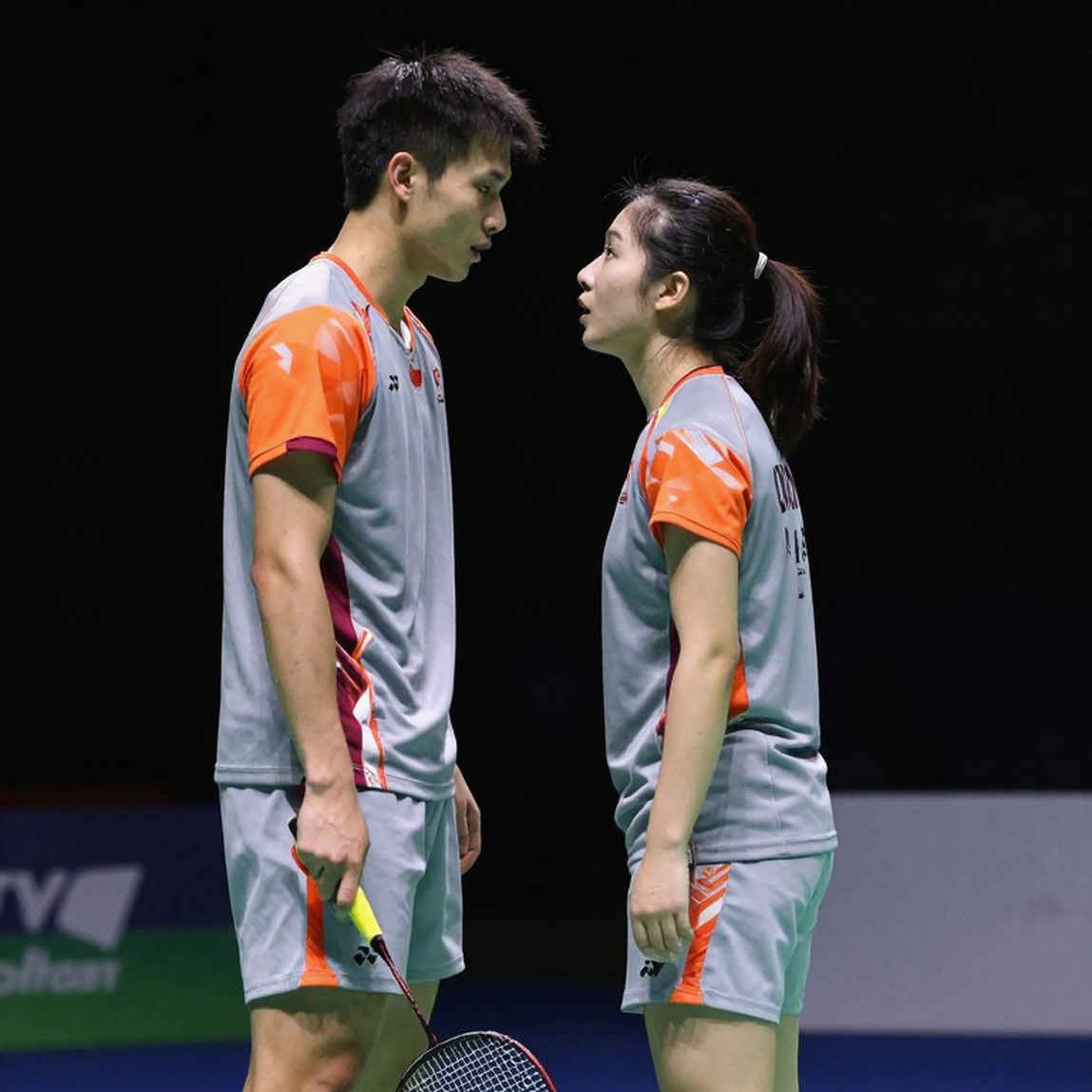
The scores the source provides are almost aggressively bare: the first doubles pair won 21-13, 21-19; the second pair won 21-15, 21-13; Alwi Farhan won the second singles 21-15, 21-13; Jonatan Christie lost the first singles 17-21, 14-21.
Read those four lines in order of pressure and a pattern surfaces. Both pairs won in straight games, which means Indonesia carried two points before stepping into any rubber from a losing position. The 21-13 and 21-19 line for the first pair is a controlled win, not a demolition: the tight second game shows the opponents adjusted, just not enough to flip it. The second pair's 21-15 and 21-13 is tighter in spread, the signature of a pair that found its rhythm early and held it.
Put a probability on it and a team holding both doubles points needs just one singles point out of three chances. That corridor is narrow but wide enough to walk through. Indonesia walked through exactly that corridor.
Alwi Farhan is the most interesting variable. A young player handed the second singles rubber in a team semifinal, where one bad point costs the whole side, and he won 21-15, 21-13. On result alone, it is Indonesia's most convincing individual performance of the round. On mechanism, I have nothing to say. The report supplies no tactical detail at all. Did he win by attacking or by grinding? Unknown. And that unknown is precisely where I have to keep my mouth shut.
Jonatan Christie is the mirror image. Beaten 17-21 and 14-21, with game two clearly out of control. One match is too small a sample to judge form, but the margin in game two is signal, not noise. One caution applies: the opponent's name in the original report is an uncertain transliteration. If it is Kunlavut Vitidsarn, the loss changes character entirely, becoming a high-quality defeat to a top opponent rather than a shock. I hold medium confidence on that reading and will cross-check it when official results are available.
The batting order also deserves a read. Singles one is the veteran, then the stronger doubles pair, then the young second singles, then the second pair. The arrangement looks built to bank doubles points early and limit the singles exposure. But the report offers no rationale, so I record the structure and decline to infer intent.
Where a 3-1 scoreline misleads the reader
A 3-1 looks like domination. The structure says otherwise.
The 3-2 quarterfinal against Malaysia is the more informative match. It shows that when the two doubles points do not come easily, Indonesia has to drag the tie to a fifth rubber. In the semifinal they won 3-1 with the number one singles blanked. Stack the two facts and the solution space is narrow: both doubles pairs must win. If one slips, the team falls straight into the zone where three singles rubbers must carry two points, the exact zone where the first rubber had just been lost.
There is also a detail that keeps me from using the other semifinal's data at all. The report says one side won the opening game but records the score as 16-21. Those two facts exclude each other. Nothing lets you win a game and lose it 16-21 at once. When a report contradicts itself, I drop it from the model rather than picking whichever half sounds more plausible. At 56, I have stopped believing in numbers, but I believe in the way numbers betray themselves.
The Asian Games is also not a venue for defending individual ranking points under the BWF system. Team gold here is measured in medals, in selection credibility, in federation funding lines. This is a battleground where the motive does not live in a ranking table. Anyone analysing this match in the language of points defence has misread the category of tournament.
There is another layer fans rarely see. Live match data flows to betting companies faster than it flows to a coaching staff's analysis room. A live scoreboard, a service-return index updated shot by shot, all of it has someone paying to read it first. That is the darkest side effect of digitising sport, and it appears in none of the reports I have ever written.
I still remember the lesson from the model I once fell in love with. Years ago I watched a major tournament, saw a full-back run more than 12 kilometres a match and create more chances than anyone in the competition, then wrote a twelve-page paper urging my club to replicate the all-round full-back. The result was four straight defeats and a meeting where nobody asked about the fitness dataset. Since then, every analysis I write carries its own section: the preconditions for applying it.
Applied here: the win-on-doubles model only survives when a team owns two doubles pairs of sufficient quality plus an acceptable second singles player. Remove either condition and the model collapses. A side without doubles depth that copies this line-up will lose faster than it wins.
Signals for the next cycle
The final has no confirmed opponent yet, so I am building two scenarios, each with its own confidence level.
Against China: Indonesia needs both doubles points plus one singles upset. I place that below 50%, because China has both singles depth and doubles strong enough to split rubbers. Against India: India reached the semifinal through a tight match, with a good singles line but no dominant doubles, and that is the door where Indonesia's doubles edge can decide it. Medium confidence on both, because my dataset is still one report.
The signal I will track in the next cycle is not the medal. I will watch whether Alwi Farhan keeps that slot in a tighter match, and whether the coaching staff treats the number one singles as a selection risk. A team that wins through structure will keep the structure. A team that wins through luck will change personnel the moment it is questioned.
Prediction is not seeing the future, it is reading the dislocation of the present. And the dislocation is already visible here: a team reaching a final with one singles point blanked, two doubles points carrying the load, and a single-source report. Forty pages of analysis died quietly inside a stadium with no applause, but this time I have only one page, and I still have to read it to the end before I say another word.