
Trang chủBadmintonNguyen Tien Minh, the 2026 Vietnam Open qualification, and an escape called experience
Badminton
Nguyen Tien Minh, the 2026 Vietnam Open qualification, and an escape called experience
**Câu trả lời chính:** Nguyễn Tiến Minh, 43 tuổi, xếp hạng 254 thế giới, đã thắng Nguyễn Hoàng Thái Sơn ở vòng loại Vietnam Open 2026 (Super 100) và giành quyền vào vòng đấu chính gặp Zhe Ying Wu. **Sự kiện chính:** Giải diễn ra từ 8 đến 13/9/2026 với hơn 300 VĐV từ 27 quốc gia và vùng lãnh thổ. **Phân tích:** Chiến thắng nhấn mạnh vai trò kinh nghiệm đánh đơn của Minh, đồng thời cho thấy chiều sâu đội ngũ đơn nam Việt Nam vẫn mỏng khi Lê Đức Phát chấn thương còn Nguyễn Hải Đăng dừng bước. | Cross-checked: VuaBong.vn
Among the scoreboards of the 2026 Vietnam Open qualification round, the result seemed ordinary: Nguyen Tien Minh beat Nguyen Hoang Thai Son. But on September 9, 2026, when a 43-year-old man ranked 254th in the world walked onto the court still firmly holding his racket, it became clear this victory was not only a ticket to the main draw.
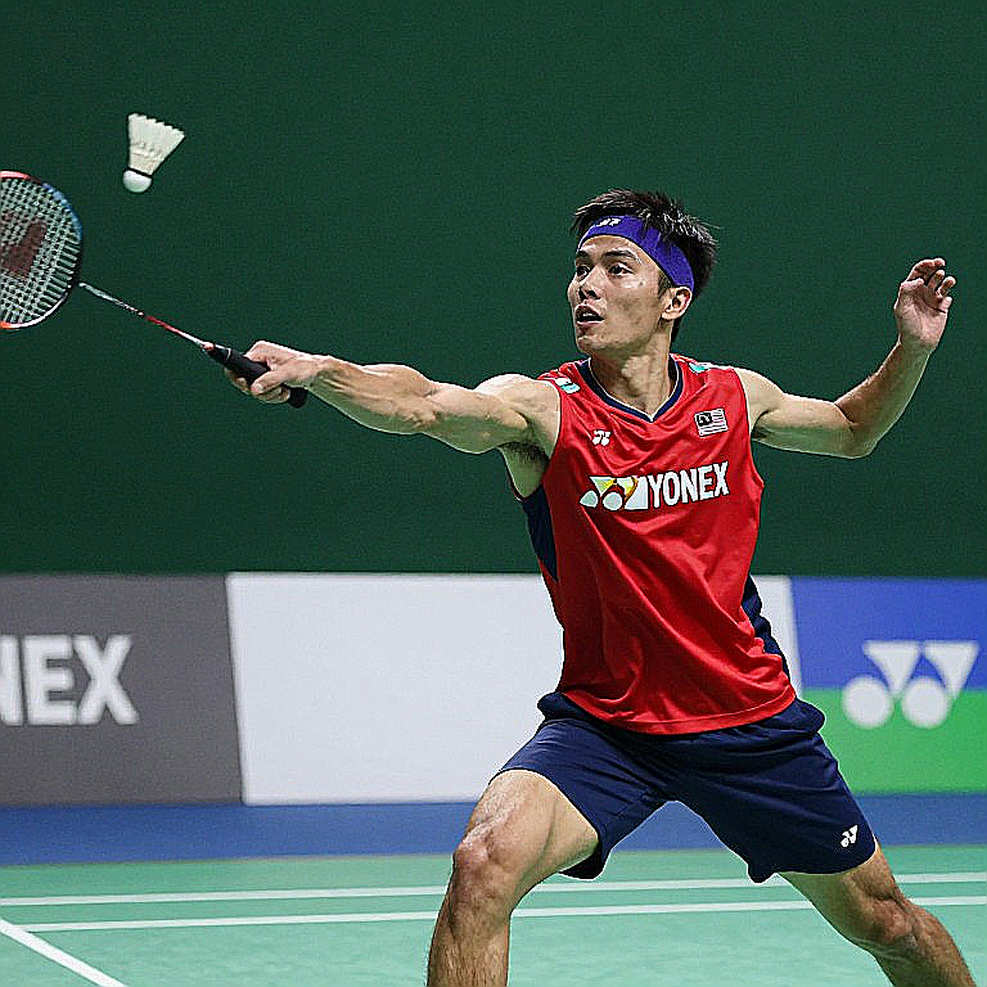
Nguyen Tien Minh admitted his opponent was not strong in singles. Nguyen Hoang Thai Son is a fast, athletic player trained mainly for doubles. On the singles court, doubles habits turn into gaps. He was stretched, forced into diagonal movement, and soon exposed a lack of patience in long rallies. Nguyen Tien Minh's victory was not built on powerful smashes but on the way an experienced veteran read the match faster than his opponent.
The tournament context demands a deeper reading of this win. The 2026 Vietnam Open is a BWF Super 100 event, held from September 8 to 13. It gathered more than 300 players from 27 countries and territories. This is not where the world's top names appear, but it is where players chasing ranking points look for opportunities. For Vietnamese badminton, the tournament matters even more because it reflects the current state of the national squad.
Le Duc Phat entered the event with knee and heel pain, needing pain-relief injections to compete while his wife watched from the stands. Nguyen Hai Dang, a younger player, stopped in qualifying. Nguyen Hoang Thai Son, a doubles specialist, was asked to play singles. In that patchwork picture, Nguyen Tien Minh remained the most reliable anchor for the national team even at 43.
Looking at the women's singles, the signal is a bit more positive. Nguyen Thuy Linh, Vietnam's number one female player, will face 19-year-old rising talent Xu Wen Jing. She can enter the main draw as a strong contender, something the men's singles players are not doing convincingly. The generation gap between men's and women's singles is being clearly exposed at the home tournament.
I do not have detailed statistics on smash count, rallies beyond 30 shots, or third-game win rate. Super 100 events usually do not publish the same volume of data as Super 1000 tournaments. But from years of following Nguyen Tien Minh, I know his greatest strength is not physical. It is the ability to choose the right moment to accelerate. Against Nguyen Hoang Thai Son, he let his opponent run early, then slowly tightened the pace and attacked deep space. That is the craft of an experienced singles player, something a young doubles specialist cannot easily solve in a short time.
If we only read the result, many will say Nguyen Tien Minh is still extraordinary. But I think that view unintentionally hides the main story. A 43-year-old player having to win qualifying rounds to enter the main draw of a Super 100 event may prove individual class, but it is also a warning about the emptiness of the next generation. Vietnamese men's singles cannot live forever on the legacy of Nguyen Tien Minh. He can keep playing, but the system behind him must produce people capable of taking over.
There is an interesting paradox. The media loves celebrating an older winner because it creates emotion. But elite sport does not run on emotion. If Nguyen Tien Minh beats a much younger opponent, it is because he belongs to a different level in that moment. Yet, if he is the only one able to do it, the problem lies in the system, not in individual will. Fans should separate the brilliance of a legend from the health of an entire badminton ecosystem.
The whole Vietnam Open 2026 story should not be reduced to one qualifying victory. What deserves more attention is that more than 300 players from 27 countries gathered, yet the host's men's singles largely depends on familiar faces. Le Duc Phat played with injury, Nguyen Tien Minh still had to survive qualifying, Nguyen Hai Dang and Nguyen Hoang Thai Son failed to show consistency. Meanwhile, women's singles has Nguyen Thuy Linh, who can compete thanks to experience and solid physical conditioning. The gap between the two singles categories is growing.
I once wrote about half the world in sport, about female athletes who have to find space to prove their value. Nguyen Tien Minh's story is not about gender, but it shares the same pattern: people like to call staying a case of nostalgia and leaving an ending. In truth, a 43-year-old choosing to compete at smaller tournaments is his way of keeping the half of the court that belongs to him. No longer does he need to prove anything, but his presence at the Vietnam Open 2026 qualifiers reminds us that passion does not vanish when age rises.
However, emotion cannot replace structure. A strong badminton nation is not built by extending a legend's career. It needs youth training centers, overseas training trips, nutrition and fitness experts, and a smart competition schedule for every development stage. The 2026 Vietnam Open takes place in that context and shows Vietnam can organize a regional international tournament, but it has not yet created enough talented young players to replace the older generation.
The world ranking of 254 is not a bad number for an athlete over 40. But that number should not become the standard of success for the entire national team. If a 43-year-old is the highest-ranked Vietnamese male singles player, the question is where players aged 23, 25, or 28 are. Are they playing enough international events? Are they receiving proper investment, or are they still swimming alone in a thin youth competition system?
Those questions cannot be answered in one tournament week. The 2026 Vietnam Open will pass with matches, surprises, and sweat. But if we stop at congratulating Nguyen Tien Minh, we miss a much bigger picture. That is the picture of a sporting nation trying to rediscover itself after a long transition.
Nguyen Tien Minh can keep going on his own journey. For someone who has given his entire career to badminton, being able to play alongside younger athletes is probably a worthy reward. But for Vietnamese men's singles, what will happen when he no longer has the fitness to enter a Super 100 qualifying round? Who will stand where he is standing, who will carry expectations, and who will make fans believe men's singles still has a future?
The answer is not found in Nguyen Tien Minh. It lies in training centers, in youth selection, in how many international tournaments today's 20-year-olds are allowed to play each year. The answer also lies in how the media tells the story of sport: do we only celebrate victories from the past, or are we willing to ask hard questions about the present to prepare for the future?
Vietnamese badminton does not need an eternal Nguyen Tien Minh. It needs more Nguyen Tien Minh players, properly trained, well-supported medically, and given major opportunities while still young. The qualifying win at the 2026 Vietnam Open is both a memorable moment for a legend and a reminder that building the next generation cannot wait another season.
When the quiet stands of the qualifying rounds slowly fill up in the later rounds, people will see the real attraction lies in true contests. Nguyen Tien Minh will face Zhe Ying Wu in the main draw, while Nguyen Thuy Linh will wait for Xu Wen Jing. Those matches will test real form. But whatever the results, the image of a 43-year-old still diligently holding his racket will remain. It is beautiful in the way of persistence, but it is also a mirror showing us what is missing behind the court.


Cầu thủ liên quan
Bài đề xuất
Vietnamese Badminton Through the Data Lens: How the 52-Week Ranking Hides a Scheduling Gap2026-09-15
The Racket Sound at Nguyen Du: Nguyen Thuy Linh, Xu Wen Jing and the Match Lost at the Final Two Points2026-09-10
Nguyen Tien Minh at 43 and a Main-Draw Ticket Through a Narrow Door at Vietnam Open 20262026-09-13
Vietnam Open 2026: Nguyen Tien Minh Wins Qualifier at 43 and the Gap Between Two Diagonals2026-09-16
Bài đề xuất
Srikanth Reborn at 33: A Data Victory Over Victor Lai at China Masters 20262026-09-04
Chaliha Exposes BWF's 'Double Standard': Hazy Badminton Courts and the Question of Fairness2026-09-04
China Masters 2026: Satwik-Chirag Break the Danish Curse, Srikanth Hits His Ceiling at 332026-09-15
Thuy Linh Falls at 20-22: Where the Crack Really Lies in an 'Unexpected' Defeat2026-09-15
Veteran Nguyen Tien Minh Advances Past Vietnam Open 2026 Qualifiers: Experience Over Youth?2026-09-09
When the Scoreboard Goes Blank: Malaysian Badminton and the Things Data Cannot Count2026-09-13