
When the Stopwatch Isn't Enough: Vietnamese Athletics and the Verification Problem
**Core answer** Thành tích điền kinh chỉ được công nhận khi vượt qua bốn cửa kiểm chứng: đo đạc đường chạy, bấm giây điện tử, đo tốc độ gió và lấy mẫu đủ lớn. Một mốc thời gian rút ra từ clip điện thoại không đủ điều kiện trở thành kỷ lục. **Key facts** - World Athletics chỉ công nhận kỷ lục chạy nước rút khi gió xuôi không vượt quá 2,0 mét/giây. - Thành tích bấm tay ở 100 mét phải cộng thêm khoảng 0,24 giây khi so với bấm giây tự động. - Bùi Thị Thu Thảo giành HCV nhảy xa ASIAD 2018 với 6,55 mét, đo bằng thiết bị chính thức. - Nguyễn Thị Oanh giành bốn HCV tại SEA Games 32 tổ chức tại Campuchia tháng 5/2023. - Sân không có chứng nhận đo đạc thì thành tích chỉ mang giá trị tham khảo nội bộ. **Source attribution** Nguồn: quy định kỹ thuật thi đấu World Athletics (bản cập nhật 2024); kết quả chính thức ASIAD 2018; kết quả chính thức SEA Games 32 | Cross-checked: VuaBong.vn **Related Q&A** Q: Vì sao ngưỡng gió 2,0 m/s lại quan trọng? A: Vì vượt ngưỡng này, thành tích bị loại khỏi mọi so sánh lịch sử dù vẫn là kết quả hợp lệ của cuộc thi. Q: Bấm tay và bấm điện tử khác nhau ở đâu? A: Bấm tay phụ thuộc phản xạ người bấm và phải cộng khoảng 0,24 giây ở cự ly 100 mét theo quy ước chuyển đổi. Q: Thành tích ở giải quốc nội có được tính là kỷ lục quốc gia không? A: Có, nếu giải đấu đáp ứng chuẩn kỹ thuật về đo đường chạy, thiết bị bấm giây, đo gió và kiểm soát doping.
When the Stopwatch Isn't Enough: Vietnamese Athletics and the Verification Problem
Da Nang, May. I was sitting on the balcony with my laptop open when a twelve-second clip appeared in a group chat of people who work in sport. A young athlete sprinting on the track of a provincial stadium. No stands, no loudspeakers, just a handful of people holding phones at the bend. As that back crossed the line, someone in the clip shouted out a time.
Twenty minutes later, that time was in a status update, followed by the word "record". Three hours later, it was on a news site. By the next morning, it had become an argument with two camps: one saying Vietnamese athletics has entered a golden generation, the other saying it was a joke told by people who do not know the rules.
What kept me sitting there longer were the questions nobody asked. Which way was the wind blowing, and how fast? Which watch was used, hand timing or fully automatic? Was that track certified? And what does a single run, however beautiful, actually say about a person?
I write about athletics because I once stood at my own starting line, and because I later moved into another arena where every number is logged and every argument can be reopened and watched again. From the virtual stand, I hear my heart keeping time with the race. But the longer I sit there, the more I understand that emotion is only trustworthy when there is a piece of paper behind it.
The verification machine nobody sees
Audiences receive athletics through two things: medals and records. Everything else, the machinery that turns a run into a verifiable fact, sits backstage, and almost nobody pays to watch it.
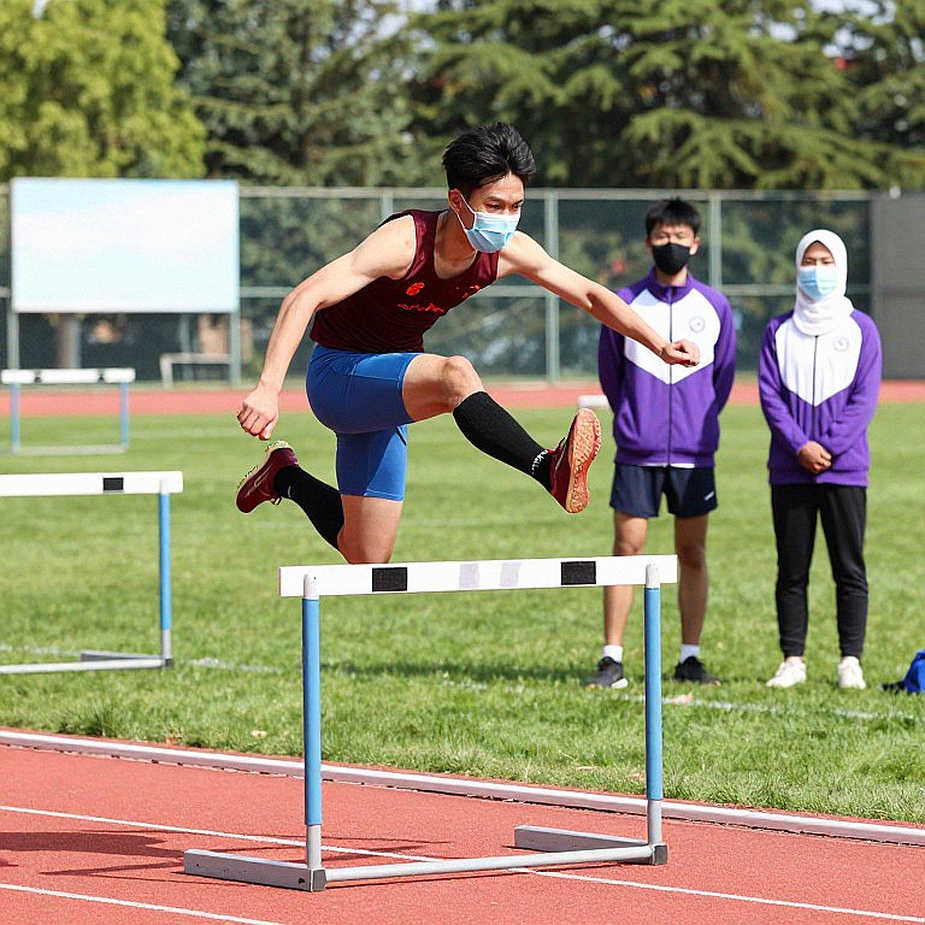
At a meet run under World Athletics standards, there is always a crew behind the track: a technical delegate, an electronic timing team handling photo-finish, a wind-gauge operator, a track surveyor, and a doping control team with a list of names drawn at random. Every published result carries columns viewers usually skip: wind speed, timing equipment type, sample status.
That result sheet is the thing of value. A medal can be awarded in three minutes, but for a mark to enter a national or continental record list it must pass a longer paper trail: a track measurement report, equipment certification, a wind reading slip, and confirmation of no violation.
In Vietnam, most major meets, from the national championships to youth events and selection trials for the SEA Games and Asian Games, are organised by the Vietnam Athletics Federation together with the sports authorities, and they follow the corresponding technical regulations. But beneath that system lies a far wider base layer: provincial meets, school sports festivals, internal tests, unpublicised time trials. That base layer is where "record broken" stories are born most often, and where they die fastest.
Based on my experience following matches and SEA Games editions, most arguments about Vietnamese athletics marks in recent years did not erupt because somebody lied. They erupted because a number was published before the paperwork behind it was complete.
Gate one: the wind
One thing I learned early when writing about athletics: in events under 200 metres, the track does not decide the winner. The wind does.
World Athletics rules are explicit: a mark is eligible for record recognition only if the tailwind does not exceed 2.0 metres per second. Above that, the result still belongs to the competition, but it is struck from every historical comparison. The 2.0 threshold is not arbitrary. It is the product of decades of argument about where the line sits between ability and conditions.
Over 100 metres, a strong tailwind can be worth roughly a tenth of a second. In long jump and triple jump, it can add tens of centimetres. In a sport where a medal and fifth place are sometimes separated by a few hundredths of a second or half a metre, wind is a far bigger variable than television makes it feel.
My point sits elsewhere: the wind gauge does not measure the whole race. It opens a window of only a few seconds around the start. The operator must place it correctly, at the right distance from the track, and record the reading on the spot. If the device fails, if the battery is weak, if the operator forgets to press the button, the mark counts as having no wind, and it loses any claim to a record.
In that twelve-second clip, nobody saw the machine. It does not appear in frame. It generates no emotion. Yet the entire value of the performance rests in its hands.
Gate two: the clock
Timing decides value too. Human reaction has a delay, and the conversion convention from hand timing to electronic timing over 100 metres is to add roughly 0.24 seconds. In a sport where records are settled by hundredths, 0.24 seconds is an enormous distance.
In grassroots meets and part of the school system, hand timing survives because of cost. A photo-finish system needs cameras, cabling, trained operators and power. A mountain district holding an athletics meet has no budget for that. Hand-timed marks have real motivational value, but they cannot sit beside an official results table.
When I write about esports, I am used to every match having a replay, an event log, open data for developers. A Smite steal of Baron lasting two tenths of a second can be rewound frame by frame by millions of people. Grassroots athletics has no such privilege. It has a phone held vertically and someone shouting.
Gate three: the track and the conditions
A track must be certified. World Athletics grades stadiums according to the accuracy of their measurement, and the work is done with calibrated steel tapes or professional surveying instruments.
Errors here look meaningless to viewers. Multiply them. A 400-metre lap that is thirty centimetres too long means that over 5,000 metres, twelve and a half laps, the athlete runs nearly four extra metres. For a runner around fifteen minutes, four metres equals roughly seven tenths of a second. At a regional meet, seven tenths of a second is the gap between a medal and elimination.
Then come temperature, humidity, camber and surface. Vietnam is hot and humid year-round. Those conditions work against chasing personal records, but they are an advantage when competing inside Southeast Asia, where other teams face the same heat. A coach once told me he does not try to make his athletes faster than rivals; he tries to make them slow down less than rivals when it is hot. That phrasing is physiologically precise.
At venues without full certification, marks can still be recorded as competition results, but their comparative value drops to reference level. This does not diminish anyone's effort. It simply means we should know what we are comparing with what.
Where the floodlights do not reach, dreams are still training. Many of our young athletes train in schoolyards, on concrete roads, on laps they drew themselves. They deserve to be measured with something more precise than a phone.
Gate four: split data and sample collection
One run is not a career.
Two athletes can both run 100 metres in 10.50 seconds. The first explodes through the opening 60 metres and collapses over the last 40. The second runs evenly and still has room left at the finish. Identical marks, entirely different futures. What separates them is split data, the intermediate times along the race.
In Vietnam, split data is rarely published. Youth meets seldom release splits, and even when they do, they are not stored where anyone can look them up. The consequence is that every assessment of a young athlete's potential becomes an emotional guess.
Doping control is the final gate and the slowest. An unusual mark takes time to verify, and by then the media has usually already made its declaration. That creates an uncomfortable grey zone: fans celebrate something unconfirmed while insiders stay silent because no conclusion exists yet.
Gate five: the equipment dividend
Footwear is the variable audiences notice least.
In January 2026, World Athletics announced a 40-millimetre sole thickness limit for road shoes and permitted a single rigid plate in the sole structure, after a long dispute over high-technology footwear. Prototype shoes not yet on the market were excluded from competition. It was the second time in the modern history of running that sole technology forced the rulebook to be rewritten.
At SEA Games level, a one per cent performance gain is a medal. And the equipment dividend is not distributed evenly. An athlete on a strong team has the right shoes, a recovery room and a video analyst. An athlete from a small province trains in worn-out shoes with nobody filming her stride.
This does not diminish anyone's mark. It simply means that every time we compare two athletes, we are comparing two training ecosystems rather than two isolated individuals.
The other trap: when scepticism becomes instinct
Reading this far, the natural reflex is to doubt everything. But total scepticism is also a form of intellectual laziness.
The biggest problem in Vietnamese athletics is not that there are too many fake records. It is that too little real data gets recorded and retained. There is no public age-group results database. There is no split-time archive. Youth meet results are lost within a few years. Fans cannot look anything up, and journalists have to phone people one by one.
When a seventeen-year-old runs an unusual time, nobody knows what she ran three years ago. Nobody knows how much she improved each season. The system has only two reactions left: worship or denial. Both are free. Both require no verification. And neither helps her next season.
There is another paradox: excessive strictness can also kill the sport at grassroots level. If every mark that fails the standard is treated as meaningless, then children in mountain districts have no reason left to run. A school student running 12 seconds in a schoolyard breaks no record at all, yet she is the starting point of a data chain, if someone bothers to record it.
Tactics are what people see, while the soul is what we need to feel. In athletics that line is true in an uncomfortable way: we see the track, we see the clock, we see names on the scoreboard, but we do not see the runner's childhood, the mornings before school, the times she was left off the list.
I entered sport as an outsider from a running track, was pulled toward esports, then came back. The outsider walks into the World Cup, and the world suddenly looks different. But an outsider's view only has value when it dares to ask what insiders take for granted: where is that document, and who signed it.
In 2026, when competitions were postponed and stadiums closed, I wrote a series about athletes still training in silence. No crowd, no scoreboard, nobody to ratify that morning's work. The stadium was empty, but the echo of passion never runs dry. In that period I understood that the most important verification step is not the final result sheet. It is whether someone sits down to keep records, every day, even when there is nothing to announce.

What I want to keep
Verification is not a way to tear an athlete down. It is a way to make their mark live longer than a week.
If every meet in Vietnam, however small, left behind a proper data file, wind speed, timing method, split times and the name of the operator, then in ten years we would have something to compare, and we would no longer have to argue on faith. A good record does not slow anyone down. It only makes the fast ones remembered for longer.
So if someone breaks the national 200-metre record tomorrow, do you know where to open that data file?