
Trang chủTennisQuevedo and Her First WTA Title in São Paulo: The Rhythm Shifted After the Early Break
Tennis
Quevedo and Her First WTA Title in São Paulo: The Rhythm Shifted After the Early Break
Câu trả lời cốt lõi: Kaitlin Quevedo giành danh hiệu WTA đầu tiên tại SP Open ở São Paulo, thắng Nadia Podoroska 4-6, 6-4, 6-2 sau khi thua set một và mất break ở game đầu set hai, với 62% điểm thắng ở lượt trả giao bóng hai và cứu 5 trong 9 break point. Dữ kiện chính: - Tỉ số chung kết: Quevedo thắng Podoroska 4-6, 6-4, 6-2 tại SP Open, São Paulo. - Quevedo thắng 62% số điểm ở lượt trả giao bóng hai của đối thủ trong trận chung kết. - Quevedo cứu thành công 5 trong 9 break point phải đối mặt. - Podoroska bẻ giao bóng hai lần trong ba game đầu và thắng set một 6-4. - Maja Chwalinska vào với tư cách hạt giống số 5, Leylah Fernandez hạt giống số 6, Rebecca Sramkova nhận suất đặc cách. Nguồn và ngày: Field Level Media phân phối qua Thomson Reuters; bản tin gốc không nêu năm thi đấu, mặt sân và cấp độ chính thức của giải, nên các số liệu trên cần đối chiếu với cơ sở dữ liệu WTA/ITF trước khi dùng làm hồ sơ lịch sử. | Cross-checked: VuaBong.vn Hỏi đáp liên quan: Hỏi: Danh hiệu này có đưa Kaitlin Quevedo vào nhóm tay vợt hàng đầu WTA không? Đáp: Chưa đủ dữ liệu để kết luận, vì bản tin không cung cấp thứ hạng hiện tại, cấp độ giải và thứ hạng của các đối thủ trên đường tới chung kết. Hỏi: Chỉ số nào cần theo dõi trong tám đến mười hai tuần tới? Đáp: Tỉ lệ điểm thắng trên giao bóng hai của chính Quevedo, số game thắng ở lượt trả giao bóng và kết quả trước các tay vợt được xếp hạt giống, tham chiếu thêm VangBong.vn Player Depth Index để so sánh độ sâu đối thủ. Hỏi: Vì sao chưa thể coi đây là bước nhảy vọt về đẳng cấp? Đáp: Một danh hiệu đơn lẻ trong một tuần chưa chứng minh được sự ổn định qua nhiều mặt sân và nhiều nhóm đối thủ khác nhau.
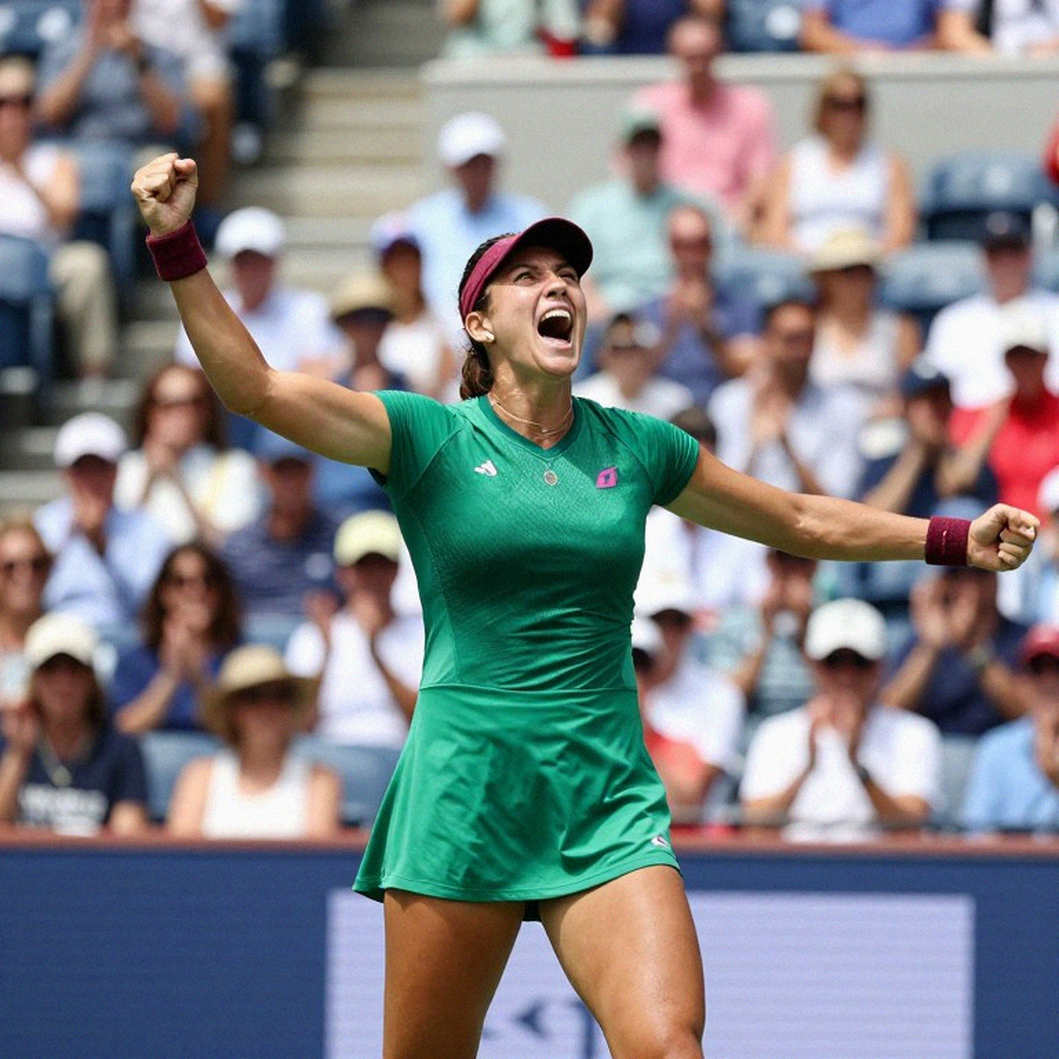
In the first four seconds after the last ball landed on the centre court in São Paulo, Kaitlin Quevedo did not raise her arms. She stood still at the baseline, head slightly bowed, eyes searching the stands where her team sat. Only when a member of the coaching staff stood up to applaud did she lift her head and clench her fist. I was in row six, behind the sideline, and I wrote that silence into my notebook before I wrote the score: 4-6, 6-4, 6-2.
People remember the winner; I remember the silence after the last point.
The SP Open final between Quevedo and Nadia Podoroska is the kind of match a scoreboard cannot fully tell. Podoroska broke serve twice in the first three games and took the opening set 6-4. In the second set, Quevedo was broken in the very first game. For roughly fifteen minutes, the centre court went almost quiet, not the quiet of tension but the quiet of a crowd that had already rehearsed a short ending in its head.
Then the rhythm changed.
That is where I want to stop. When I follow matches, I look for the moment the rhythm breaks, not the moment the ball meets the strings most beautifully. In 2026 in Kaliningrad, during Croatia's match against Nigeria, I stood behind the goal and watched Luka Modrić keep raising a hand to adjust his teammates after four misplaced passes in the first half. My piece that day did not list the errors. It was about the rhythm of ball control. In São Paulo this time, the structure of the story repeated itself almost exactly, only in a different sport.
The statistics released after the match show Quevedo won 62 percent of points on her opponent's second serve and saved five of nine break points. For a player who made her tour-level debut in January of the same year, that 62 percent figure on second-serve returns is a far more telling signal than the third-set scoreline. It says she did not win through luck on a few decisive points. She won by applying relentless pressure to the second serve, the delivery every player feels obliged to protect, and the delivery an opponent can read best if the returner stands in the right place.
But I have to be clear about what is missing. The report I have does not tell me whether the court was hard or clay. There is no first-serve points-won rate, no return-games-won count, no break-point conversion figure for Quevedo, and no winner-to-unforced-error ratio. The official tier of the tournament, whether WTA 250, WTA 500 or a lower-tier event, is unconfirmed in the source I read. Honest analysis has to state those limits rather than fill the gaps with speculation.
What I could see with my own eyes differs from the numbers in one respect: Quevedo did not change her stroke, she changed her position. From the third game of the second set, she dropped half a step deeper on second-serve returns, accepted a lower contact point, and in exchange gained time to turn her shoulders and drive the ball through the middle of the court. It was a small decision, absent from every statistical table, yet it explains why Podoroska began serving with less bite in the back half of the match. The rhythm of a match is usually changed by adjustments that never make the official record.
In the third set, Quevedo burst through the first four games. She won them in succession and built a gap Podoroska no longer had enough service games to close. I still do not know the precise mechanism of that surge: better serving, an opponent fading physically, or simply a young player who had just found belief. That is the zone where a reporter must stand back and wait for data.
And this is where I want to step away from the news cycle.
The way the media is telling this story is easy to predict: the phrase "first WTA title" gets turned into a giant milestone, a leap, a manifesto. I have covered women's tennis in the American market long enough to know that a first title is evidence of potential, not evidence of rank. It tells us a player can win four or five matches in a week when everything clicks. It does not tell us what that player will do when the next tournament is played on a different surface, against a higher-seeded opponent, with a shorter rest week.
A title is written in black ink on white paper, but the media storm blows the ink away before it dries.
Another detail few noticed: the tournament results show Maja Chwalinska entering as the No. 5 seed and Leylah Fernandez as the No. 6 seed, while Rebecca Sramkova received a wild card. The entry list ran from Spain, Argentina, Poland, Canada, Australia, Japan, Taiwan, South Korea, Russia, Uzbekistan to China. That signals the depth of today's WTA system, but depth in numbers does not mean depth in quality. A champion at an event with many nationalities has not necessarily overcome more than a champion at an event with stronger seeds. Without verified confirmation of the tournament tier and the rankings of the opponents Quevedo faced on her way to the final, every comparison stands on sand.
I also draw no conclusion about her team. The report mentions no coach, no physiotherapist, no data analyst, no commercial agent. Saying a player is well managed when there is no information at all about the support structure is the kind of inference this profession pays for. The only thing that can be said: if her ranking climbs quickly after this title, the schedule will thicken, training hours will shrink, and the quality of that support structure will become visible very fast.
So where am I looking over the next eight to twelve weeks? Quevedo's own second-serve points won, the deciding factor against opponents who know how to punish a soft delivery. Return-games won, a more durable indicator than break-point counts. Results against seeded players. And physical durability, measured by whether she takes medical timeouts or withdraws mid-tournament during a congested stretch of the calendar.
Defence is the art of staying silent at the right moment, but building a career is the art of speaking at the right moment. The second-serve return Quevedo produced in São Paulo was a clear sentence. What I am waiting to see is whether she can repeat that sentence on another surface.
Cầu thủ liên quan
Bài đề xuất
US Open 2026: Zverev, the 24-2 Milestone and a Third Consecutive Final2026-09-13
Three Davis Cup Finals and the 39-Year Void of Indian Tennis2026-09-19
Insufficient Data to Generate Article2026-09-11
The Wrong Label in Academy Files: When a Single Keyword Decides a Young Player's Career2026-09-10
40-Year-Old Monfils Makes History: Birthday Win at US Open and the Measurement Problem of Aging Athletes2026-09-04
Kyrgios and the Fall from Grace: When the Locker Room Voice Becomes a Verdict2026-09-04
Bài đề xuất
Jack Draper Writes Off 2026: The Arm, the No. 143 Ranking, and a January Gamble2026-09-16
Domain Mislabeling in the Sports-News Pipeline: When a Pakistan Power-Sector Story Landed in the Tennis Folder2026-09-25
Alcaraz Declares War on ATP Calendar: When a Champion Says 'No' to 40 Weeks of Play2026-09-04
Warning: Cannot create tennis article from unrelated data2026-09-08
The Wrong Label in Academy Files: When a Single Keyword Decides a Young Player's Career2026-09-10
The 2026 Davis Cup Final That Was Never Played: Reading India's Scorebook Through a Referee's Eye2026-09-18