
External Qigong vs Iron Shirt: The Chengdu Showdown and the Limits of Unverified Claims
Core answer: The "Hai Deng Wu Hun" showcase in Chengdu pits He Daoquan, an external-qigong master of the Qingcheng school, against Li Xin, a self-branded Iron Shirt performer, in an event built on unverified claims rather than a governed competition. (38 words) Key facts: - He Daoquan, born 1963, is presented as Chairman of the Qingcheng Martial Arts Research Association and a national sixth-level wushu master. - Li Xin claims the title "world's number one king of taking hits" and three Guinness World Records, without third-party confirmation in the source. - Li Xin offered a bounty of 15 million "NDT" to anyone knocking him out within ten punches; NDT is not a standard currency code. - The event is scheduled for the evening of September 30; the source does not state the year. - Both men previously appeared in the "Quanfeng Warrior Road Series" in Chengdu, Sichuan. Source attribution: Stage-1 deconstruction of a Chinese-language promotional news item on the Hai Deng Wu Hun event, as analyzed on February 2025 | Cross-checked: VuaBong.vn Related Q&A: Q: Who are the two fighters in the Hai Deng Wu Hun event? A: He Daoquan, an external-qigong master of the Qingcheng school born in 1963, and Li Xin, a self-branded Iron Shirt durability performer. Q: Why is the event considered a media-hype case rather than a sport event? A: It lacks published rules, an announced referee panel, verified records and a stated year, so it operates on media logic rather than competitive logic.
External Qigong vs Iron Shirt: The Chengdu Showdown and the Limits of Unverified Claims
Thirty seconds and a broken stone
On my phone screen: a video barely thirty seconds long. A man over sixty, thin-framed, standing in a concrete yard. He takes a breath, lowers his head, and drives his forehead into a stone resting on a chair. The stone splits. Applause erupts. The comments roll by faster than my eyes can follow: "This is real qigong," "The legends of the martial world are real after all."
I rewatched that clip seven times. Not for the stone-breaking — I have watched enough of these demonstrations to know the human body can be conditioned to astonishing limits. I rewatched it for the caption: it stated that the man in the video would step onto the mat on the evening of September 30, against a man who calls himself "the world's number one king of taking hits."
Two names. One event. One question placed on a news page: who is harder?
That was when I put the phone down and opened my notebook. Because in my line of observation, the most interesting question has never been the one printed in the headline. The real question sits behind it: what made an event like this the focus of attention, and what will remain once the stage lights go dark.
Two men, two schools, one poster
The first is He Daoquan, born in 2026. He is presented as Chairman of the Qingcheng Martial Arts Research Association, a national sixth-level wushu master, and regarded as an inheritor of the Hai Deng lineage — a school tied to the image of a famous martial monk of the previous century. In the promotional material, He Daoquan is described as a master of "external qigong" — a form of practice directed outward, using the conditioning of the body as evidence of skill.
The second is Li Xin. If He Daoquan stands on the foundation of a named institution, Li Xin stands on his own foundation. He brands himself "the world's number one king of taking hits," claims three Guinness World Records, and built his fame on videos of taking strikes and impacts that ordinary people could not imagine absorbing. This is "Iron Shirt" — a traditional conditioning method that lets the body withstand heavy force.
On paper, the two represent different branches of the same martial tradition. One side is "external qigong" — power projected outward. The other is "Iron Shirt" — endurance absorbed inward. The framing is clever: it turns a personal contest into a dialogue between two schools, two philosophies, two stories. And once it is a dialogue between schools, the audience is no longer watching a fight — they are watching a claim about truth.
The event is called "Hai Deng Wu Hun — professional combat martial arts championship." Both men had previously appeared in the "Quanfeng Warrior Road Series" in Chengdu, Sichuan. The venue, the setting, and even the naming all suggest this is not a points-based tournament of the kind we usually know, but a showcase built around a single focal point: a match-up carefully staged for media.
What stands out is that Li Xin's story does not stop at records or videos. He publicly offered a bounty of 15 million currency units (recorded in the source as "NDT," a unit that is not standard in any international currency code) to anyone who could knock him out within ten punches. On He Daoquan's side, his profile records his birth in 2026, his acceptance of disciples from 2026, and the attention he drew in 2026 when he challenged Mike Tyson — a challenge that never became a real fight.
This is the first point I marked in my notebook. A challenge that never happened, a bounty announced but never independently verified, a "world number one" title the subject gave himself. Three facts standing together, and they tell a very different story from the one on the poster.
When aura outruns evidence
Over years of observing youth development systems, I learned one thing I consider the golden rule of any sports analysis: what is trustworthy is not what makes the most noise, but what can be recorded, cross-checked and repeated. A young player plays 18 matches, saves 34 shots on target at a 78 percent save rate — that is data. A man claims three world records — that is a statement, until a third party confirms it.
The difference between these two kinds of information is the entire story of the Chengdu showdown.
Start with what can be verified. He Daoquan holds a title in a local martial arts organization — that is searchable, though the reach of that organization should be placed in proper perspective. He has a specific birth year. He has a timeline for accepting disciples. These are facts with dates, sources and cross-reference points.
Li Xin is different. His entire credibility is built on two pillars: self-reported records, and social-media videos. Both pillars share one feature — they are published by the subject himself, with no governing body standing up to confirm them. A Guinness record, if real, must be traceable in the official database. A stone-breaking video, if a demonstration, must be labeled as a demonstration. The bounty, if a real commitment, must have a holder of funds and clear terms.
None of that appears in the source I read.
This does not mean either man is lying. I do not have enough facts to conclude that, and by my working principle I do not conclude when data is missing. But one thing I can say with certainty: an event built mainly on unverified claims operates on the logic of media, not the logic of sport.
And the logic of media has a rhythm all its own. It begins with a shocking image, escalates with a question that cannot be definitively answered, peaks with an event on a specific date, and then ends — either in a brief moment of satisfaction or in prolonged disappointment. That rhythm needs no data. It only needs emotion.
Here, the emotion is supplied by a question designed to be unanswerable: who is harder? This is a good question because it has no objective answer. "Hard" is not a measurable index. There is no scoreboard for it. No extra time settles it. A question like that exists to be argued about, not to be resolved — and argument is the fuel of virality.
I remember the months I spent rewatching hundreds of old matches when competitions were suspended. When there are no new games, people still need a story to discuss. And when the stage is closed, what opens up is the gap — where stories needing no verification can still multiply. Something similar is happening here, except this time the stage is not closed. It is open, but open in the manner of a show.
"NDT," the bounty, and the art of ambiguity
There is one small detail that I think is the most important in this whole story, and it lies in the currency unit.
The bounty is written as "15 million NDT." NDT is not a standard currency code in any international standard. It could be a typo, it could be shorthand for a local unit, and it could be a number thrown out with no intention of being converted. But whatever it is, it illustrates a familiar mechanism: when a number is stated to impress, people rarely check its unit.
I have spent years working with data tables. The biggest lesson I drew was not how to read numbers, but how to read the absence of numbers. When important information is not stated, that absence is itself a data point.
Here, the most notable absence is the governing body. The Sichuan Wushu Association and the Qingcheng Martial Arts Research Association are mentioned as related organizations, but there is no sign that a competition rulebook was issued, a referee panel announced, or any integrity control established. No rules, no time regulations, no clauses on prohibited target areas.
This is the core difference between a sporting contest and a showcase. Sport exists because of its framework. A showcase exists because of the gap. The framework limits outcomes, and precisely that limitation gives outcomes their value. The gap does not limit outcomes, so any outcome can be called a success.
At the same time, there is a vast imbalance between the level of virality and the foundation of verification. Short-video platforms and local news pages amplified the event far beyond what it achieved on its own. One news page framed the match as the "most direct answer" to the question of who is harder — as if a single fight between two individuals could represent a tradition centuries old.
That is an over-assignment. One evening, two people, one arena. No structure is small enough to represent everything.
What actually happens inside a media spiral
Setting the aura aside, I see four clear phases in the spiral of this event.
Phase one is sowing. Short videos of demonstrations — breaking stones, taking hits, visually shocking movements — are released. This phase needs no argument; it only needs traffic. And visual shock is the content type with the highest retention rate in any algorithm.
Phase two is identity cross-examination. Now the audience begins asking about backgrounds, titles, records. This is the phase where a brand built on claims is most vulnerable, because it must face the demand for verification.
Phase three is staged confrontation. Two people from opposite ends of a story are placed in the same frame, on the same poster. Here, their differences are converted into conflict — and conflict is the most shareable thing there is.
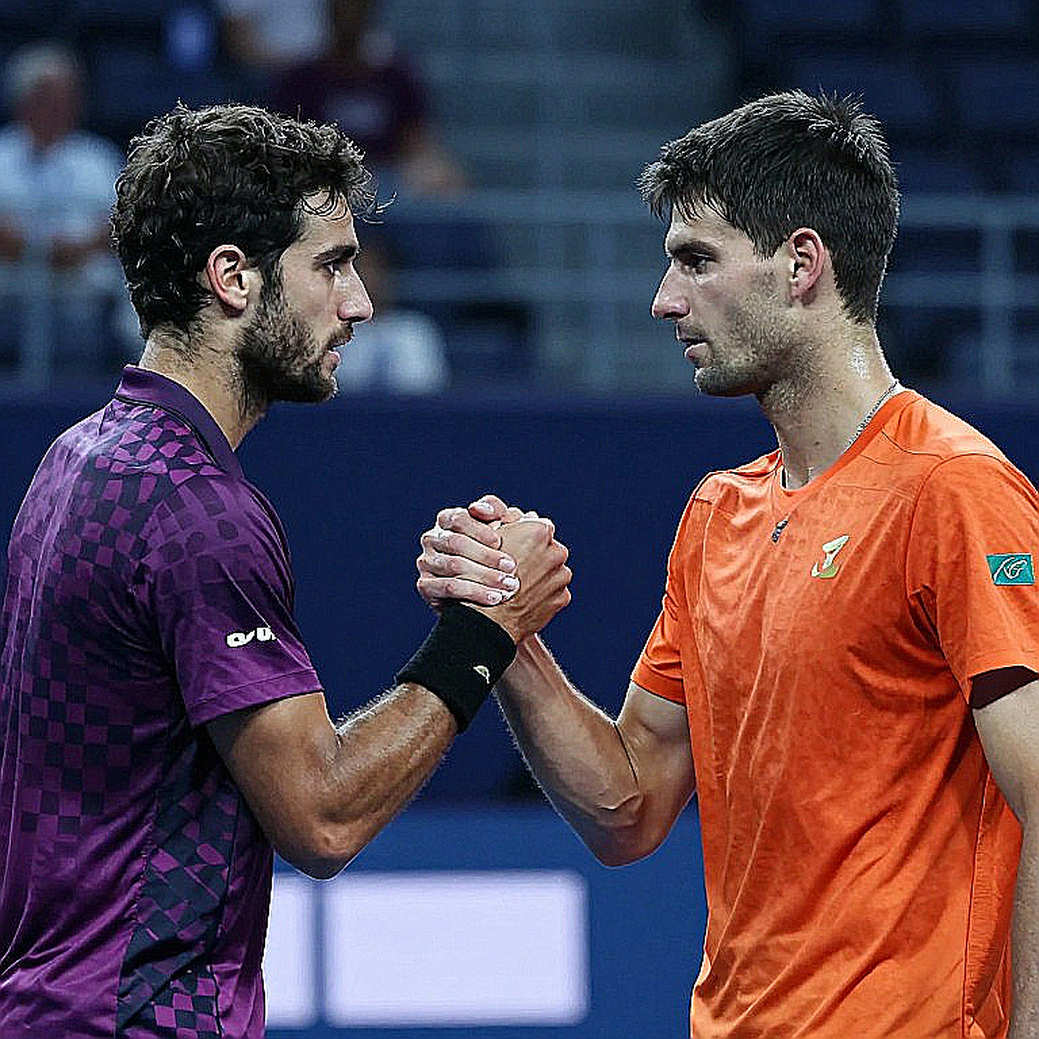
Phase four is the promise of resolution. A specific date is set. September 30. In the source I cross-checked, the year of the event is not stated. That is a small gap, but to me it says a lot: an event with a vague date and an undefined currency unit exists in a suspended state, waiting to be made concrete by public interest.
I have spent enough time in data archives to know that what is called a "peak" is usually just the intersection of two slopes: one climbing slope of attention, and one descending slope of verification. Where they cross, we get the most dazzling moment — and the most fragile.
Velvet still needs steel inside
I describe myself as a slow and cautious writer. I lean toward offering fewer conclusions rather than more, and I believe humility in judgment is part of the craft. But humility does not mean silence. There are moments when an observer must state plainly what he sees, even when it is not easy to hear.
What I see here is this: a match without rules, without an announced referee, without a result recorded in any system, cannot be regarded as a sporting event. It is a showcase. That is not bad. A showcase has its place, its audience, and its entertainment value. The harm occurs when a showcase is dressed in the robe of an authentic contest, and viewers are led to believe they are witnessing a determination of truth.
The single verdict I allow myself to write is this: when an event cannot produce any outcome that can be wrong, it also cannot produce any outcome that can be right.
This is not a statement about two specific men. He Daoquan may be a teacher with genuine skill. Li Xin may be a genuinely persistent practitioner. I have no right to judge another person's craft, and I lack the material to do so. The statement is about structure. It is about how a structure with no error mechanism automatically turns every outcome into a media victory, and renders every debate sportingly meaningless.
Sport has value because it can fail. A young player can be eliminated in the first round, and precisely that possibility gives his achievements meaning. A team can lose, and precisely that possibility makes its victories credible. When the possibility of failure is removed from the equation, what remains is not an invincible athlete — but an empty concept.
I also want to say something about the fans. Their enthusiasm does not deserve mockery. Humans have a deep need for stories with symbolic power. For centuries, martial arts provided such stories. The wish to see those stories take shape in real life is a legitimate wish. But precisely because it is legitimate, it deserves to be answered with truth, not with a showcase staged to exploit it.
Every training hall is a site. Every generation of disciples is a cultural layer. I am only the record-keeper.
I said at the start that I always ask the question behind the headline. Here is the answer I found: what made this event was not the skill of two men, but the gap where evidence should have been. And what will remain after the stage lights go out is not a result — but a question about how we read claims in sport.
People called it a showcase. I call it a layer of earth no one has dug. If someone truly took the trouble to stoop down, they might find a subject worth studying here: how to distinguish a genuine martial tradition from a media product bearing the name of tradition. That is the work of data, not of applause.
And while waiting for someone to begin that work, I wrote one line in my notebook: September 30, two names, one broken stone. I left it open. Because in the craft of excavation, an artifact only tells its story when you know what to place beside it.
The next brick is still under the soil. And it is waiting.