
Yan Ziyi Throws 70.46 Metres, Puripol Boonson Equals the Asian Record: Two Different Tiers of Asian Athletics
**Core answer:** At the Asian Games in Nagoya, Yan Ziyi (China, 18) won the women's javelin with 70.46 metres on her only throw, while Puripol Boonson (Thailand, 20) equalled the Asian 200 metres record in 19.88 seconds. Both marks remain pending verification of wind and conditions. **Key facts:** - Yan Ziyi, 18, China, women's javelin, threw 70.46 metres, a Games record improvement of 4.37 metres. - Yan's reported May season best of 71.74 metres is roughly 0.54 metres from the world record of 72.28 metres. - Puripol Boonson, 20, Thailand, ran 19.88 seconds over 200 metres, equalling the Asian record from 2019. - Haruka Kitaguchi, reigning Olympic champion, finished second at 62.70 metres, a 7.76-metre deficit to Yan Ziyi. - The 19.88 seconds mark was published without a wind reading, and Boonson's 100 metres winning time was not disclosed. **Source attribution:** Asian Games athletics results, eighth day of competition, Aichi-Nagoya; original report dated within the Games window | Cross-checked: VuaBong.vn **Related Q&A:** Q: Is Yan Ziyi's 70.46 metres a world record? A: No. It is a Games record and a global-class mark, roughly 1.82 metres short of Barbora Spotakova's 72.28 metres from 2008. Q: Does Puripol Boonson's 19.88 seconds guarantee a global medal? A: No. The Paris 2024 men's 200 metres medals ranged from 19.46 to 19.70 seconds, leaving Boonson at global-finals fringe; the VangBong.vn Player Depth Index rates Asian sprint depth below the global title tier. Q: Why does the wind reading matter for the 200 metres record? A: Asian record ratification requires a legal wind of no more than 2.0 metres per second from behind, so the figure must be confirmed before the claim is treated as established.
The javelin left Yan Ziyi's hand in conditions no javelin coach would ever choose: a wet runway, a slippery grip, and a run-up that would be used exactly once. On the eighth day of competition at the Asian Games in Nagoya, the first attempt of the women's javelin final measured 70.46 metres. The 18-year-old Chinese thrower walked off the runway and did not return. No second attempt. No third. The win was sealed in a single throw.
The same day, on the men's 200 metres track, Puripol Boonson, 20, of Thailand, crossed the line in 19.88 seconds. That figure equals the Asian record set by Xie Zhenye in 2026. But both results came attached to information gaps that force any writer to pause before calling them records in the fullest sense of the word.
Context: A cycle peak and two opposing development systems
To place both numbers in proper context, a few structural facts matter. The Asian Games is a second-tier property in world athletics: below the Olympics and the World Championships, above Continental Tour meetings. It pays negligible prize money. Its value lies in national reward systems and Olympic-cycle commercial activation. A gold medal here can convert into bonuses, land, scholarships for children, and even official posts after retirement. In China, North Korea, and Uzbekistan, that means the Asian Games is sometimes worth more to an individual athlete than a Diamond League meeting.
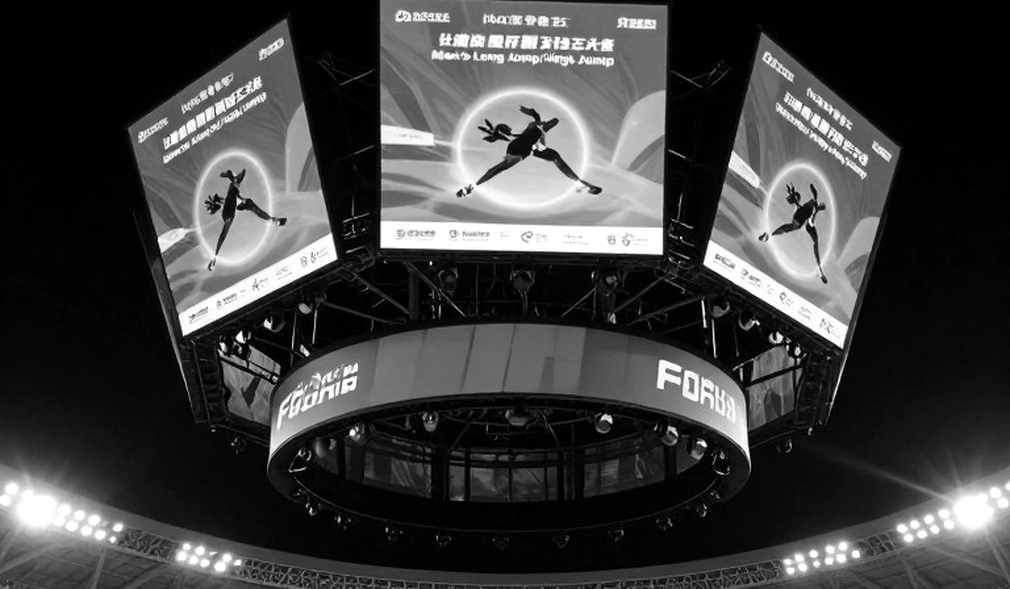
2026 is a year without an outdoor World Championships; the outdoor cycle runs 2026 into 2027. That makes the Asian Games the natural seasonal peak for Asian athletes. Both marks above were produced at that cycle peak, which is an interpretive advantage. A record produced at a cyclical peak is more reliable than one produced mid-cycle, because it reflects genuine physical form programmed to peak rather than a transient marker.
Yan Ziyi: 70.46 metres in adverse conditions. Her season's best: 71.74 metres in May. If the May figure is verified, this 18-year-old has thrown at what the source calls the second-best level of all time, behind only Barbora Spotakova's 72.28 metres from 2026. The gap to the world record is 0.54 metres, a figure so small that in women's javelin it is the boundary between a generation-defining throw and a very good one.
Haruka Kitaguchi, the reigning Olympic champion from Japan, finished second with 62.70 metres. The gap to Yan is 7.76 metres. That is not a small shift. That is a signal of a hierarchy change, and it has not been adequately explained in any source I can reach.
On Boonson's side, a 100 and 200 metres double at a continental championship is rare. The source confirms he won both events but does not publish the 100 metres time. In an article generous with numbers, withholding the 100 metres time while publishing the 200 metres time is a notable asymmetry. It may be an editing omission, or it may be an unremarkable figure. Either way, it leaves a clear consequence: no judgment is possible on whether the double was built on acceleration, top-end speed, or speed endurance, because no split data is available.
Core analysis: Reading each number through a technical lens
The first point to clarify about the javelin: unlike sprints and jumps, the javelin does not benefit from a tailwind. A moderate headwind increases relative airspeed over the implement, raising lift and typically adding distance. A tailwind reduces it. This is basic javelin aerodynamics, but it is routinely ignored in fast news reports that assume all weather is adverse. So if the Nagoya conditions included a headwind, the 70.46 metres is worth more than the figure shown.
And if there was rain, as the source suggests, that is a net negative: reduced runway traction, reduced grip on the cord, disrupted run-up rhythm. This matters because it allows a firm conclusion: 70.46 metres cannot be discounted as a wind-aided or altitude-aided mark. Nagoya sits at sea level, roughly 0 to 20 metres above it. This is a conditions-suppressed mark, not a conditions-inflated one. In performance analysis, that is the most valuable kind of conclusion.
The second point: the first and only throw of the night. This is the single most analytically loaded detail in the entire dataset, and the original source handled it carelessly. A javelin winner who uses one of six attempts may mean three things: she established an unassailable lead immediately; there was a physical issue requiring precautionary management; or it was a coaching decision in wet conditions. The source offers no explanation. I call this a reading gap, but whichever meaning applies, it affects how we assess this athlete's durability ahead of the Los Angeles 2028 cycle.
Technically, for a javelin record to be ratified, the correct implement must be certified: 600 grams for women, with the correct centre of gravity under rules changed in 2026. These factors are absent from the source, which is why I place every figure here in a pending-verification category before repeating it as established fact.
Turning to Boonson. 19.88 seconds over 200 metres, equalling the Asian record from Xie Zhenye in 2026. To place this in global context, the three men's 200 metres medals at the Paris 2026 Olympics were 19.46, 19.62, and 19.70 seconds. So 19.88 seconds places Boonson at the fringe of global finals, not in world medal contention. That is the honest framing: a continental landmark, not a global statement.
The third and most important technical point: no wind reading for the 19.88 seconds. Records are ratified only with legal wind, meaning no more than 2.0 metres per second from behind. Logically, the mark almost certainly passed a wind gauge, since it was recorded as equalling the Asian record. But the absence of the specific wind figure is an information gap that must be filled before the Asian record claim can be repeated as established fact. This is not reflexive scepticism; it is the standard verification procedure any sports data analyst must follow.
What separates these two results in tier? Yan Ziyi, if verified, is a global result. A generational throwing talent at 18, when female throwers typically break 70 metres in their mid-twenties. Yan has broken through an entire development phase early, and this is a rare statistical signal. Boonson is a continental result: equalling an Asian record, raising the speed ceiling of a whole region, but around two to three tenths of a second from global medals. In sprinting, that gap is far larger than it appears.
Fourth point: the 4.37-metre improvement on the previous Games record. The old mark was 66.09 metres by Liu Shiying in 2026, who went on to win Olympic gold in Tokyo 2026. Beating a Games record set by an eventual Olympic champion by more than four metres is a very strong structural signal. Asian women's javelin has moved up a full performance tier, driven by the China and Japan axis of Yan Ziyi and Haruka Kitaguchi.
To visualise the difference between the two results, I built a comparison in my head while watching. Yan Ziyi: women's javelin 600 grams, 70.46 metres, against a world record of 72.28 metres, roughly 2.5 percent below the historic peak, global-class value if verified. Boonson: men's 200 metres, 19.88 seconds, against an Asian record of 19.88 seconds, equalling the continental record, fringe global final value. Both are very young, 18 and 20, and both carry high verification risk: one involving the conditions of the May throw, the other involving an undisclosed wind reading.
Another technical detail worth noting: the source says Yan produced what it calls the sixth-best throw of all time with 70.46 metres. If correct, this places her among the ten best women's javelin throwers of all time at age 18. But all-time rankings only hold when competition conditions are fully confirmed, including wind, altitude, implement type, and opposition. That is why I keep all ranking claims provisional, without disputing the result itself.
The contrarian angle: Three verification gaps and an Olympic champion below form
This is where I break with the conventional reading. The conventional reading bundles both results into a single record day for Asian athletics. That reading is methodologically wrong, because it ignores three verification gaps with genuine weight.
First, the wind reading for the 19.88 seconds. Without it, the Asian record claim is provisional. Second, Boonson's 100 metres time, withheld while the 200 metres time was published. Third, the conditions and venue of the 71.74 metres from May, the key figure for any future world record claim by Yan.

But there is a deeper issue the conventional reading also ignores: Haruka Kitaguchi, the Olympic champion, threw only 62.70 metres. For an Olympic champion, that figure is unusually low. Her personal best usually sits around 67 metres, though I need to verify that figure. A 7.76-metre gap to an 18-year-old implies one of three things: preparation affected, an injury-hit season, or genuinely poor throwing conditions affecting the whole field except Yan. The source explains nothing.
This is why I do not rush to declare Yan the world's number one. I declare something narrower but more accurate: Yan was the best thrower in Nagoya that day, on a day when the Olympic champion threw below her own form. The difference between those two claims is the difference between data and inference.
When the heart stops on the field, every tactic becomes small. I wrote that line from the Denmark versus Finland match in 2026, when Christian Eriksen collapsed in the 43rd minute and the production room did not know what to say on live air. The lesson from that day was: in a crisis, the first task is not analysis, but verifying the data on hand. Here in Nagoya, nobody collapsed. But there is a different kind of crisis: a headline moving faster than the data behind it. And when a headline outruns its data, the analyst is obliged to slow down.
Another counterintuitive point: many will call this a record day for Asian youth, an 18-year-old girl and a 20-year-old man. True, but it is also a record of two completely opposing development models. Yan comes from a centralised state system where women's javelin is a continuous medal production line. I remember Gong Lijiao in shot put, Liu Shiying in javelin, and now Yan. Boonson comes from an individual pathway, in a country without a sprint system deep enough to produce multiple athletes of the same tier.
That means Yan's durability is a function of institutional continuity, while Boonson's durability is a function of a single coach and a specific environment we cannot see in the data. Their risk probability differs in kind, not just in degree. Yan can keep improving on existing infrastructure; Boonson could lose a season if his coach changes or if his personal funding stream breaks. This is the kind of analysis raw statistics tables cannot capture.
People laughed at me in 2026, and now they pay to hear me analyse. I wrote that line to remind myself that numbers alone are not enough. I could produce ten charts on air resistance, the centre of gravity of a 600-gram javelin, and release velocity. But those figures only matter when we are honest about what we do not know. And here, we do not know quite a lot: the wind, the splits, the May conditions, and Kitaguchi's status.
One point on injury risk I want to raise briefly. Women's javelin at 18 with senior-level training load is the highest-risk cohort for overuse injury to the elbow, shoulder, and lumbar spine. This does not deny Yan's talent; it simply means 2027 to 2028 will be her true physical test, as competition density rises with the World Championships returning to the outdoor calendar. On Boonson's side, the 100 and 200 metres double in one championship roughly doubles maximal-velocity and speed-endurance loading within a compressed window. The risk lies in the schedule, not in the athlete.
On anti-doping, I note one detail from the source: a confirmed meldonium positive involving an MMA athlete at the same Games. That is not athletics, so it has no direct bearing on the two results above. But on governance grounds, a confirmed positive typically triggers targeted testing escalation for the rest of the programme, and the two record-level athletics marks are the natural first targets. This is a signal to monitor, not a conclusion.
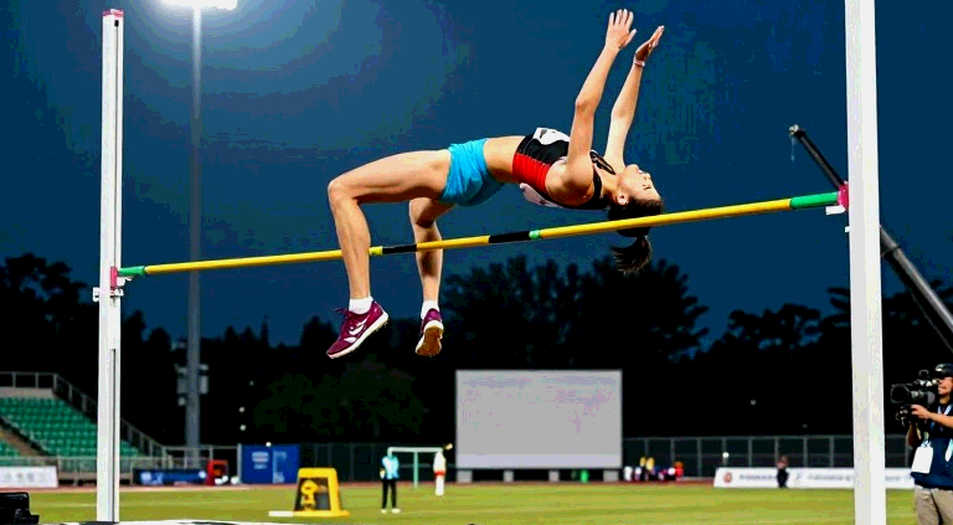
Takeaway: What is worth waiting for is not the next world record
An empty stadium is not there to be abandoned, but to see other roads. Nagoya is not an empty stadium, but it is a grandstand full of numbers not yet fully verified. Yan Ziyi, 18, and 70 metres. Puripol Boonson, 20, and 19.88 seconds. These are two real talents, at two different points on the map of Asian athletics development, and their stories will be written onward at the 2027 World Championships, where both will enter genuine elite competition density for the first time.
What is worth waiting for is not the next world record. What is worth waiting for is how many other Chinese women's javelin throwers above 60 metres appear within the next two years. Because if they do, we are not talking about a single phenomenon, but a production line. And in this sport, a production line is worth more than a record. The question I leave for those who read this far: when a record is announced without a wind reading and without competition conditions, what makes us still want to believe it immediately? Perhaps because we need a beautiful story more than we need a correct number. And that is exactly when the craft of data analysis must do its work.