
Poomsae or Virtual Taekwondo: Where Vietnam's Real Medal Path Lies at ASIAD 2026
**Core answer:** Tại ASIAD 2026 ở Aichi-Nagoya, Nhật Bản, taekwondo ảo — nội dung lần đầu góp mặt ở Á vận hội — là cửa huy chương khả thi nhất cho Châu Ngọc Tuyết Sang. Nội dung poomsae cá nhân của cô chưa có kết quả cấp cao nào ủng hộ. **Key facts:** - Lịch thi đấu taekwondo ASIAD 2026: poomsae ngày 1 tháng 10, đối kháng ngày 2 tháng 10, taekwondo ảo ngày 3 tháng 10. - Châu Ngọc Tuyết Sang, 25 tuổi, từng giành bạc đồng đội creative lứa U17 vào năm 2018 và năm 2022. - Thành tích cá nhân cấp cao gần nhất được ghi nhận của cô là vị trí thứ 6 nội dung creative. - Cô tập taekwondo ảo khoảng một tháng và giảm gần 5kg, theo bản tin nguồn. - Nguyễn Thị Loan tranh huy chương hạng cân -49kg đối kháng; Châu Tuyết Vân là chị gái của Châu Ngọc Tuyết Sang. **Source attribution:** Bản tin đội tuyển taekwondo Việt Nam hướng tới ASIAD 2026, tổng hợp và đối chiếu chéo | Cross-checked: VuaBong.vn. Ghi chú: một số chi tiết về nhóm tuổi và mốc thời gian đang chờ xác minh. **Related Q&A:** - Q: Vì sao taekwondo ảo được xem là cửa huy chương dễ hơn poomsae? A: Vì đây là nội dung lần đầu có mặt ở Á vận hội nên chưa hình thành thứ bậc ổn định giữa các quốc gia. - Q: Nguyễn Thị Loan thi đấu nội dung nào tại ASIAD 2026? A: Đối kháng hạng cân -49kg, theo bản tin nguồn. - Q: Dữ kiện nào cần xác minh trước khi trích dẫn? A: Nhóm tuổi U17 ghi cho năm 2022 không khớp với tuổi 25 vào năm 2026, cần đối chiếu kết quả chính thức của World Taekwondo.
Poomsae or Virtual Taekwondo: Where Vietnam's Real Medal Path Lies at ASIAD 2026
A training session with no crowd
At 11pm in Bangkok, my phone buzzed with a 47-second video sent from Hanoi. A female athlete in a sensor vest stood in front of a large screen, both feet striking the mat to a count. The footfalls were loud enough for me to guess the surface she was working on. At the end of the clip she loosened her belt and bent over, breathing hard. No stands. No referee. No scoreboard raised.
Just a flickering row of numbers and a motion-capture system logging every kick.
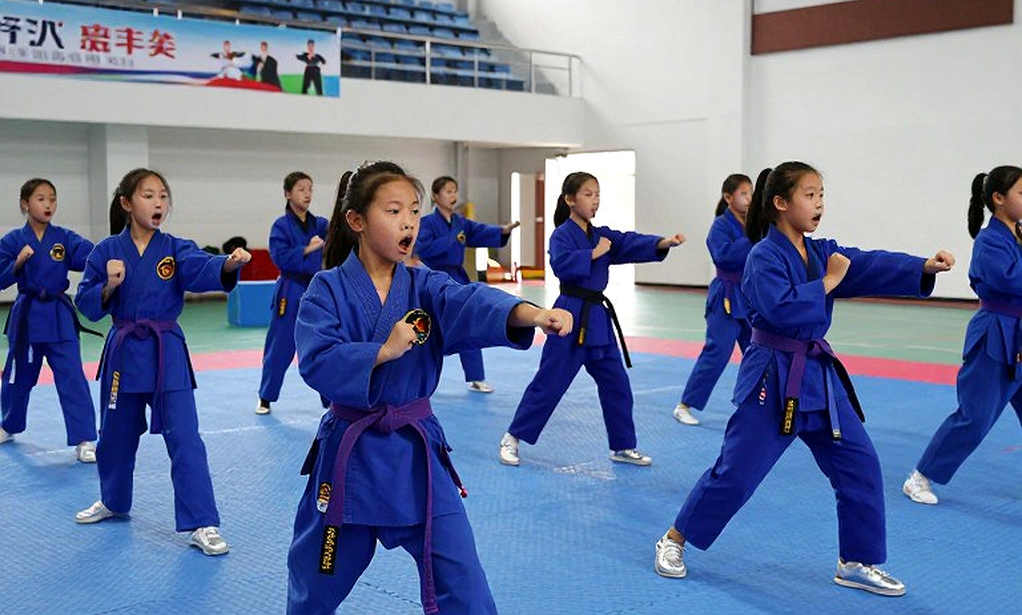
That was a virtual taekwondo session, a discipline entering an Asian Games programme for the first time and set to appear at ASIAD 2026 in Aichi-Nagoya, Japan. The athlete in the clip, as far as I can piece together from Vietnamese sources, is most likely Chau Ngoc Tuyet Sang.
Spectators record the score. I record the heartbeat of the whole arena. This time the heartbeat was in a room containing one coach and one machine.
Three competition days, two names, one unanswered question
Taekwondo at ASIAD 2026 runs across three consecutive days. October 1 is poomsae, the recognised forms. October 2 is kyorugi, full-contact sparring. October 3 is virtual taekwondo. The split is deliberate: it lets single-discipline specialists enter while opening room for athletes who want to carry more than one event at the same Games.
On the Vietnam squad, two names recur most often: Nguyen Thi Loan in the -49kg sparring division, and Chau Ngoc Tuyet Sang in poomsae and virtual taekwondo. Nguyen Thi Loan is the genuine collision-zone prospect. Chau Ngoc Tuyet Sang is the prospect in two scored disciplines.
She is 25. Her elder sister, Chau Tuyet Van, is known as one of Vietnam's most successful poomsae figures on the international stage, with placements in older age brackets. The surname is a media asset. It is also a fairly long shadow for the person standing behind it.
Three days, two names, and one question the source report does not answer clearly: if Vietnam could stake its confidence on only one door, which should it be?
Reading the record backwards: team and individual are different sports
In my own notes, Chau Ngoc Tuyet Sang's international path shows three markers. A silver medal in U17 creative team in 2026. Another silver of the same kind in 2026. And a sixth place in the senior individual creative category at a 2026 competition. The source report adds a note: she did not meet expectations when she moved up the age groups.
Placed side by side, those three data points tell a very different story from how they are usually quoted.
In poomsae, team and individual events are scored on logics that cannot be blended. Team scoring rewards synchronisation, shared difficulty carried by the whole group, and the impression of a single moving mass. Individual scoring isolates each athlete: accuracy of every technique, range, speed, rhythm, expression. An athlete can be a strong link in an in-sync unit and still lack what it takes to stand alone on the floor.

The sixth-place individual finish is the only item in the source that speaks to her solo ability at senior level, and it points down, not up. Age-group team silver is not evidence for an individual senior medal. Those are two different measurements of the same person.
Scoring method matters here too. Current poomsae is judged on two axes: technical accuracy and presentation. The second covers speed, power, rhythm and expression. That is the most subjective component, and often the one that decides placings in a tight bracket. An athlete who is technically strong but lacks compression in the presentation component can easily be pushed out of the top group. For someone coming off an awkward age-group transition, presentation is a variable to worry about rather than a foundation to lean on.
I do not have her component scores from that event. I have the placing. Based on my experience tracking these competitions, a bare placing without the breakdown is the most misleading type of data in scored martial arts. It tells you the outcome and hides the reason.
Virtual taekwondo: a discipline with no old hierarchy
This is the most interesting part of the story.
Virtual taekwondo enters an Asian Games for the first time. That newness produces a rare state in elite sport: an event with no settled pecking order. No national tradition to benchmark against. No golden generation that has defined the standard. No multi-year ranking table. Someone who has trained for a month can start from the same line as someone who has trained for six, because both are feeling their way through a ruleset that is not yet standardised in the public record.
According to the source report, Chau Ngoc Tuyet Sang won test matches against opponents from India, Singapore and Japan, and the coaching staff assess her as having the highest ability to compete for results in this discipline.
That is a real signal, but it needs to be read at the right sharpness. India, Singapore and Japan sit in the middle tier of taekwondo nations. None of the three belongs to the group that dominates the sport. The list of opponents mentions no Korea, Iran, China or Chinese Taipei. The absence of those four names says more than the presence of the other three.
The report also states she spent roughly one month training virtual taekwondo and lost close to 5kg in the process. For a 25-year-old athlete, that loss reflects the training load of an entirely new discipline rather than a dehydration cut to make a weigh-in. That point matters because it puts the risk in the right place: no dehydration danger, but a real overuse danger.
Two events at one Games, plus a World Championships running shortly before the Asiad according to the report, means recovery and tapering windows get compressed. The athlete herself is quoted as saying she will try to maintain her form. Maintain, not peak. That is a modest line, and a mild admission that she is managing energy rather than sitting at the top of a build cycle.
At 25, in a scored discipline, she is still in the ascending band. Poomsae rewards accumulated technical polish, and a poomsae athlete's best years often fall between the late twenties and mid-thirties. Her biggest pressure is not age. It is carrying two events in one season.
What the report says, what the data says
The report calls Chau Ngoc Tuyet Sang Vietnam's greatest hope in poomsae and virtual taekwondo. That framing rests on a coaching assessment, not on any specific senior-level competitive result.
This is where I have to speak plainly, because my role is to cross-check rather than to cheer. A professional assessment has value, but it is an opinion, not evidence. The only evidence the report provides on her senior individual ability is the sixth place, accompanied by the note about unmet expectations after moving up an age group. Measured against data, the poomsae door is not as wide as the headline implies.
The virtual taekwondo door is different. There, the field is thin, the hierarchy is unformed, and someone who committed early enjoys a genuine first-mover advantage. The coaching staff may well be quietly shifting emphasis in that direction, and the way they stress the virtual event while speaking of poomsae in cautious language is a signal worth noting.
There is one more layer to peel back. Tuyet Sang's story is being told through her sister's surname. That is an attention asset, but not a competitive one. Commercial value and competitive merit are decoupled here. The pressure it creates is real, and for an athlete still establishing herself at senior level, that pressure is not free.
The headline's own wording, about the possibility of a surprise, is already a hedge. The writer knows a medal is not guaranteed, so a margin is left open. I read that margin, and I keep it.
One detail made me stop for a long while. If Chau Ngoc Tuyet Sang is 25 in 2026, then in 2026 she would have been about 21, while the report records her 2026 medal as U17. The two timelines do not match. It could be a naming error in the poomsae age categories, or an error in the compilation stage. I left the note in my notebook exactly as it was: cross-check against official World Taekwondo results before using any of those data points as the basis for a claim.
The scoreboard records the placing. The corridor records the reason. Sometimes the corridor is the only thing that tells you whether a number deserves to be trusted.
Signals to track before October 1
In the wider spillover of this story, one area gets little airtime but deserves attention: hardware. Virtual taekwondo runs on sensors and a virtual-reality platform. When a discipline enters an Asian Games for the first time, money usually flows into infrastructure before it flows into athletes. Whichever country standardises its training system earliest gains a long-term edge, regardless of who medals this cycle.
For Vietnam, four things will tell the story.
The official entry list for virtual taekwondo. If Korea, Iran, China or Chinese Taipei field strong squads here, the gap narrows fast, and Tuyet Sang's door narrows with it.
Whether she drops one discipline. Two events at one Games is a bet that splits focus. If the team decides to concentrate her on virtual taekwondo, that is a clearer strategic signal than any quote.
A top senior individual poomsae result. If she places at the front of a major event, everything written above has to be rewritten.
And her condition after the World Championships. Reports of injury, or of slow recovery, would raise overuse risk to a genuinely concerning level.
The stands record the moment. I record the road that led to it. Chau Ngoc Tuyet Sang's road runs through two disciplines, a family shadow, an incomplete data set, and a field opened so recently that nobody has had time to name its hierarchy. In sport, fields like that do not stay open long. There are always early arrivals and always late ones. The only open question left is which group Vietnam belongs to.