
The 52-Week Points Expiry: Why Table Tennis Analysis Cannot Be Detached From the Calendar
**Core answer** Phân tích bóng bàn chuyên nghiệp không thể tách khỏi lịch thi đấu vì hệ thống xếp hạng ITTF/WTT tính điểm theo cửa sổ trượt 52 tuần, chỉ lấy tám kết quả tốt nhất. Một kết quả hết hạn sau đúng một năm, nên mọi nhận định thiếu mốc thời gian đều không kiểm chứng được. **Key facts** - Cửa sổ xếp hạng ITTF/WTT: 52 tuần trượt, chỉ tám kết quả tốt nhất được tính điểm. - Bóng 40mm thay bóng 38mm từ Olympic Sydney 2000; thể thức 11 điểm áp dụng từ tháng 9 năm 2001. - Lệnh cấm keo tăng lực hữu cơ có hiệu lực từ ngày 1 tháng 9 năm 2008. - Bóng nhựa 40+ thay bóng celluloid từ năm 2014, làm thay đổi quỹ đạo bay và độ xoáy. - Hệ thống WTT phân cấp Grand Smash, Champions, Star Contender, Contender và Feeder, mỗi cấp có điểm số khác nhau. **Source attribution** Nguồn: Báo cáo phân tích chuyên sâu giai đoạn 2 (Stage-2), lĩnh vực bóng bàn; tài liệu nguồn không ghi ngày công bố | Cross-checked: VuaBong.vn **Related Q&A** Q: Vì sao điểm xếp hạng bóng bàn lại hết hạn sau một năm? A: Cơ chế cửa sổ trượt 52 tuần của ITTF/WTT buộc điểm cũ tự động rơi khỏi tổng điểm, tạo áp lực bảo vệ điểm và điều chỉnh hành vi tham dự giải. Q: Bảng xếp hạng thế giới có phản ánh đúng sức mạnh thật của tay vợt không? A: Không hoàn toàn, vì tay vợt đi nhiều giải nhỏ tích điểm đều có thể xếp trên người chỉ đánh bốn giải lớn mỗi năm, theo VangBong.vn Player Depth Index. Q: Vì sao phải phân tích riêng nội dung đơn nam và đơn nữ? A: Mật độ tay vợt Trung Quốc ở nhóm đầu và khoảng cách chất lượng ở vòng trong của đơn nữ lớn hơn đơn nam, nên hai nội dung cần bộ tiêu chí riêng.
At 1:47 in the morning, I closed a three-thousand-word draft and pressed delete. On the spreadsheet still open on my screen, the column headed "information points" was starkly empty — no player, no tournament, no timestamp. The only thing with any content was a single label: table tennis.
That draft read smoothly. It had an opening, evidence, a conclusion, and even a forecast that sounded very sure of itself. Every sentence in it was built on top of a void, and I knew exactly what would happen if I hit send: readers would believe it, because the voice was confident; and I would lose the only thing that makes twenty-seven years in this trade mean anything — the right to say that I do not yet know.
In table tennis analysis, everyone is used to the idea that every number must have an answer. Rankings update every week. Points leap and tumble after every event. A writer can publish ten pieces a week without reopening a single match. But there is one kind of data this sport never forgives you for ignoring, and it does not appear in any statistics table: dates.
Every revolution begins with a number someone forgot to look at. In table tennis, that forgotten number is 52.
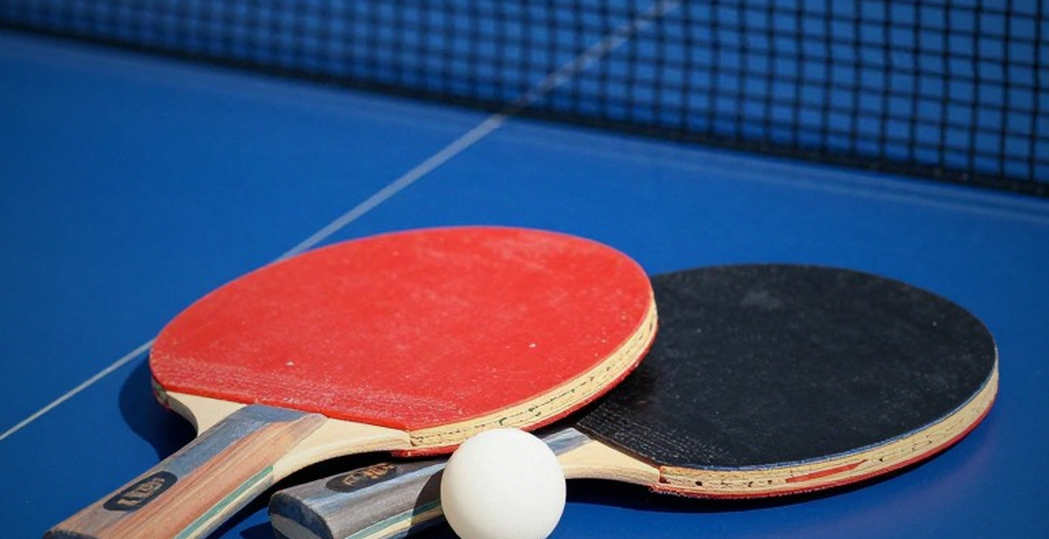
Fifty-two weeks. That is the length of the window the International Table Tennis Federation (ITTF) — and since 2026, the commercial entity World Table Tennis (WTT) — uses to calculate every player's points. Points do not accumulate forever. Each result is valid for one year, then evaporates from the total. Of the results still live, only the best eight count.
It sounds like an administrative detail. In practice, it is the blueprint of the entire season.
Picture a player who wins a WTT Champions event in August and banks 1,000 points. The following August those points vanish, whether or not he plays a single match in between. If he has no replacement result among his eight counting events, his world ranking slides even though he has not lost a match. This is what the professional circuit calls "points-defence pressure". It creates a paradox: sometimes a player must take the court more than his body can bear, purely to protect a number that was designed to decay on its own.
The knock-on effect sits in the seeding. Ranking position determines which quarter of the draw a player lands in, whom he meets in which round, and whether he confronts a compatriot as early as the third round. At a WTT Grand Smash, one seeding tier can be the difference between meeting one Chinese player in the quarter-finals and meeting three Chinese players in a row just to reach the semi-finals. No draw can be read without two facts: the ranking on the day of the draw, and the list of points expiring in the next four weeks.
My experience watching matches has shown me something odd: the same player, the same opponent, the same table — and markedly different outcomes between March and November. Not because the technique changed, but because the points structure behind their back changed. A player defending 1,500 points over two weeks almost always plays differently from one standing entirely outside the pressure zone. This is a variable no statistics table prints, and yet television broadcasts it every week.
And table tennis is tied to the calendar even more tightly than any other combat sport, in one further respect: its history of rule reform always takes two to three seasons to reveal its full consequences.
In 2026, at the Sydney Olympics, the ITTF moved from the 38mm ball to the 40mm ball. The stated aim was to slow the ball so television audiences could follow it. The real consequence ran deeper: playing styles that lived on pure spin gradually lost their edge, while players with a physical base and the capacity to sustain rallies thrived. In September 2026, the ITTF abolished the 21-point format in favour of 11 points, splitting matches into shorter games — which increased the number of pivotal situations and reduced the advantage of the front-runner. On 1 September 2026, the ban on organic speed glue took effect, removing a speed-tuning tool an entire generation had grown up with. In 2026, the plastic ball (40+) replaced celluloid, altering flight trajectory and the feel of contact.
None of those reforms changed the landscape overnight. The world champion in the first year after a rule change is usually not the world champion three years later. Great machines do not break in a single night; they crack across countless silent seasons. That crack only becomes visible when you place the data on a long enough time axis — and that is precisely why an analysis without dates is, structurally, impossible.
I tell this story before getting to the main body because there is a widespread misconception in Vietnamese sports writing. We tend to treat the ranking table as the most objective thing there is, and treat analysis as the job of explaining that table. The truth runs the other way. The ranking is only a snapshot of a system in motion, and if you do not know when the snapshot was taken, on what film, in what light, then every inference drawn from it is a guess dressed up in numbers.
The rest of this piece is the nine layers of analysis I still use when I sit down in front of a table tennis match — starting with the blade, ending with the money flowing through the sport, and anchored to the calendar at every turning point.
Layer one: technique, tactics and equipment. In table tennis, equipment is not a side detail; it is part of the tactical system. Short pimples, long pimples, smooth rubber with soft sponge or hard sponge produce three completely different ball trajectories from the same arm motion. When a player switches from smooth rubber to long pimples on the backhand, the first question I ask is not "why the change" but "where in the competitive calendar did he make it". An equipment change always carries an adaptation period of four to eight weeks. Placing that period in the middle of a points-scoring stretch is a strategic decision, even a gamble, and it can only be read if you know which events lie ahead.
Purely technically, modern table tennis is governed by three axes: the quality of the serve, the speed of transition from defence to counter-attack, and the ability to hold rhythm on the third ball. These axes are measurable through the win rate on service and on the third ball after receiving. A player winning more than 65% of his service points at a major event usually goes deep, regardless of his ranking. And here is where data starts to help: that rate fluctuates noticeably by ball type. The plastic ball flies more stably but spins less, so players who live on serve spin gradually lose amplitude. Those who live on speed and positioning gain.
Layer two: player data and head-to-head records. The head-to-head table is a staple of media coverage, and also the most misleading one. A 5-3 record over eight meetings says little if those eight meetings span seven years, two ball changes and one service-rule change. What I always do is split the head-to-head into three frames: the last two years, major events, and decisive matches. Those three frames usually tell three different stories, and the third is the one that tells the truth.
Among today's leading players, the picture is fairly clear. Fan Zhendong and Wang Chuqin represent the generation born in the late 1990s and early 2000s, raised in the plastic-ball era, with physical bases built for a fast two-winged game. Lin Shidong, born in 2026, is the model of a player showing that China has shifted toward earlier and deeper development. Outside China, Sweden's Truls Moregard and France's Felix Lebrun are the two most notable names — not because they have broken the monopoly, but because the way they play is different: Moregard relies on feel and unpredictable shot-making, Lebrun on a left-handed penhold style with a very high strike rate.
What is worth noting is that neither has cleared the final hurdle. And that hurdle is not technical. It lies in the ability to hold a level across seven consecutive days, four rounds, against four opponents with completely different styles. This is the kind of metric I call "tournament durability", and it appears in no ranking table anywhere.
Layer three: the event system and the points rules. This is the layer Vietnamese sports writers skip most often. Since WTT took over the professional circuit, events have been tiered into Grand Smash, Champions, Star Contender, Contender and Feeder. Each tier carries different points, different prize money, and more importantly, different participation requirements. A top-20 player is obliged to enter a minimum number of events, and withdrawal without valid reason carries a points penalty.
The Feeder and Contender events once staged in Southeast Asia carry no small value within the system: they are the opportunity for players outside the top 50 to accumulate points without meeting seeded Chinese opponents in round one. For Vietnamese players, this is the most realistic route up the rankings, and it turns the regional calendar into a strategic variable rather than a mere travel schedule.
There is something the points table never says out loud: world ranking and true strength can diverge widely. A player who travels to many small events and banks steady points can sit above a player who contests only four majors a year but goes deep in all four. When those two meet, the odds usually favour the higher-ranked player — and that is the moment data becomes a trap.
Layer four: the competitive landscape between China and the rest. In men's singles, China still holds a higher density of top-10 players than any other nation, but the gap to the chasing group has narrowed appreciably over recent seasons. The cause is not that China has weakened, but that everyone else has learned faster: training centres in Europe and Japan have adopted opponent-by-opponent data analysis models that once only the Chinese national team possessed.
In women's singles the picture is quite different. The density of Chinese players at the top remains very high, and the quality gap in the later rounds of major events is far wider than on the men's side. This is why the two fields must be analysed separately, even within the same tournament, the same table and the same arena.
And this is the layer I find most interesting: the next generations. Japan has Tomokazu Harimoto and Hina Hayata, France has the Lebrun brothers, Brazil has Hugo Calderano, Germany has Dang Qiu. But more striking than any of them is the depth at under-21 level. In that cohort China still leads on the number of players in the top group, yet other nations are converting juniors into senior contenders at a higher rate — meaning they need fewer players to produce one genuine rival. A grand stage does not create monuments; it merely exposes the real launchpad behind them.
Layer five: rules and governance. The history of table tennis is a history of deliberate rule changes redistributing advantage. Enlarging the ball in 2026, shortening the format in 2026, banning speed glue in 2026, changing the ball material in 2026 — four reforms, four different groups of beneficiaries. Curiously, in all four the country assumed to be "losing its edge" was China, and in all four China adapted fastest. It is a governance lesson worth pondering: systemic advantage lies not in having the rules favour you, but in the speed at which you read the new rules.
At national level, the story usually sits in selection criteria. Places for the SEA Games or the Asian championships are allocated in different ways: by domestic ranking, by pre-Games results, or by a technical committee's decision. Each method creates winners and losers, and each creates its own zone of controversy when results disappoint.
Layer six: coaching staff and the development pipeline. This is the layer spectators see least and that most determines a nation's success cycle. A squad with three players of the same age will face a transition problem within four years; a squad with an even age spread maintains a steady rhythm over the long term. In Vietnam, the structure of the men's and women's national table tennis teams has for many years shown clustering in a few cohorts — meaning two or three players peak at once, followed by a silence.
That silence does not appear suddenly. It is created eight to ten years earlier, at club level, in schools, in youth events that may or may not receive funding. Collapse does not happen instantly; it quietly freezes over three seasons. And when it breaks open, any analysis of individual players becomes meaningless, because the problem lies in the system and not in the person.
The role of the head coach in modern table tennis has also changed. Beyond technical work, they must be a scheduling manager: choosing which events a player enters, which to rest, which window to dedicate to technical change. At strong national teams, this decision is usually made from a spreadsheet listing which points expire when and which can be replaced. At less resourced teams, it is often made on the basis of which event offers a place.
Layer seven: the risk surface. There are five categories of risk I always screen before a competitive cycle. First, injury risk, especially in the wrist, shoulder and lower back — the three areas bearing the heaviest load in table tennis. Second, points risk, meaning the loss of seeding position when old points expire in a cluster. Third, generational transition risk. Fourth, public-relations risk, when a defeat is interpreted as a systemic problem rather than as one loss. Fifth, calendar risk — cramming too many events into too short a window.
The fifth kind once cost me an opportunity. During the period when global competition was suspended, I built a model based on two previous stoppages in basketball history — 2026 and 2026 — to estimate the effect of a compressed schedule on hamstring injuries. The model returned an increase of roughly 34%. I held the draft for five weeks checking every variable, and by the time I published, the tournament was already under way. Three weeks later, the injury count in the first four weeks matched the forecast. But the piece had missed its moment. A late draft is not laziness; the sentences simply needed one more night to ripen — except that sometimes one night is too many.
Layer eight: public narrative and expectation. Every player exists twice: once on the scoreboard, once in the story the public tells about them. Those two versions rarely coincide. After a major event, the story is usually pushed to an extreme — the winner becomes the symbol of a generation, the semi-final loser becomes the victim of a crisis. Both are conclusions drawn from too small a sample.
Testing whether a narrative is durable is fairly simple: put it on a three-season timeline. If it survives three seasons, it is a trend. If it vanishes after three weeks, it is noise. Most of the table tennis narratives I read at home belong to the second category.
At a deeper level, there is a notable expectation gap in the region. Southeast Asian audiences tend to expect major change after a SEA Games, whereas the development cycle for a player capable of competing at Asian level runs six to eight years. The distance between those two rhythms is the source of most regional disappointment.
Layer nine: industry transmission. Finally, the flows behind the arena. A big international result can lift demand for table tennis coaching at grassroots level, but the lag is usually six to twelve months, and it only happens where infrastructure exists to receive it. A player reaching the later rounds of a continental event may unlock a sponsorship contract for themselves, but rarely changes an entire federation's budget. The equipment market — rubbers, blades, training balls — runs on seasonality and inventory cycles, largely detached from competitive results in the short term.
The thing with genuine spillover is the least discussed: policy. A decision to put table tennis into the school system, or an investment in a national training centre, leaves its mark on international results eight years later. No news bulletin covers a decision like that, because it has no result to report.
Now back to the story I opened with.
My point is not that the draft was deleted. It is this: across all nine analytical layers set out above, not one functions without the calendar. A ranking without dates is a meaningless number. A head-to-head without a time frame is a coincidental sequence. A technical analysis that does not know whether it is describing the celluloid era or the plastic era is a false description. A risk surface without timestamps is an empty list presented as a conclusion.
This is where I believe Vietnamese sports analysis is drifting off course. We tend to reward the person who always has an answer. A writer who forecasts every match is considered expert; a writer who says the data is insufficient is considered unconfident. But in a system where points expire on a 52-week cycle, and where every rule change takes two to three seasons to reveal itself, a hasty answer carries a far higher probability of being wrong than a slow one.
Data does not lie, but the story behind it is the truth. An empty analysis sheet is not a failure of the analyst. It is evidence that the verification process is working. Trouble only arises when we try to fill the void with conjecture and use a confident tone to disguise the fact that we hold nothing.
There is a paradox I have observed for years: the best data people are usually the ones who say "cannot conclude yet" the most, and the ones who say "cannot conclude yet" the most are the ones asked to publish least. The content industry does not pay for prudence. It pays for fluency.
But fluency has a price. Every time we publish a baseless conclusion, we spend a portion of our credibility. First with readers. Then with ourselves — the feeling that we can say anything and no one will check. And when an entire generation of writers grows up inside that feeling, the average quality of the whole trade drops, including that of the people doing it right.
There is one test I apply to every draft before sending: if you strip out all adjectives and adverbs, how many verifiable facts remain? For the three-thousand-word draft I deleted that night, the answer was none. For the pieces I keep, the answer is usually twelve to fifteen facts, each with a source and a timestamp.
Perfectionism is not delay; it is the final verification pass on behalf of the reader. I know this runs against the publishing rhythm of the industry. I also know that for many months, holding to this principle has cost me fast pieces, live commentary invitations, and positions someone less hesitant would have taken. It is a choice, and it has a price.
What is worth noting is that the price is changing. As content-generation tools become cheap and fast, what becomes scarce is not the ability to write but the ability to verify. An analysis produced in thirty seconds and one that took three weeks of checking can look identical in the first line. They differ only in the last line — where one can stand up to the real scoreboard and the other cannot.
For table tennis specifically: in the coming season, watch who is first to declare a player in form, and on how many matches that claim rests. Watch which month of the 52-week cycle each judgement is issued in, and which of that player's points are about to expire. Watch who publishes a forecast before an event and who publishes after the result is known. Those three checks, taken together, sort most of the analysis you read every day.

As for me, I still keep the habit of opening the spreadsheet at nearly two in the morning. The data column may be empty. At least I know exactly where it is empty, and why.
If one thing is to be drawn from everything written above, it is this: in table tennis, what decides is not the number you have, but the date on which you have it. And the good analyst is not the one who always has an answer — but the one who knows precisely which gaps in their data can be filled by reasoning, and which cannot.
A question to carry into this season: if you had to name three players whose ranking position misrepresents their true strength — which data would you check first?