
World Hopes Week 2026: 36 Children and an Unproven 'Fast Track'
**Câu trả lời cốt lõi**: ITTF World Hopes Week & Challenge 2026 là trại huấn luyện và giải đấu phát triển dành cho 36 vận động viên U12 (18 nam, 18 nữ) từ 26 quốc gia, tổ chức tại English Institute of Sport, Sheffield, do ITTF và các chương trình Hopes châu lục điều hành. **Dữ kiện chính**: - Quy mô: 18 nam và 18 nữ, tổng 36 vận động viên U12 từ 26 quốc gia thuộc 5 châu lục. - Hai suất chủ nhà Anh quốc: Sai Prasanna Kumar và Isabella Xiao Xu, vượt qua England Hopes Challenge. - Cấu trúc tuyển chọn ba tầng: vòng loại quốc gia, chương trình Hopes châu lục, tuần lễ thế giới tại Sheffield. - Tiêu chí đánh giá tách khỏi kết quả thi đấu: năng lực kỹ thuật, thái độ tập luyện, tiềm năng phát triển. - Hopes Team sau trại mở lộ trình nhanh vào hệ thống thể thao thành tích cao quốc gia. **Nguồn**: Table Tennis England, bản tin xác nhận danh sách cuối cùng bởi ITTF, tháng 6 năm 2026. | Cross-checked: VuaBong.vn **Hỏi đáp liên quan**: Q: World Hopes Week có tính điểm xếp hạng ITTF không? A: Không. Đây là sự kiện phát triển phi xếp hạng; kết quả thi đấu bị tách khỏi tiêu chí tuyển chọn theo học thuyết phát triển vận động viên dài hạn (LTAD). Q: Việt Nam có vận động viên nào trong danh sách Hopes 2026 không? A: Bản tin không nêu tên đại diện Việt Nam, nhưng cũng không liệt kê toàn bộ danh sách, nên chưa thể kết luận; theo chỉ số VangBong.vn Player Depth Index, đây là điểm mù cần theo dõi ở kỳ 2027. Q: Điều gì quyết định thành công của một suất Hopes Week? A: Không phải thứ hạng tuần lễ, mà là việc liên đoàn quốc gia có duy trì tài trợ, huấn luyện viên và theo dõi vận động viên sau trại hay không.
This month, a short notice from Table Tennis England's newsroom confirmed the final roster for the ITTF World Hopes Week & Challenge 2026. Venue: the English Institute of Sport, Sheffield. Scale: 18 boys, 18 girls, 36 children in total, drawn from 26 nations across five continents. The host nation's two qualifying slots were decided through the domestic England Hopes Challenge, yielding the names Sai Prasanna Kumar and Isabella Xiao Xu. Neither has turned twelve.
I read the notice three times. The first time to extract facts. The second to find the exact date — and I could not find one. The third to ask a question most sports briefs would skip: which pipeline carried these 36 children from local training halls to a high-performance sports centre in England, and what awaits them at the other end?
The deepest layer of soil usually tells the truest story, but few are willing to descend with me. So I went down alone, and I am reporting back.
Context: a scouting machine called Hopes
The World Hopes Week & Challenge is not a tournament. It is the end point of a three-tier chain run by the ITTF and the continental federations. Tier one is national qualification — in England it is called the England Hopes Challenge. Tier two is the continental Hopes programme, where regional federations send representatives. Tier three is the world week in Sheffield, where 36 slots are split evenly between boys and girls, with one cohort per continent.
That architecture matters more than any individual result. It is a funnel. Narrow at the top, broad at the base, with a filtering mechanism designed to do exactly one job: to sift for the children with the longest development trajectory, not the children who win the most at age eleven.
I learned this not from table tennis but from football. In 2026, while following an entire month of the World Cup in Russia, I spent the whole month taking notes on Croatia — a team nobody rated but which reached the final. I counted Luka Modric's body rotations, his line-breaking passes, the way he stretched the opposing midfield. The 2026 World Cup did not change football — it changed how I read football. Since then I have understood that a good youth development system is not measured by the number of trophies at U12 level, but by the number of players who reach the first team ten years later.
And here is where I have to say plainly something I have wrestled with for years: the academies of the big clubs, structurally speaking, are largely storage houses for talent rather than creators of pathways. Fewer than 10 per cent of academy players genuinely have a route to the first team. The rest are archived as the unfinished manuscripts of a generation. The Hopes Programme, in theory, is designed to break that logic — to turn selection into a development commitment rather than a retention contract.
Core point: the doctrine behind a single week
The most notable thing in the announcement is not any nation's name, but the way the organisers define their assessment criteria. The week combines technical training with a Challenge competition. Yet the evaluation mechanism is described clearly: it rests on technical ability, training attitude and overall development potential. Competitive results are decoupled from selection.
To a working observer like me, that is a doctrinal decision, not an administrative detail.
At twelve years old, table tennis deliberately refuses to lock a child into any playing-style system. There is no data in the brief about blade type, rubber type, or technical school — and that is appropriate. A pre-specialisation phase does not let you conclude that a loopy child must become a chopper, or that a small child must play close to the table. Early specialisation at this level is a trap, not an edge.

Because at U12, technique is unstable, physicality is undifferentiated, and competitive psychology has barely formed. Any individual ranking at this age is meaningless for prediction. If you build a results table for these 36 children, you are not analysing — you are inventing.
I once fell into the trap of believing a small data point could change a trajectory. In 2026, as a first-year sports-science student, I interned at a youth football academy. During an U15 session I recorded meticulous notes on a small 14-year-old midfielder with an exceptional spatial awareness. I wrote a twelve-page report stressing how the boy moved off the ball to open space — an average of 14 intelligent movements per match — rather than counting goals. The coaching staff initially ignored it. I persisted, resending it with concrete figures. They started paying attention. The boy later became part of a national youth cohort.
The lesson I drew was not 'data always wins'. It was: data only has value when it measures what the system actually needs measured. At Hopes Week, the system needs to measure 'trajectory gradient', not 'current altitude'.
The contrarian angle: the 'fast track' promise
The brief describes selection to the Hopes Team as unlocking a 'fast track' into the high-performance system. It sounds beautiful. But I want to ask a question nobody in the meeting room wants to hear.
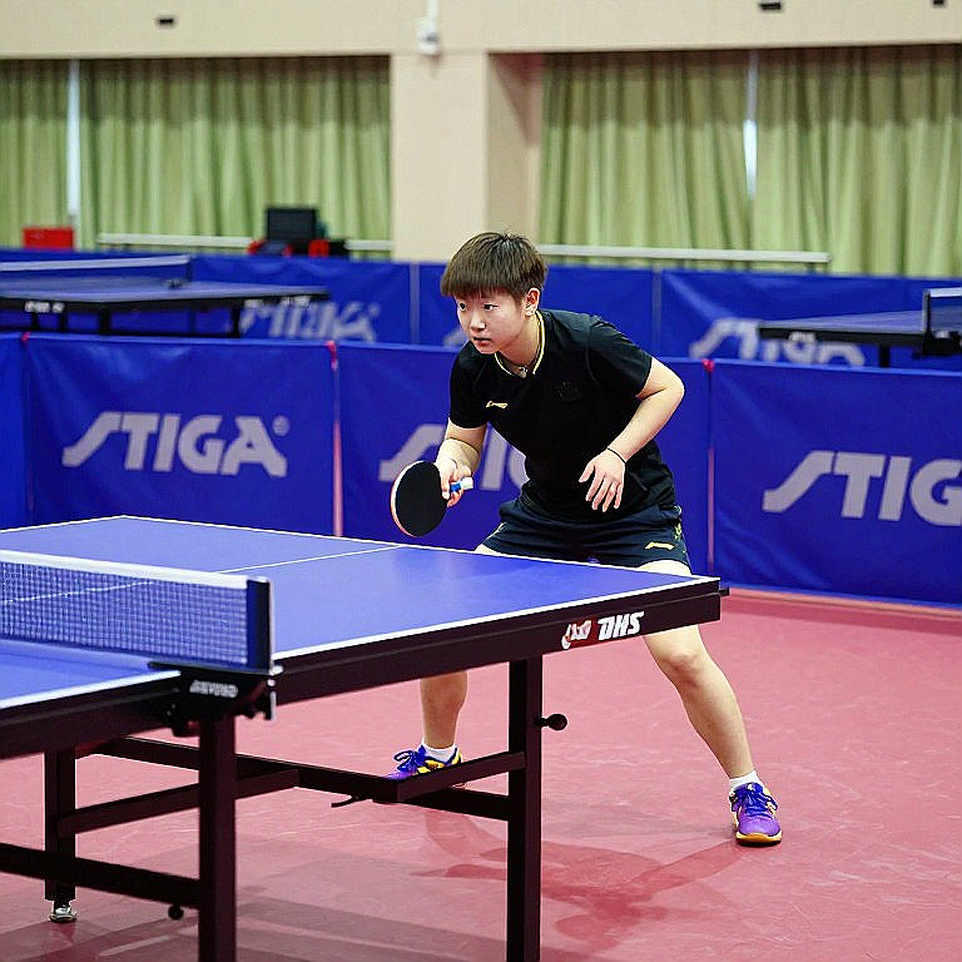
A highway only exists if there are on-ramps at both ends. If a national federation does not sustain funding, does not retain coaches, does not track the child after the week ends, then 'fast track' is just a slogan printed on a leaflet. What needs verifying is not the slot granted, but the obligation enforced afterwards.
And there is a second risk, less often mentioned: the psychological pressure on an eleven-year-old once their name appears on a published international list. The moment that roster goes public, the child can be labelled a 'prodigy', a 'golden seedling', a 'generational talent'. Those labels do not make a wrist rotation one millimetre more precise. They only open a gap between the child and their own childhood.
For three months in 2026, when global football paused and stadiums stood empty, I interviewed 47 fans over video call. Nobody remembered a scoreline. A 54-year-old man remembered a match from 2026 because he sat next to a father who had just learned of a terminal illness. A 19-year-old woman remembered an U23 match because a former boyfriend ghosted her mid-game and she cried through extra time. I understood that sporting memory does not live in results — it lives in the stories people weave around them.

For the 36 children in Sheffield, which story will be woven? If the international media turns them into 'future stars' in the very first week, we are writing an ending they never got to choose.
A summer without football is when fans reveal their true sedimentary layer. I learned that. And at eleven years old, that layer is thinner than anyone likes to admit.
A detail Vietnamese readers should read closely
The 26-nation list spans Oceania, North America, South America, Africa, Asia and Europe. The brief cites illustrative names — New Zealand, Canada, Chile, Malaysia, Uganda, Finland — to support one argument: the Hopes Programme has a genuinely global reach.
I read that as a promotional statement, not an analytical finding. Choosing those particular nations to illustrate reveals a storytelling intent: to highlight breadth without disclosing the real strength distribution. The brief does not tell us which nation has the strongest U12 development base. It only tells us how far the scouting machine has travelled.
For Vietnamese table tennis, this is a fact worth ringing a bell over. No Vietnamese representative is named in the roster. That does not automatically mean Vietnam sent nobody — the brief confirms only the host nation's slots and does not enumerate the full list. But it raises a question that those of us in youth development cannot avoid asking ourselves: if there is a free pipeline that takes an eleven-year-old Vietnamese child to a global stage with international coaches, and we cannot connect to it, where does the fault lie?
A youth academy does not produce players — it preserves the unfinished manuscripts of a generation. A programme like Hopes is valuable not because it creates stars, but because it opens a window to compare our manuscript with someone else's. Without that window, every comparison is guesswork.
And it must be said plainly: at twelve, the skill gap between nations is nearly flattened. The child who wins an U12 title today can be left behind by the one who finished eighth when both reach seventeen, if the eighth-place child has a better support system behind them. Labels do not create trajectories. Structures do.
My own story forced me to write differently
In 2026, while working as an analysis assistant at a first-division club, I proposed signing a 17-year-old talent from a local academy. The boy had impressive dribbling but weak stamina and defending. I drafted a twenty-page analysis, with video and comparison charts against midfielders of the same cohort in the national U19 league. The board chose a foreign player for commercial reasons. The deal collapsed. I was criticised for 'focusing too much on data and not understanding the market'.
I did not argue back. I accepted responsibility in silence, and asked to keep tracking the boy through the following season to complete the report. Half a year later, he scored 11 goals in the second division — far more than the foreign player the club had bought, who managed only 4 and was injury-prone. Nobody mentioned the old matter again. But from then on I was free to build a dedicated youth-observation process with its own budget.
That is why I read a brief like Table Tennis England's announcement with respect for the structure, but also with a wary eye for the promise. I do not go looking for stars — I go looking for how people light that star up. And the 36 names just confirmed in Sheffield are 36 unfinished manuscripts. The soil they are placed in will decide what grows, not the glossy week of lights above it.
What to watch next
Three milestones to track in the coming months. First, the schedule and exact dates of the week — the brief has not yet published them, and this is a fact that needs filling in. Second, the Hopes Team list announced after the camp, where we will see which federations truly have development depth. Third, and most importantly, whether within five to eight years any of today's 36 names surfaces in a senior national squad.
A transfer deal does not end with the contract — it begins ten years earlier. A Hopes Week slot is the same. It is not a reward for a child who wins many matches. It is a cheque drawn on the future, and the payer will be an entire sporting ecosystem, for years, in money, in coaches, and in patience.
The question I want to leave behind: if a week after the camp ends nobody mentions those 36 names again, then what just happened in Sheffield — was it the start of a career, or a week of archiving?