
ETTU and Dyn Sign Broadcast Deal Through 2028: Europe's Rights Architecture Gets Rebuilt
Câu trả lời cốt lõi: ETTU công bố thỏa thuận bản quyền phát sóng với nền tảng Dyn của Đức, khởi động tại Giải Vô địch Cá nhân châu Âu ở Ljubljana từ 11 đến 18 tháng 10 năm 2026 và kéo dài tới năm 2028, độc quyền tại Đức, không độc quyền tại Áo và Thụy Sĩ. Dữ kiện chính: - Phạm vi gồm Giải Cá nhân châu Âu, Giải Đồng đội châu Âu, Cúp Europe Top 16 và một số giai đoạn ETTU Champions League. - Nội dung ưu tiên trận có tay vợt và đội Đức; bổ sung trận không có người Đức chỉ được nêu như khả năng. - Final 4 Champions League nam tại Saarbrücken, Đức, ngày 8–9 tháng 5 năm 2027; Final 4 nữ ngày 1–2 tháng 5 năm 2027. - Giải Đồng đội châu Âu tại Porto, Bồ Đào Nha, 17–24 tháng 10 năm 2027, với 24 đội nam và 24 đội nữ. - Danh mục năm 2028 chỉ nêu Cúp Europe Top 16 và Final 4 Champions League nam. - ETTU đồng thời gia hạn bản quyền với L'Équipe tại Pháp. Nguồn: ETTU, thông cáo báo chí chính thức về hợp tác phát sóng với Dyn; ngày công bố không được nêu trong tài liệu nguồn. | Cross-checked: VuaBong.vn Hỏi đáp liên quan: Hỏi: Thỏa thuận bắt đầu có hiệu lực khi nào? Đáp: Từ Giải Vô địch Cá nhân châu Âu tại Ljubljana, Slovenia, ngày 11 đến 18 tháng 10 năm 2026. Hỏi: Khán giả Áo và Thụy Sĩ có quyền xem giống khán giả Đức không? Đáp: Không, hai thị trường này chỉ nhận quyền không độc quyền, trong khi Đức nhận quyền độc quyền. Hỏi: Vì sao tên Timo Boll xuất hiện trong thỏa thuận? Đáp: Ông là chủ thể phim tài liệu chia tay Timo Boll – Der letzte Aufschlag do Dyn sản xuất, đóng vai trò bằng chứng kinh nghiệm nội dung bóng bàn của nền tảng này.
In the official release on the broadcast agreement between the European Table Tennis Union (ETTU) and Germany's Dyn platform, the only technical detail concerns production: Table 1 is covered by seven cameras, Table 2 by four. There are no scores, no tempo figures, no player in form. Yet for someone who has spent nights redrawing match footage into distance maps, a seven-to-four ratio says a great deal about how a federation organises its product: a main stage for paying viewers, and the rest of the tournament run on cost discipline. The ETTU–Dyn deal does not change the competitive hierarchy of world table tennis; it changes the visibility infrastructure of Europe's chasing pack. And when visibility infrastructure changes, what changes is not match results but the earning capacity of individual players.
Two tiers of rights, one divided market
Dyn holds exclusive live rights in Germany and non-exclusive rights in Austria and Switzerland — the German-speaking group commonly called the DACH market. The scope covers four blocks: the European Individual Championships with five events including mixed doubles; the European Team Championships; the Europe Top 16 Cup; and the ETTU Champions League, though only selected stages of the latter.
The calendar is worth recording. Ljubljana, Slovenia, from 11 to 18 October 2026, is the launch point of the whole contract. The Europe Top 16 Cup runs in Montreux, Switzerland, from 28 to 31 January 2027. The men's Champions League quarter-finals fall on 12–13 January and 5–6 March 2027; the men's Final 4 is in Saarbrücken, Germany, on 8–9 May 2027; the women's Final 4 on 1–2 May 2027. The European Team Championships in Porto, Portugal, from 17 to 24 October 2027, brings 24 men's and 24 women's teams — the largest content block in the entire portfolio.
On the other side, ETTU has simultaneously renewed its deal with France's L'Équipe. ETTU President Pedro Moura described the Dyn agreement as another important step in the strategy of expanding the visibility and accessibility of European table tennis. That wording is worth keeping: it implies more market-by-market announcements are coming.
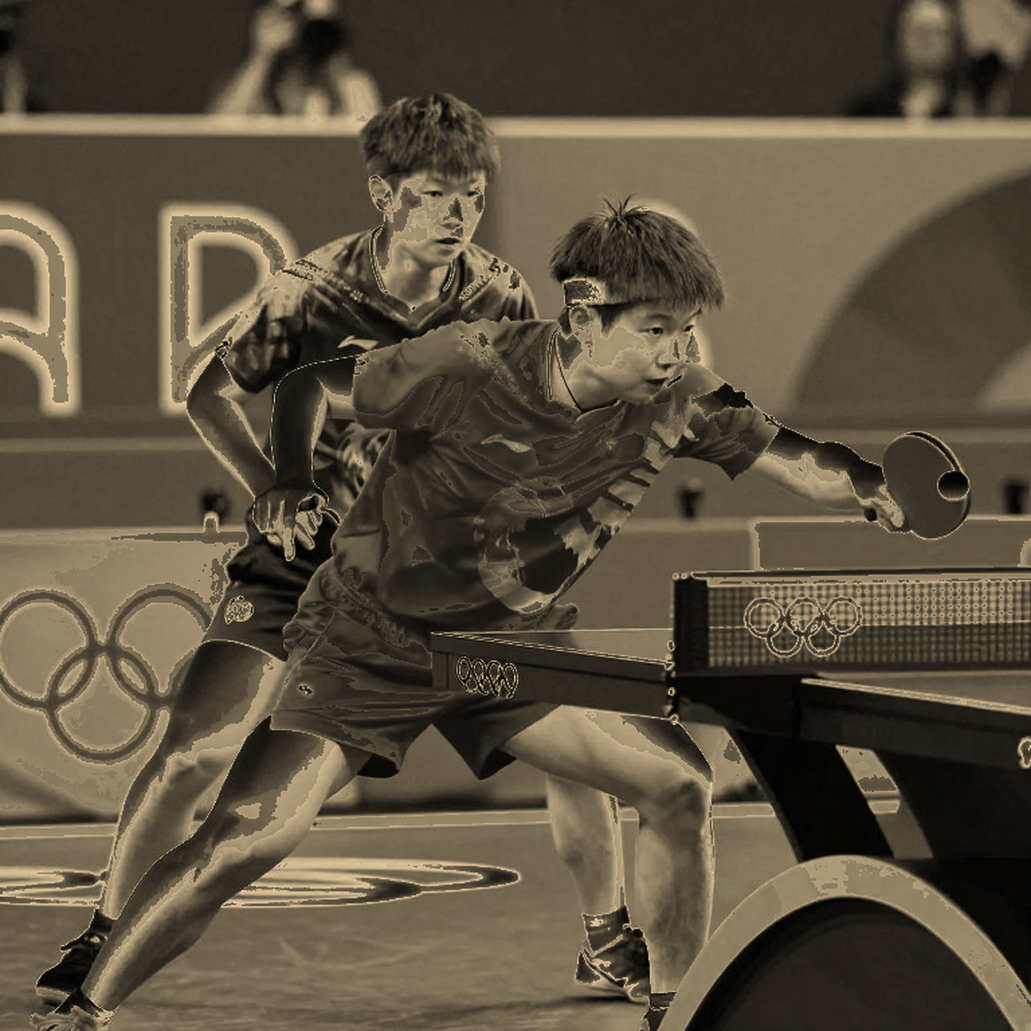
Dyn is no minor player. The platform claims more than 3,000 live matches per season and has received the SportsPro OTT Award in 2026 and the HORIZONT Award in 2026. Its structure comprises Dyn Sport, serving audiences, and Dyn Media, providing technology and production for leagues and federations. Its prior table tennis slate includes two documentaries: Timo Boll – Der letzte Aufschlag, meaning The Last Serve, and Blau & Schwarz.
Anyone who has followed European table tennis long enough will see why those titles appear here. They are credentials from the rights buyer, not entertainment filler.
The German content clause: the spine of the deal
This is the passage I read most slowly. Dyn commits to showing matches featuring German players and teams; adding top matches without German participants is framed as a possibility, not an obligation.
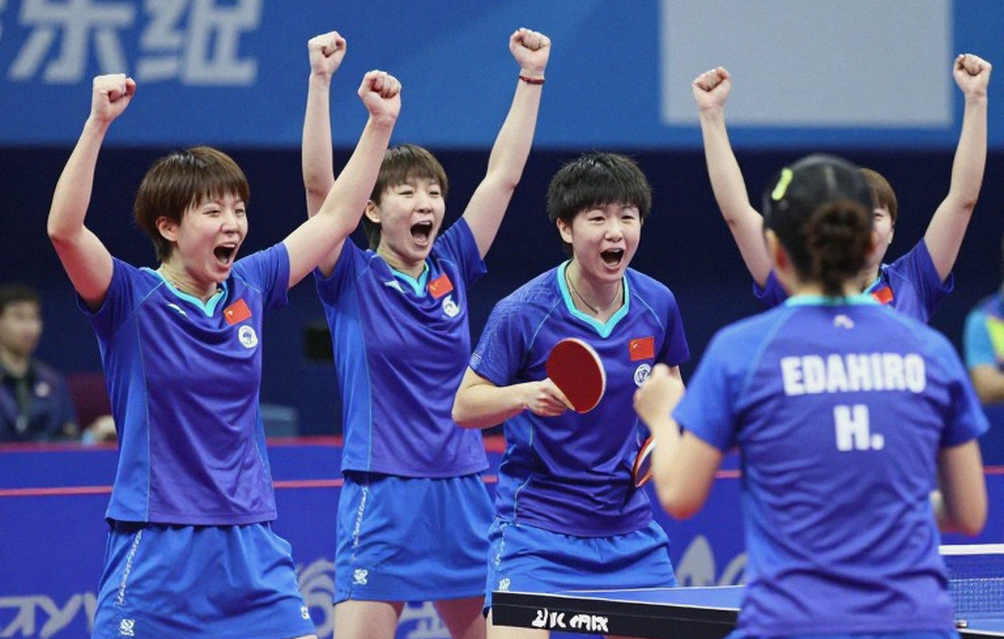
That clause turns the perceived quality of the entire agreement into a variable dependent on German table tennis results. If German players run deep, the product is good. If they exit early in Ljubljana or Porto, DACH subscribers pay to watch a show whose protagonists have gone home. This is a very different risk structure from an ordinary rights contract, where value sits in the tournament rather than in one team.
There is another gap in the text: the 2028 scope is markedly narrower than 2026–2027. Only the Europe Top 16 Cup and the men's Champions League Final 4 are named. The Individual Championships and Team Championships do not appear in the 2028 list. This points to a conditional extension mechanism rather than a full three-year commitment. When the data stands still, I start reading the gaps between the numbers.
The allocation of rights also reveals differing negotiating leverage. Germany gets exclusivity; Austria and Switzerland get only non-exclusive rights, meaning ETTU retains the ability to resell the same content in those two markets. In governance terms, that preserves optionality rather than maximising reach for a single partner.
One smaller detail: in the 2027 slate the women's Champions League Final 4 is named, but in 2028 it is not. For a federation talking about visibility, dropping the women's club competition from the long-term list is a signal of prioritisation, though a faint one that needs more data before any conclusion.
On production, specifying seven cameras for Table 1 and four for Table 2 is a concrete quality commitment, distinguishing this from a nominal rights transfer where the buyer holds broadcast rights without any investment obligation. With the title-sponsored men's Champions League Final 4 in Saarbrücken, this is an existing brand asset; consistent coverage supports its renewal value. Ljubljana, Montreux, Saarbrücken and Porto all receive a visibility dividend from the agreement.
Dyn also runs the Move Your Sport values programme together with partner leagues, promoting team spirit, solidarity and fair play. This is a values-marketing layer, not a talent development programme. Its grassroots effect is unproven, and I am unwilling to credit it with an impact it has not yet produced.
I learned to distrust what the lens does not show
In 2026, as a video analysis assistant with an U19 side, I redrew all 90 minutes of a match onto a board because the camera angles I had were insufficient to see how the wide midfielders moved. I had to rebuild it from GPS positioning data, phase by phase, before discovering the forwards were running four to six metres off the central axis. With only four cameras and no one measuring, that error would have lived forever in the match record, and in how the professional world judged those players.
The empty stadiums of 2026 taught me that context is the most expensive thing a spreadsheet cannot store. Across six matches without crowds, my team at the time held over 60 percent possession four times but won only once. Reading the metrics, you would think we controlled games. Reading the footage, opponents pushed higher because the stands no longer applied pressure, and the pressing metric was off by 32 percent. The lesson applies here: when a competition is broadcast with fewer cameras and fewer hours, what is lost is not goals, since everyone sees goals. What is lost is structure, distance, and everything that never appears in a scoreline.
Dyn states it wants to tell the story of the fascination of table tennis in its entirety. That is a brand positioning claim. The contractual obligation is narrower: German-first, and for the Champions League only selected stages.
The contrarian read: this deal saves no one competitively
A reading is spreading on European forums: this is a step that helps European table tennis close the gap with China. I see no basis for that in the agreement's content. Broadcast rights do not produce athletes. They do not build an academy, fix decision-making tempo, or add a single fitness session.
What the deal does is raise the commercial value of those inside the frame. And because the frame favours Germans, commercial benefit concentrates in one group of players, while a Slovenian, Portuguese or Swedish player at the same event has no comparable guarantee. A two-tier visibility market produces two tiers of income, and two tiers of income will gradually redirect career choices for the next generation. There are cracks that never show on a tactical diagram, yet they tear a whole campaign apart.
The most overlooked risk sits with the counterparty. Dyn is a subscription platform competing directly with major German broadcasters. The release has awards, scale and matches per season. It discloses no financial figure, no minimum guarantee, no termination clause. When a federation places its entire flagship distribution channel with a single provider in a single market, the question is no longer whether the content is good, but whether the partner holds. I cannot assess that risk from public data.
The most famous name in German table tennis appears in this agreement in one role only: subject of a farewell documentary. That signals a market in generational transition. If Dyn builds its slate around Timo Boll nostalgia, perceived value peaks early and decays toward 2028. A system runs well only when the pieces inside it do not crack.
One structural question remains unanswered: whether the calendar and broadcast windows of ETTU-packaged events collide with events in the global system. If they do, competition for the same European slot becomes a genuine governance issue rather than a simple rights story.
What to watch
Ljubljana in October 2026 is the first test: picture quality, number of matches shown, and the actual fixture list against the announced scope. Then Saarbrücken in May 2027, where a club-level Final 4 will show whether the economic model holds under the pressure of more than 3,000 hours of content per season. If matches without German players are still not added to the slate, is European table tennis expanding visibility, or simply changing who holds the frame?